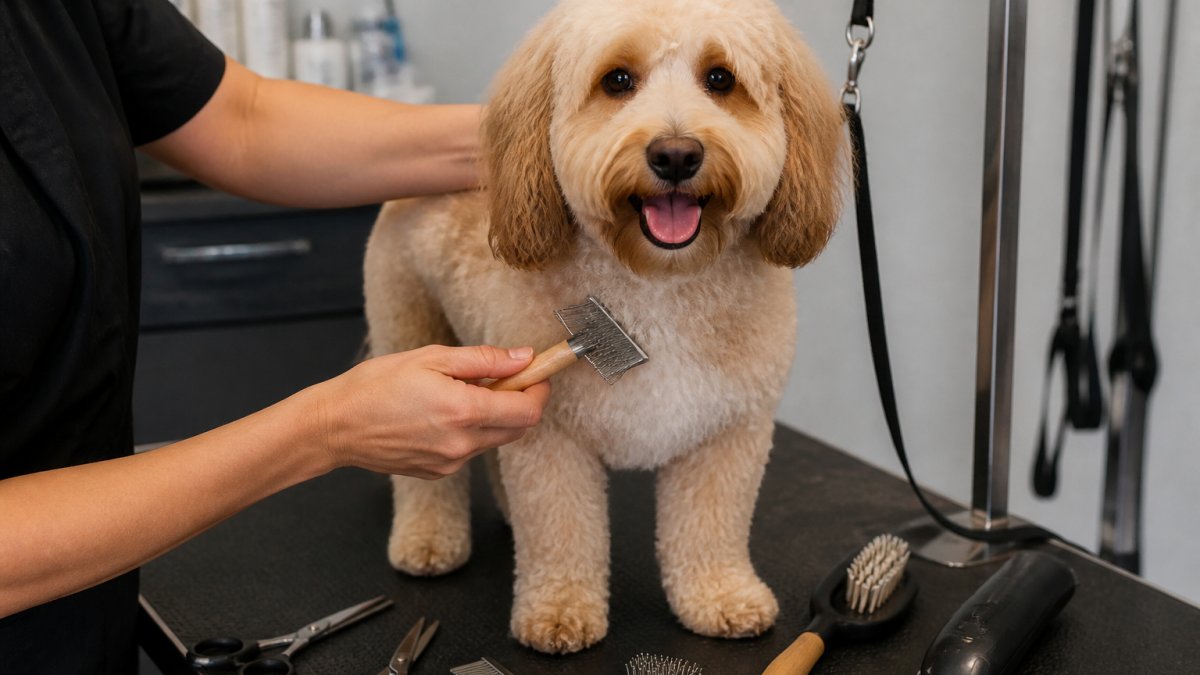
 blog
blog
Grooming Services for Doodle Breeds: Complete Care Guide
Table of Contents
- Why Doodle Grooming Requires Specialized Care
- Understanding Your Doodle's Coat Type and Grooming Needs
- Best Grooming Styles for Poodles and Doodles in 2026
- Doodle Grooming Frequency: How Often Does Your Dog Need Professional Care
- How to Prevent Matting in Goldendoodles and Other Doodle Breeds
- Professional Dog Grooming Tools for Doodles: What Groomers Use
- What Happens During a Full-Service Doodle Grooming Session
- At-Home Maintenance vs. Professional Services: Finding Your Balance
- Frequently Asked Questions
Last Updated: September 30, 2026
Why Doodle Grooming Requires Specialized Care
Grooming services for doodle breeds demand a different approach than grooming other dog types. Doodles, Goldendoodles, Labradoodles, Cockapoos, and similar crosses, inherit a coat structure that's prone to matting and tangling in ways purebred dogs often aren't. Their fleece or wool coats trap moisture and debris, creating conditions where mats form quickly if not managed properly.
At STEPH'S CUTE CRITTER CUTS & CORI'S CRITTER CREATIONS, we've worked with hundreds of doodle owners who didn't realize their dog's coat type required different maintenance than they'd done with previous pets. The difference isn't minor. A doodle's coat can go from healthy to severely matted in just two to three weeks without proper care, and once matting sets in deeply, the only solution is shaving the dog down to the skin.
Understanding why doodles need specialized grooming services starts with understanding their coat. A doodle's fleece or wool coat doesn't shed like a Labrador's does. Instead, dead hair gets trapped in the growing coat, creating tangles at the root level. This is why regular professional grooming and consistent at-home maintenance aren't optional, they're essential to keeping your doodle comfortable and healthy.
Understanding Your Doodle's Coat Type and Grooming Needs
Your doodle's coat type determines which grooming styles work best and how often professional sessions should happen. Not all doodles have identical coats, some lean more toward their poodle parent's texture, others toward their other parent's.
Fleece and Wool Coats: What Makes Them Different
A fleece coat is softer and wavier than a wool coat, with a texture that feels silky to the touch. Fleece coats tend to mat less readily than wool, but they still require regular maintenance. A wool coat is tighter, curlier, and denser, it's the coat type most prone to matting because dead hair gets trapped deeper in the curl pattern.
Both coat types share one critical trait: they don't shed hair the way double-coated breeds do. Instead of shedding seasonally, doodles shed continuously, and that shed hair doesn't fall out, it tangles into the living coat. This is why line brushing (brushing in sections down to the skin) works better than surface brushing. Surface brushing only detangles the top layer while mats form underneath.
The coat type your doodle has influences grooming frequency and which styles hold up longest between appointments. A fleece coat might stay tangle-free for eight weeks with proper home care, while a wool coat might need professional attention every six weeks.
How Matting Develops and Why Prevention Matters
Matting starts invisibly. Your doodle's coat feels soft and fluffy on top, but underneath near the skin, small tangles are forming. These tangles tighten over days and weeks, pulling the hair into dense knots that cut off air circulation to the skin. Once matting reaches this stage, your dog experiences real discomfort, the mats pull on the skin, trap moisture and bacteria, and can lead to skin infections.
Severe matting sometimes requires sedation to remove safely because dematting a heavily matted coat is painful for the dog. Prevention through regular brushing and professional grooming is always gentler and less stressful than dealing with severe mats later.
Best Grooming Styles for Poodles and Doodles in 2026
The best grooming styles for doodles balance aesthetics, coat health, and maintenance requirements. Your choice depends on your lifestyle, your doodle's coat type, and how much time you're willing to invest in at-home care.
Puppy Cut: The Low-Maintenance Option
A puppy cut keeps your doodle's coat uniformly short, typically one to two inches all over the body. This style is the lowest-maintenance option for doodle owners because shorter hair tangles less readily and requires less frequent professional grooming (every 8-10 weeks instead of 6-8).
The puppy cut works well for active dogs, families with busy schedules, and doodles with sensitive skin. The trade-off is that your dog loses the longer, fluffier appearance many doodle owners prefer. The puppy cut also shows the dog's body shape more clearly, which means any weight changes become visible immediately.
Full-Service Grooming and Creative Styling
Full-service grooming keeps more length on the coat and allows for creative styling, teddy bear cuts, lion cuts, or custom designs. These styles look stunning in photos and showcase your doodle's personality. They also require more frequent professional grooming (every 6-8 weeks) and consistent weekly line brushing at home.
Full-service grooming typically includes bathing, drying, brushing, styling, nail trimming, ear cleaning, and a sanitary trim. For doodles with behavioral anxiety, a full-service appointment might be split into two sessions to reduce stress.
Doodle Grooming Frequency: How Often Does Your Dog Need Professional Care
The ideal grooming frequency for doodles depends on coat type, lifestyle, and your at-home maintenance routine. Most doodles need professional grooming every 6-8 weeks to prevent matting and keep the coat healthy.
Dogs with fleece coats might stretch to 8-10 weeks between appointments if you're diligent with weekly brushing. Dogs with wool coats typically need 6-8 week intervals. Active dogs that spend time outdoors or swimming need more frequent grooming because water and dirt accelerate matting.
Puppies should start grooming appointments early, around 8-12 weeks old, to build positive associations with the grooming process.
How to Prevent Matting in Goldendoodles and Other Doodle Breeds
Matting prevention requires two parallel efforts: professional grooming and consistent at-home maintenance. Neither alone is sufficient.
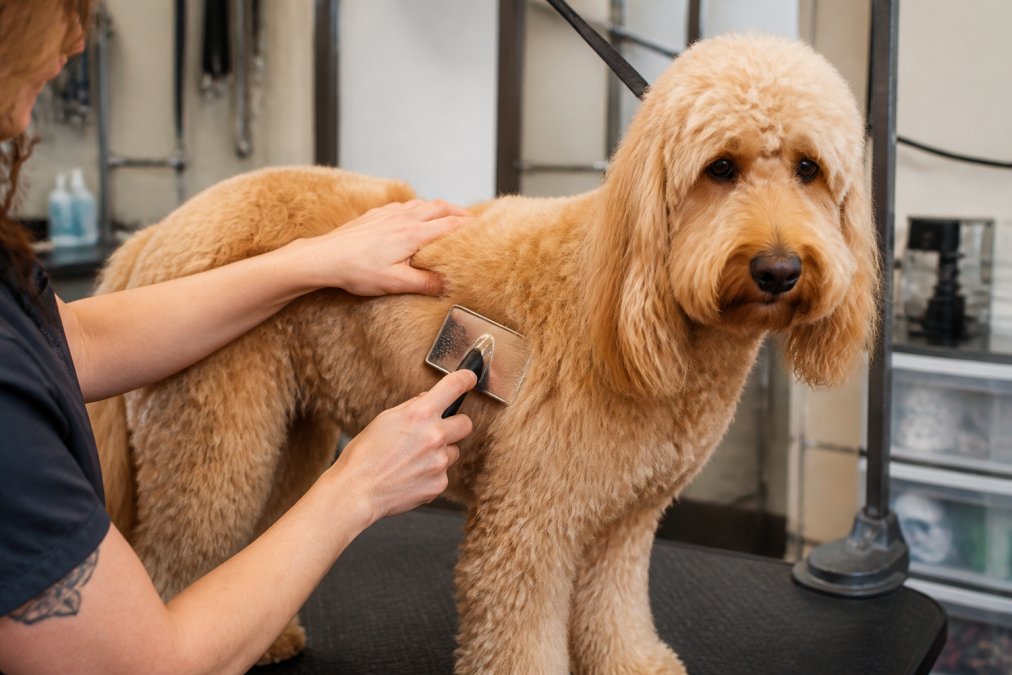
Line Brushing Technique for Daily Maintenance
Line brushing is the foundation of at-home doodle coat care. Instead of brushing the surface layer, you brush in sections from the skin outward, working through the entire coat systematically.
Here's how to line brush your doodle:
- Start at the dog's rear end and work toward the head
- Divide the coat into small sections (about the size of your hand)
- Hold the section up and brush from the skin outward with a slicker brush or metal comb
- Work through one section completely before moving to the next
- Pay special attention to high-friction areas: armpits, behind ears, the groin, and between back legs
Pre-Grooming Checklist for Owners
Before bringing your doodle to a professional grooming appointment, prepare the coat:
- Brush thoroughly with a slicker brush and metal comb
- Check for mats in high-friction areas (armpits, behind ears, groin)
- Bathe your dog 1-2 days before the appointment if possible
- Trim any severely matted sections yourself if mats are minor
- Bring any special requests or photos of desired styles
- Note any skin sensitivities or behavioral concerns
- Arrive on time and mention if your dog has anxiety
Professional Dog Grooming Tools for Doodles: What Groomers Use
Professional groomers use specific tools designed for doodle coats because standard dog grooming tools often don't work well on fleece or wool textures.
What Happens During a Full-Service Doodle Grooming Session
A full-service grooming appointment for a doodle typically follows this sequence: assessment, bathing, drying, brushing, styling, and finishing touches.
Sanitary Trims and Hygiene Clipping
A sanitary trim removes hair around the rear end and genital area for hygiene and cleanliness. This prevents matting in sensitive areas and reduces the risk of infection. A sanitary trim is typically included in full-service grooming.
Handling Behavioral Challenges and Anxious Pets
Some doodles experience anxiety during grooming due to loud dryers, unfamiliar environments, or previous negative experiences. Professional groomers trained in handling anxious dogs use several strategies: shorter appointment times, breaks during grooming, calming environments, and sometimes splitting the appointment across two days.
At-Home Maintenance vs. Professional Services: Finding Your Balance
The most successful doodle owners combine professional grooming with consistent at-home care. Neither replaces the other.
| Maintenance Task | Frequency | Time Required | Who Does It |
|---|---|---|---|
| Line brushing | Weekly | 20-30 minutes | Owner |
| Bathing | Every 4-6 weeks | 30-45 minutes | Owner or groomer |
| Professional grooming | Every 6-8 weeks | 2-4 hours | Professional groomer |
| Nail trimming | Every 4-6 weeks | 10-15 minutes | Owner or groomer |
| Ear cleaning | Weekly or as needed | 5-10 minutes | Owner |
Frequently Asked Questions
How often should a doodle breed be professionally groomed?
Most doodles need professional grooming every 6 to 8 weeks, depending on coat type and lifestyle. Dogs with fleece or wool coats that mat easily may need more frequent visits. Between appointments, regular line brushing (2 to 3 times per week) prevents tangles and matting. Talk to your groomer about the right schedule for your individual dog's coat texture and maintenance needs.
What is included in a full-service doodle grooming appointment?
A complete grooming session typically includes a bath, nail trimming, ear cleaning, and sanitary trims. The exact services depend on your dog's coat condition and your preferences. Contact us to discuss what's included in your appointment.
How can I prevent matting between professional grooming visits?
Line brushing is the most effective prevention method. Using a slicker brush and metal comb, brush small sections of coat down to the skin 2 to 3 times weekly. Pay special attention to areas behind ears, armpits, and the rear end where mats form fastest. Avoid bathing without brushing first, as water can tighten existing tangles. A pre-grooming checklist helps you stay on track.
Why do doodle breeds require specialized grooming techniques?
Doodles inherit coat traits from both poodle and other breed parents, creating unique textures that mat easily and need specific care. Their fleece and wool coats don't shed like traditional fur, so they need regular professional dematting to stay healthy. Professional groomers trained in doodle coat care understand these challenges and use proper tools and techniques to keep your dog comfortable and mat-free.