 ultimate-guide
Is Professional De-Shedding Worth It for Allergies?
Table of Contents
- Understanding Pet Allergens: Dander vs. Fur
- How Professional De-Shedding Reduces Pet Allergens
- Benefits of Professional Pet Grooming for Allergy Sufferers
- How Often Should a Dog Be De-Shedded for Allergy Control
- Professional De-Shedding vs. At-Home Brushing
- How to Reduce Pet Dander in the Home
- Is Professional De-Shedding the Right Choice for You?
- Frequently Asked Questions
Last Updated: October 2, 2026
Understanding Pet Allergens: Dander vs. Fur
Pet allergens come from two distinct sources: dander (microscopic skin flakes shed constantly) and fur (visible hair). Understanding this distinction is essential when asking whether is professional de-shedding worth it for allergies and how it fundamentally changes your approach to allergy management.
The Allergen Source: Protein, Not Hair
Dander contains protein-based allergens (Can f 1 in dogs, Fel d 1 in cats) that trigger reactions in sensitive individuals. Fur is simply a carrier that transports dander throughout your home. Most allergy sufferers mistakenly assume removing visible hair solves the problem, when dander persists and circulates even after aggressive brushing.
A single dog sheds billions of dander particles daily. These microscopic flakes remain airborne for hours, settling on furniture, bedding, and clothing. Loose fur accelerates dispersal by carrying trapped dander into the air in concentrated bursts when your dog shakes, scratches, or moves.
Why De-Shedding Targets Fur, Not Dander Directly
Professional de-shedding cannot eliminate dander production, but it removes loose fur carrying the highest concentration of dander before it naturally sheds. By extracting loose undercoat material where dander accumulates most densely, you reduce dander-laden particles entering your home's air.
Your pet produces dander continuously. Without de-shedding, loose fur traps dander and carries it around your home for days or weeks. Professional de-shedding intercepts that loose, dander-laden fur before it becomes airborne, reducing allergen load by 50-80% depending on coat type and grooming frequency.
Seasonal Cycles and Coat Type Variations
Dogs shed heavily twice yearly (spring and fall) during seasonal coat transitions, when dander production increases dramatically. This is why allergy sufferers notice symptom spikes during these periods.
Coat type matters significantly. Double-coated breeds (Golden Retrievers, German Shepherds, Huskies) trap enormous quantities of loose fur and dander. Single-coated breeds (Poodles, Bichons) shed less and produce lower allergen loads. Understanding your pet's coat type helps predict allergen reduction from professional de-shedding.
How Professional De-Shedding Reduces Pet Allergens
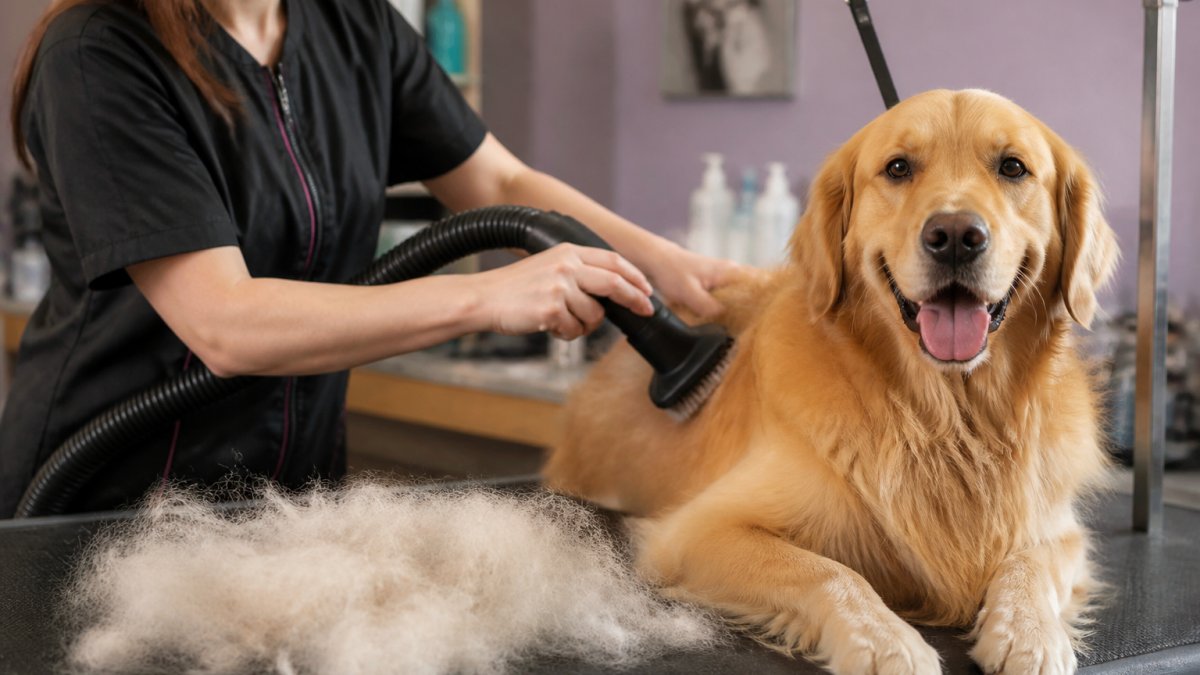
Professional de-shedding removes loose fur and trapped dander before they shed naturally. Groomers use specialized tools that penetrate the undercoat, extracting matted fur that would otherwise end up on furniture and in the air you breathe.
Home brushing removes surface fur only. Professional grooming reaches deeper into the coat where dense accumulation of loose hair and dander lives, removing substantially more material than weekly home brushing.
The process works in stages: therapeutic bath to loosen the undercoat, then high-velocity dryers and specialized tools to extract loosened fur. This two-step approach removes far more dander-laden fur than dry brushing, reducing allergen particles that would otherwise circulate for weeks.
Benefits of Professional Pet Grooming for Allergy Sufferers
Regular professional grooming creates measurable improvements in indoor air quality. Pet owners often report breathing more easily within two weeks of starting a consistent grooming routine.
Professional grooming maintains skin barrier health. A well-maintained coat sheds less dander because the skin remains healthy. Groomers identify early signs of skin conditions, parasites, or fungal infections that increase dander production, preventing allergen spikes.
Groomers notice matting, which traps moisture and encourages bacteria and fungi growth, increasing dander production. They identify parasites that trigger excessive scratching and shedding, directly impacting allergen levels.
At STEPH'S CUTE CRITTER CUTS & CORI'S CRITTER CREATIONS, our team understands that allergy management requires personalized attention to each pet's specific coat type and skin condition. We tailor our de-shedding approach based on your pet's breed, age, and current shedding cycle to maximize allergen reduction for your household.
How Often Should a Dog Be De-Shedded for Allergy Control
Frequency depends on breed, coat type, and allergy severity. Double-coated breeds benefit from de-shedding every 6-8 weeks during non-shedding seasons and every 4-6 weeks during peak shedding. Single-coated breeds require less frequent grooming but still benefit from quarterly sessions.
Most dogs shed heavily twice yearly (spring and fall). During these periods, weekly or bi-weekly de-shedding provides dramatic allergen reduction. Outside these windows, monthly grooming maintains benefits.
Consistency matters more than frequency. Regular grooming on a predictable schedule produces fewer allergen spikes. Starting with monthly de-shedding and adjusting based on your allergy response helps find the optimal frequency.
Senior dogs develop skin changes that increase dander production, often requiring more frequent de-shedding. Puppies benefit from early grooming exposure to establish a healthy coat foundation.
Professional De-Shedding vs. At-Home Brushing
At-home brushing removes surface fur only. Professional de-shedding tools penetrate deep into the undercoat where the majority of loose, dander-laden fur resides.
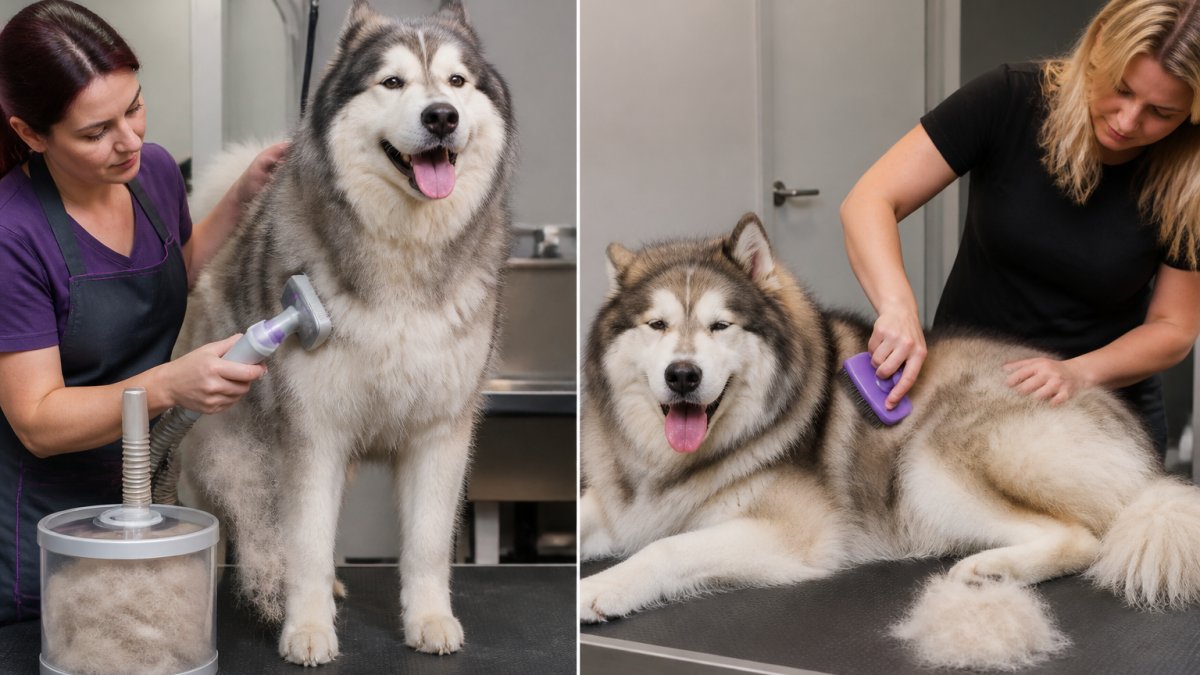
Professional-grade tools, high-velocity dryers, and therapeutic baths process large volumes of loose coat material efficiently. A professional session removes more loose fur than most people remove in a month of daily home brushing.
Professional therapeutic baths use warm water and conditioning products that loosen the undercoat. The combination of proper bathing, drying technique, and specialized tools creates a synergy home grooming cannot match.
Home brushing between appointments prevents matting and removes some loose fur. The ideal approach combines professional de-shedding every 4-8 weeks with consistent home brushing 2-3 times weekly.
How to Reduce Pet Dander in the Home
Professional de-shedding is most effective combined with a layered home environment strategy. A comprehensive approach treats professional grooming as one pillar of a multi-system strategy.
HEPA Filtration: The Synergy with Professional De-Shedding
HEPA filtration captures dander particles that escape grooming intervals, removing particles as small as 0.3 microns. Professional de-shedding reduces dander entering your home, while HEPA filtration removes dander that circulates.
Bedroom placement provides highest impact since you spend 6-8 hours there nightly. A second unit in your primary living area captures allergens during waking hours. Whole-home HVAC systems provide comprehensive coverage if budget allows.
HEPA filters require regular maintenance to remain effective.
Vacuuming Strategy and Equipment
Vacuuming frequency directly impacts dander accumulation on floors and furniture. Standard vacuums with basic filters recirculate fine dander particles back into the air, actually worsening symptoms for some allergy sufferers. HEPA-filter vacuums capture dander more effectively, but only if the filter is clean and the bag or canister is emptied frequently.
Fabric Management and Designated Pet-Free Zones
Pet hair and dander cling to fabric surfaces. Washing pet bedding weekly in hot water (at least 130°F) removes accumulated dander. Machine-washable furniture covers on couches and chairs provide a barrier between your pet and upholstered surfaces; wash these covers every 2 weeks during shedding seasons. Throw blankets on furniture where your pet rests can be washed weekly and replaced easily.
Humidity and Air Quality Control
Dander particles spread more easily in dry air (below 30% humidity) because they become lighter and remain airborne longer. Maintaining indoor humidity between 40-50% reduces airborne allergen circulation and makes dander particles heavier, causing them to settle faster. A humidifier during winter months (when heating systems dry indoor air) supports your overall allergen management strategy.
Home Bathing Between Professional Appointments
Bathing your pet at home between professional grooming sessions removes surface dander but requires proper technique to avoid damaging skin health. Use lukewarm water (not hot, which irritates skin) and pet-specific shampoos formulated to maintain the skin barrier's pH balance. Human shampoos and harsh products can disrupt skin health and actually increase dander production by irritating the skin.
The Layered Approach: Why One Strategy Isn't Enough
No single strategy eliminates pet allergens completely. Professional de-shedding alone reduces allergens but doesn't eliminate them. HEPA filtration alone captures airborne dander but doesn't prevent it from being produced. Vacuuming removes settled allergens but doesn't stop new dander from circulating. The most effective allergy management combines all these strategies: professional de-shedding every 4-8 weeks, HEPA filtration running continuously, weekly vacuuming with a HEPA-filter vacuum, weekly fabric washing, humidity control between 40-50%, and a pet-free bedroom.
Is Professional De-Shedding the Right Choice for You?
The question of whether is professional de-shedding worth it for allergies has a clear answer if you have moderate to severe pet allergies and want to keep your pet at home. The allergen reduction is measurable and improves quality of life for allergy sufferers. If your symptoms are mild or you're willing to manage them with medication and environmental controls alone, home brushing combined with HEPA filtration may suffice.
Frequently Asked Questions
What is the difference between pet dander and shedding fur when it comes to allergies?
Pet dander consists of microscopic skin flakes and sebum (skin oil) that carry protein-based allergens, these float in the air and settle on surfaces, triggering allergic reactions. Shed fur itself is less allergenic, but loose undercoat traps dander and allergens. Professional de-shedding removes the undercoat where dander accumulates, significantly reducing airborne allergens. This distinction matters because vacuuming alone removes visible fur but misses the dander embedded in the coat.
How often should a dog be de-shedded to manage allergies effectively?
Dogs with heavy shedding cycles benefit from professional de-shedding every 4-8 weeks, depending on breed and coat type. Dogs with double coats (like Golden Retrievers or German Shepherds) shed year-round but intensify during seasonal transitions, requiring more frequent treatments during spring and fall. Discuss your dog's specific shedding pattern with a professional groomer to establish a schedule that keeps allergen levels manageable in your home.
Can professional de-shedding treatments work alongside HEPA air filtration?
Yes, professional de-shedding and HEPA filtration work synergistically. De-shedding removes dander at the source by eliminating loose undercoat, while HEPA filters capture airborne allergens already in circulation. Using both together creates a multi-layered allergy management strategy: fewer allergens are shed into the air, and whatever does circulate gets trapped by the filter. This combination is more effective than either method alone.
Is professional de-shedding worth the cost for someone with pet allergies?
For allergy sufferers, professional de-shedding can be a worthwhile investment because it removes the undercoat where most dander accumulates, something at-home brushing rarely achieves. The cost-benefit depends on your allergy severity and how much you value pet ownership. If allergies have forced you to consider rehoming your pet, professional de-shedding may be significantly cheaper than that outcome. Discuss your specific situation with a groomer to determine the right frequency and treatment plan.
Professional de-shedding offers real allergen reduction when you have a pet you want to keep but allergies that make coexistence difficult. The combination of regular professional grooming with home management strategies creates an environment where both you and your pet can thrive. Book a consultation with STEPH'S CUTE CRITTER CUTS & CORI'S CRITTER CREATIONS to discuss a de-shedding schedule that fits your pet's coat type and your household's allergy management needs.