 how-to
Maintain Dog Coat Health in Summer Heat: A Step-by-Step Guide
Table of Contents
- Why Summer Heat Affects Your Dog's Coat and Skin
- How Often to Brush a Dog in Summer
- How Often to Bathe a Dog in Summer
- Should You Shave a Dog for Summer: Safe Trimming Guidelines
- Preventing Dog Skin Irritation in Summer
- Your Step-by-Step Summer Grooming Routine to Maintain Dog Coat Health
- Signs Your Dog Needs Professional Help
- Frequently Asked Questions
Last Updated: October 5, 2026
Why Summer Heat Affects Your Dog's Coat and Skin
Heat stress impacts your dog's skin and coat in ways many owners don't realize.
Dogs with thick coats face extra challenges in summer. Their undercoat traps heat close to the skin.
The sun also damages your dog's skin directly. UV rays can cause sunburn, especially on areas with thin fur or light-colored coats.
Understanding how heat affects your dog is the first step to maintaining dog coat health in summer.
How Often to Brush a Dog in Summer
Brush your dog at least 3-4 times per week during summer months.
Regular brushing removes dead undercoat and loose fur. This lets air reach the skin and helps your dog stay cooler.
Start with a slicker brush to remove surface mats. Follow with an undercoat rake to pull out loose fur from the undercoat.
Work gently and check for any skin irritation as you brush.
Signs you're brushing the right amount:
- Loose fur comes out easily
- No new mats form between sessions
- Your dog's skin looks healthy and pink
How Often to Bathe a Dog in Summer
Frequent bathing removes dirt buildup that can trap heat and cause skin problems.
Use a gentle, dog-specific shampoo. Human shampoo or harsh products strip natural oils that protect the skin.
Always rinse thoroughly. Shampoo residue left on the skin causes itching and irritation. Rinse until the water runs completely clear.
Dry your dog completely after bathing. Damp fur traps moisture against the skin, creating conditions for fungal growth and hot spots.
Should You Shave a Dog for Summer: Safe Trimming Guidelines
Shaving a dog's coat completely is usually a mistake. The coat protects skin from sun damage and helps regulate temperature. Removing it entirely leaves your dog vulnerable to sunburn and heat stress.
A better approach is a careful trim that maintains some coat length. Here's how to trim safely:
Step 1: Assess your dog's coat type
- Double-coated breeds (Labs, Golden Retrievers, German Shepherds) should never be fully shaved
- Single-coated breeds (Poodles, Doodles) can handle shorter trims
- Mixed breeds depend on their specific coat structure
Step 2: Trim strategically, not completely
- Leave at least 1 inch of coat for sun protection
- Trim the belly and underarms to improve air circulation
- Thin the coat rather than remove it entirely
Step 3: Avoid shaving the top coat
- The top coat protects against UV rays
- Shaving it exposes the sensitive undercoat to sun damage
- The coat may grow back unevenly or damaged
Step 4: Let a professional handle it
- Professional groomers understand coat types and safe trimming
- They have proper tools and techniques
- They can spot skin problems while grooming
A professional trim keeps your dog cool while protecting the coat. We know how to maintain dog coat health in summer without the risks of full shaving.
Preventing Dog Skin Irritation in Summer
Hot spots, sunburn, and contact irritation all spike in summer, but the risk profile changes with coat type.
Coat-type-specific prevention
- Double-coated breeds (Huskies, Shepherds, Retrievers): Focus on undercoat removal. A trapped, damp undercoat is the single biggest driver of hot spots in these dogs. Brush 3-4 times weekly with an undercoat rake, and after any swim, towel-dry and then use a low-heat dryer until the undercoat is fully dry to the skin.
- Short-coated breeds (Boxers, Beagles, Dachshunds): The coat offers little UV buffer. Sunburn on the belly, muzzle, and ear tips is common in light-pigmented dogs. Provide shade during peak sun hours and ask your veterinarian about pet-safe sun protection for exposed areas.
- Curly and wool-coated breeds (Poodles, Doodles, Bichons): Curls hold moisture and debris. Keep the coat trimmed to a manageable length, dry thoroughly after bathing or swimming, and check skin folds and armpits for trapped dampness.
- Long-haired single coats (Yorkies, Shih Tzus): Keep the coat clean and combed to the skin. Debris and moisture trapped against the skin under a long coat is a frequent cause of irritation.
Daily and weekly habits that actually reduce risk
- Dry completely after every bath or swim, damp fur against warm skin is the setup for hot spots.
- Check the belly, armpits, groin, and skin folds every few days; these areas stay damp longest.
- Avoid tight collars, harnesses, or clothing that rubs and traps heat.
- Keep fresh water available at all times; dehydration worsens skin barrier function.
Early warning signs to check for
- Red, moist, or oozing patches
- Excessive scratching, licking, or chewing at one spot
- Scabs, crusting, or a foul odor
- Patchy hair loss
When to call a veterinarian instead of treating at home
Ordinary seasonal shedding is gradual and even. Persistent itching, spreading redness, open sores, discharge, or a dog that seems painful when touched are not grooming problems, they are medical ones. A veterinarian can distinguish between a hot spot, a bacterial or fungal infection, a parasite infestation, and an allergy, each of which needs a different treatment.
If you are unsure whether a skin change is grooming-related or medical, a professional groomer can flag what they see during a session and refer you to a veterinarian when something looks beyond routine care.
Your Step-by-Step Summer Grooming Routine to Maintain Dog Coat Health
Most summer grooming guides give one routine for every dog. That is the biggest gap in the category. A Husky and a Poodle need different tools, different frequencies, and different drying methods.
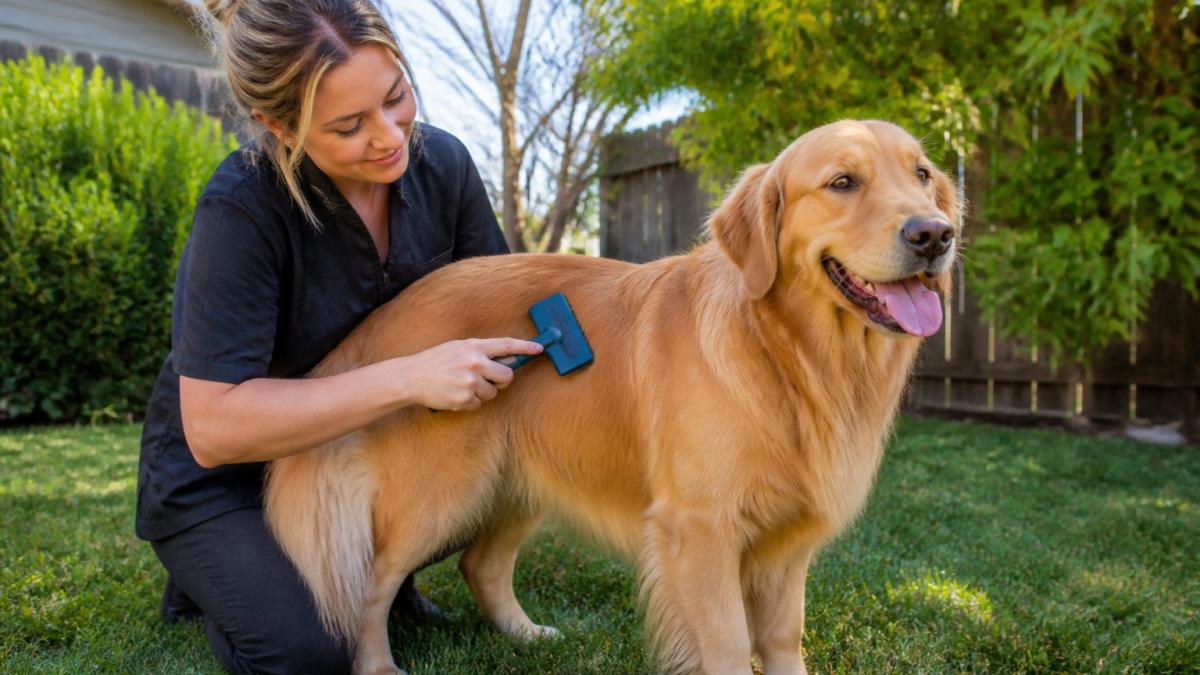
The base routine (about 30 minutes)
Step 1: Brush before bathing (10 minutes)
- Start with a slicker brush to lift surface debris and small tangles.
- Follow with an undercoat rake on double-coated dogs to pull loose undercoat.
- Work in the direction of the coat, in small sections, and check the skin as you go.
- Never force a brush through a mat, work it out with your fingers or a mat splitter, or book a professional session.
Step 2: Bathe with lukewarm water (10 minutes)
- Wet the coat thoroughly to the skin. If the undercoat is not wet, the shampoo will not reach the skin.
- Use a dog-specific shampoo. Human shampoo strips the oils that protect the skin barrier.
- Lather gently with your fingers or a rubber curry; avoid scrubbing mats.
- Rinse until the water runs completely clear, residue is a common cause of post-bath itching.
Step 3: Dry completely (5 minutes, longer for double coats)
- Squeeze excess water out with your hands, then towel dry.
- Use a low-heat pet dryer on double-coated and curly-coated dogs until the coat is dry to the skin. Air-drying a dense undercoat can take hours and invites hot spots.
- Pay extra attention to the armpits, groin, belly, and skin folds.
Step 4: Trim only where it helps (varies)
- Trim the belly, sanitary area, and paw pads for hygiene and airflow.
- Leave at least 1 inch of coat on the body for sun protection.
- Do not shave double-coated breeds, the undercoat may not grow back correctly and the skin loses its UV buffer.
- For full trims on curly or long coats, book a professional groomer who can shape the coat without exposing the skin.
Step 5: Final brush and full-body check (5 minutes)
- Brush through the dried coat to confirm no damp spots or new tangles.
- Check ears, paws, and between the toes.
- Look for redness, bumps, or parasites.
Coat-type adjustments
- Double-coated (Huskies, Shepherds, Retrievers, Akitas): Brush 3-4 times weekly with an undercoat rake; bathe every 4-6 weeks; never shave. The undercoat is the cooling system, remove the loose undercoat, keep the top coat.
- Short-coated (Boxers, Beagles, Dachshunds, Pugs): Brush weekly with a rubber curry or bristle brush; bathe every 4-6 weeks or after heavy outdoor play. Watch for sunburn on light-pigmented areas.
- Curly/wool (Poodles, Doodles, Bichons): Comb to the skin every 2-3 days to prevent hidden mats; bathe every 3-4 weeks; dry thoroughly with a low-heat dryer. Curls that stay damp are a hot-spot risk.
- Long single coat (Yorkies, Shih Tzus, Maltese): Comb daily, bathe every 2-3 weeks, and keep the coat trimmed to a length you can maintain between sessions.
Weekly and monthly checklist
- Weekly: Brush per coat type; check skin for redness, bumps, or parasites; confirm fresh water and shade access.
- Every 2-4 weeks: Full comb-through to the skin; check ears, paws, and skin folds.
- Every 4-6 weeks: Bath and, if needed, a professional trim.
- Monthly: Weigh your dog and note any change in coat condition, shedding, or scratching, these are early signals worth mentioning to your veterinarian.
Repeat the base routine every 4-6 weeks, with brushing 3-4 times per week in between. Adjust frequency up for heavy shedders and down for short, low-maintenance coats. The goal is a coat that insulates, protects, and breathes, not one that is stripped bare.
Signs Your Dog Needs Professional Help
Some situations require a professional groomer or veterinarian. Knowing when to seek help prevents small problems from becoming serious.
Contact a groomer if:
- Your dog has severe matting you cannot remove
- You're unsure about safe trimming techniques
- Your dog has a thick double coat and needs expert thinning
- Your dog is anxious about grooming and needs gentle handling
Contact your veterinarian if:
- You see signs of hot spots or skin infection
- Your dog scratches excessively or seems in pain
- The skin has an unusual odor or discharge
- Your dog shows signs of heat exhaustion (excessive panting, drooling, weakness)
Professional groomers understand how to maintain dog coat health in summer safely. We work with anxious pets, senior dogs, and dogs with skin sensitivities.
Your dog's comfort matters. When you're unsure about grooming or notice any changes in skin or coat health, reaching out to professionals helps your dog stay healthy and happy all summer long.
Frequently Asked Questions
How often should I brush my dog in summer?
Brush your dog 3-5 times per week during summer to remove loose fur and reduce shedding. Dogs with double coats or longer hair need more frequent brushing, sometimes daily, to prevent matting and improve air circulation to the skin. Regular brushing also helps you spot early signs of skin irritation or hot spots before they become serious problems.
Should I shave my dog's coat for summer?
Avoid shaving your dog down to the skin. The undercoat and outer coat work together to regulate body temperature and protect skin from sun damage and heat stress. Instead, trim excess fur, especially on the belly and between paw pads, to improve air circulation. A professional groomer can safely remove loose undercoat without compromising your dog's natural temperature regulation and skin protection.
What are signs of dog skin irritation in summer?
Watch for redness, excessive scratching, hot spots, flaking, or a musty odor. Hot spots are painful, inflamed areas that develop quickly, often from moisture trapped in the coat or excessive licking. If you notice any of these signs, bathe your dog in cool (not cold) water, dry thoroughly, and contact your veterinarian if the irritation doesn't improve within a day or two.
Can a dog's coat actually keep them cool in summer?
Yes. A healthy, well-maintained coat with proper air circulation helps regulate body temperature and protects skin from sun exposure and heat stress. The undercoat acts as insulation, and the outer coat shields the skin. Removing too much coat removes this protection, making dogs more vulnerable to overheating and sunburn. Regular brushing and strategic trimming maintain these protective benefits without compromising cooling.
Summer heat challenges your dog's skin and coat, but consistent grooming makes a real difference. Brush regularly, bathe appropriately, trim safely, and watch for warning signs. When you need expert care, STEPH'S CUTE CRITTER CUTS & CORI'S CRITTER CREATIONS is here to help. Our team provides personalized grooming that keeps your dog cool, comfortable, and healthy. Book an appointment with us today to get your dog ready for summer.