 blog
blog
7 Signs of Skin Allergies in Dogs: What Pet Owners Should Know
Table of Contents
- Understanding Skin Allergies in Dogs
- Sign 1: Excessive Scratching and Itching
- Sign 2: Red, Inflamed Skin (Erythema)
- Sign 3: Hair Loss and Alopecia
- Sign 4: Paw Chewing and Licking
- Sign 5: Ear Infections and Otitis Externa
- Sign 6: Secondary Bacterial or Yeast Infections
- Sign 7: Skin Thickening and Hyperpigmentation
- When to See a Veterinarian
- Managing Skin Allergies at Home
- Frequently Asked Questions
Last Updated: September 20, 2026
7 Signs of Skin Allergies in Dogs: What Pet Owners Should Know
When your dog starts scratching more than usual, it's easy to dismiss as normal behavior. But excessive scratching, red patches, or hair loss can signal something more serious: skin allergies.
Signs of skin allergies in dogs range from obvious itching to subtle changes in skin texture and pigmentation. Some signs develop quickly. Others appear gradually over weeks or months. The key is knowing what to watch for and when to contact your veterinarian.
This guide covers the seven most common signs of skin allergies in dogs, what each one means, and what you should do next.
Understanding Skin Allergies in Dogs
Skin allergies in dogs happen when their immune system overreacts to a trigger. That trigger might be food, environmental allergens like pollen or dust mites, or even flea bites. The result is inflammation, itching, and visible skin changes.
Dogs can develop allergies at any age. Some breeds are more prone to them than others.
The challenge is that many skin problems look similar. Bacterial infections, yeast infections, and parasites can all cause itching and redness. That's why recognizing the specific pattern of signs matters. It helps your vet narrow down the cause faster.
Sign 1: Excessive Scratching and Itching
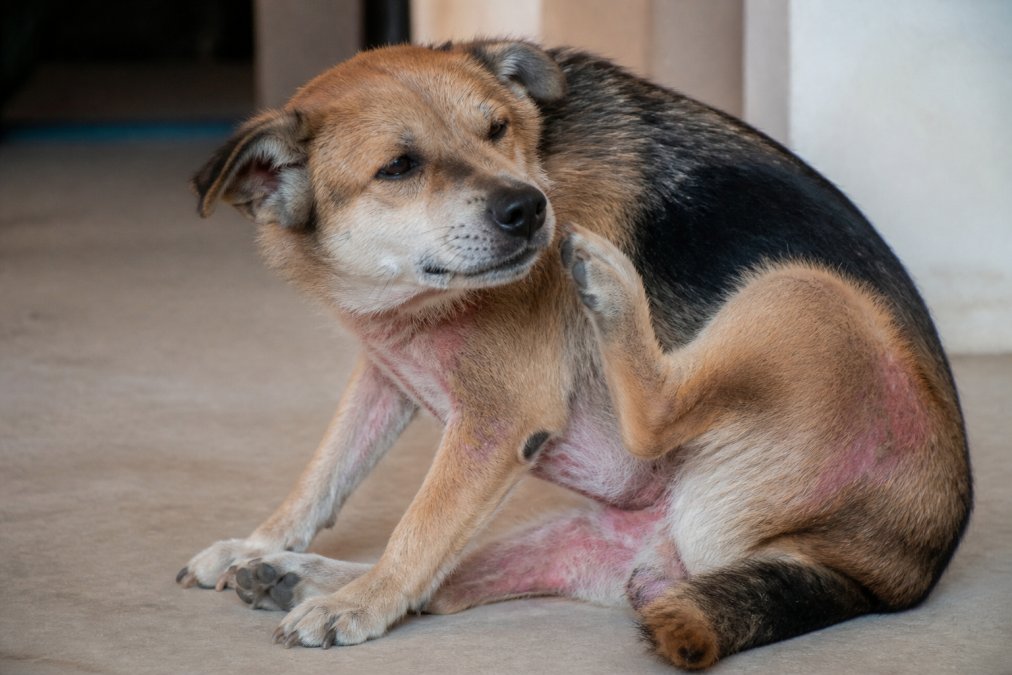
Excessive scratching is the most obvious sign of skin allergies in dogs. Your dog may scratch constantly, even in public or during walks. Some dogs scratch so much they lose sleep or seem unable to settle.
This intense itching is called pruritus in veterinary terms. It's not just annoying, it's uncomfortable and stressful for your dog. The scratching itself can damage the skin, creating openings for secondary bacterial infection.
Watch for scratching that:
- Happens multiple times per hour
- Disrupts normal activities like eating or playing
- Occurs even after recent baths
- Focuses on specific areas (paws, ears, face, belly)
If your dog scratches more in certain seasons, that's a clue. Seasonal itching often points to environmental allergens like pollen or mold spores.
Sign 2: Red, Inflamed Skin (Erythema)
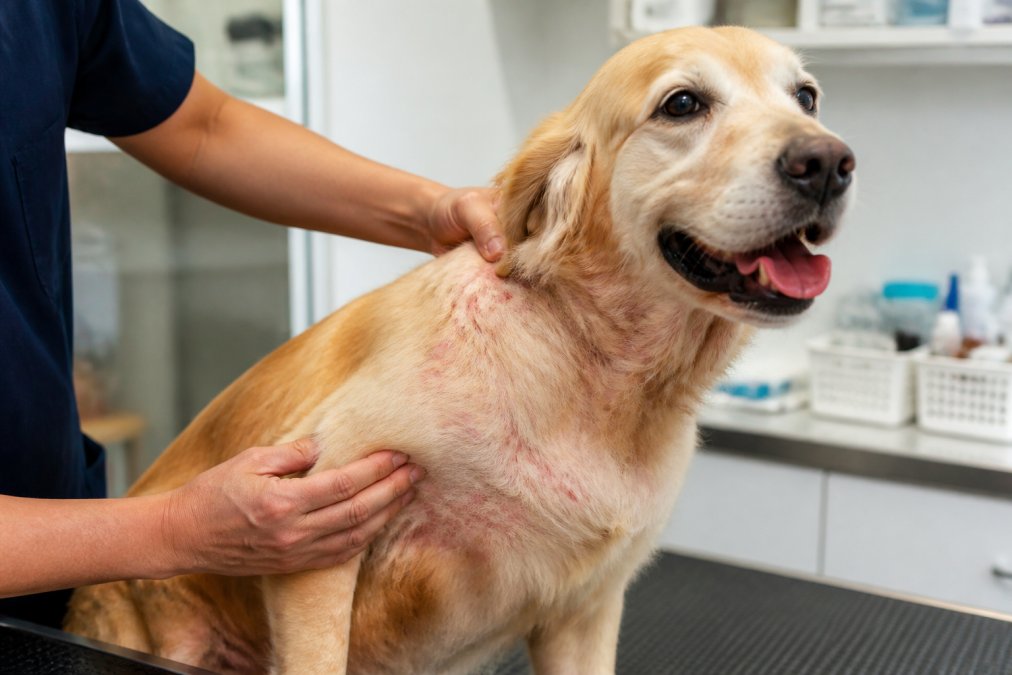
Red, inflamed skin, called erythema, is a direct sign that your dog's skin is reacting to an allergen. You'll see patches of pink or red skin, often on the paws, belly, ears, or face.
Erythema can appear suddenly or develop over time. Some dogs show just a few small red patches. Others have widespread redness across large areas of their body.
The redness happens because blood vessels in the skin dilate in response to the allergic reaction. This inflammation is your dog's immune system working overtime.
Look for:
- Pink or red patches on paws or between toes
- Redness around the ears or ear flaps
- Red spots on the belly or inner thighs
- Skin that feels warm to the touch
If you see erythema, don't wait. Red, inflamed skin can quickly develop into a secondary infection if your dog continues scratching.
Sign 3: Hair Loss and Alopecia
Hair loss, called alopecia, often follows excessive scratching. Your dog may have patches where fur is completely missing, or the coat may look thin and patchy overall.
Alopecia from allergies usually appears in areas your dog scratches most: the paws, legs, face, and ears. The hair doesn't fall out on its own, your dog's constant licking and scratching pulls it out.
Some dogs develop alopecia so severe that large sections of skin are exposed. This makes the skin even more vulnerable to infection and further irritation.
Signs of allergy-related hair loss:
- Bald patches that match scratching patterns
- Dull, brittle-looking coat
- Hair that pulls out easily when you pet your dog
- Visible skin underneath where fur is missing
Hair loss is a sign that the allergy has progressed. It means your dog has been scratching intensely for a while. This is the time to get professional help.
Sign 4: Paw Chewing and Licking
Dogs with allergies often focus their attention on their paws. You might notice your dog constantly licking, chewing, or biting at their feet. Some dogs do this so much their paws become raw and swollen.
Paw chewing is a classic sign of food allergies or environmental allergens. When your dog walks through grass or soil containing allergens, particles get trapped between the toes and in the paw pads. The result is intense itching that your dog tries to relieve by licking.
This behavior can create a vicious cycle. Constant licking creates moisture and warmth between the toes, perfect conditions for yeast and bacterial growth.
Watch for:
- Frequent licking of paws throughout the day
- Swollen or puffy paws
- Discoloration of the fur between toes (often reddish or brownish from licking)
- Limping or reluctance to walk
- Chewing at nails or paw pads until they bleed
Sign 5: Ear Infections and Otitis Externa
Ear infections, called otitis externa when they affect the outer ear, are extremely common in dogs with allergies. The warm, moist environment inside the ear is perfect for yeast and bacteria to grow, especially when allergies cause inflammation.
Signs of ear infection linked to allergies:
- Head shaking or tilting
- Scratching or pawing at the ears
- Redness or swelling inside the ear
- Waxy or crusty discharge in the ear canal
- Foul odor from the ears
- Sensitivity when you touch the ears
Sign 6: Secondary Bacterial or Yeast Infections
Secondary infections are where allergies become truly problematic. When your dog scratches and licks constantly, the skin barrier breaks down. Bacteria and yeast move in and multiply, creating an infection on top of the allergy.
Signs of secondary infection:
- Musty or yeasty odor on the skin or fur
- Greasy or oily-looking patches
- Pustules or pus-filled bumps
- Crusting or scabbing over red areas
- Increased itching (worse than the allergy alone)
- Thickened, discolored skin
Sign 7: Skin Thickening and Hyperpigmentation
Over time, chronic allergies cause permanent changes to the skin itself. The skin becomes thickened and leathery, a condition called lichenification. The skin also darkens, especially in areas that are scratched most. This darkening is called hyperpigmentation.
Signs of chronic allergic skin changes:
- Thick, leathery skin texture
- Dark brown or black discoloration
- Skin that looks wrinkled or folded
- Rough, scaly patches
- Skin that feels warmer than normal areas
| Sign | What It Looks Like | When to Act |
|---|---|---|
| Excessive scratching | Constant scratching multiple times per hour | Within 1-2 weeks |
| Red, inflamed skin | Pink or red patches on paws, ears, belly | Immediately |
| Hair loss | Bald patches matching scratch areas | Within 1 week |
| Paw chewing | Swollen paws, discolored fur between toes | Within 1 week |
| Ear infections | Head shaking, redness, foul odor | Immediately |
| Secondary infections | Musty smell, greasy patches, pustules | Immediately |
| Skin thickening | Leathery texture, dark discoloration | Schedule vet visit soon |
When to See a Veterinarian
Don't wait for multiple signs to appear. If you notice even one or two of these signs, contact your veterinarian. Early treatment prevents the allergy from worsening and stops secondary infections before they develop.
See your vet immediately if your dog shows:
- Severe itching that disrupts daily life
- Signs of infection (oozing, pustules, foul odor)
- Difficulty walking or limping
- Swollen face or difficulty breathing (rare but serious)
Managing Skin Allergies at Home
While your vet treats the allergy, you can support your dog's skin health at home. Regular bathing with appropriate products helps remove allergens and soothe inflamed skin. Frequent paw cleaning after walks removes environmental allergens before they irritate the skin.
Frequently Asked Questions
What are the most common causes of skin allergies in dogs?
Skin allergies in dogs stem from three main sources: environmental allergens like pollen, dust mites, and mold spores; food hypersensitivity to ingredients such as chicken, beef, or grains; and parasites like fleas, which cause flea allergy dermatitis. Environmental allergies are seasonal, while food allergies and flea allergies can occur year-round. Atopic dermatitis, a genetic predisposition to allergic reactions, affects many breeds and makes dogs more vulnerable to developing allergies.
How is dog skin allergy treatment different from treating other skin conditions?
Dog skin allergy treatment depends on the allergen source and severity. Veterinarians may recommend antihistamines, corticosteroids, or monoclonal antibody therapy to reduce inflammation and itching. For food allergies, an elimination trial with a hypoallergenic diet helps identify triggers. Environmental allergies may require immunotherapy or seasonal management. Topical therapy with medicated shampoos and antihistamines provides relief, while addressing secondary infections prevents complications. The right treatment plan targets the root cause, not just symptoms.
When should I take my dog to a veterinarian for skin allergy concerns?
Schedule a veterinary visit if your dog shows persistent scratching for more than a week, has visible skin lesions, red patches, or hair loss, or develops ear infections. Seek immediate care if you notice signs of secondary bacterial infection, excessive swelling, or if your dog appears in pain or distress. Early diagnosis prevents complications like lichenification (thickened skin) and chronic infections. A vet can perform intradermal skin testing or serum allergy testing to identify specific allergens and recommend targeted treatment.
What hypoallergenic dog grooming tips can help manage skin allergies at home?
Regular bathing removes allergens and soothes irritated skin. Gently dry the coat to prevent moisture-related yeast growth. Trim nails regularly to reduce damage from excessive scratching and paw chewing. Brush your dog's coat several times weekly to remove dander and detect early signs of infection. Keep bedding clean and consider using air filters to reduce environmental allergens indoors.