 blog
blog
Florida Pet Grooming: Mobile Costs & Frequency Guide
Table of Contents
- Pet Grooming Frequency Guide for Florida Pets
- How to Prepare Your Pet for a Grooming Session
- Your Pet Grooming Appointment Checklist
- Grooming for Senior and Anxious Pets
- Breed-Specific Grooming Requirements and Coat Care
- Frequently Asked Questions
Last Updated: September 16, 2026
Pet Grooming Frequency Guide for Florida Pets
Most pets need professional grooming every four to eight weeks, but the right schedule depends on coat type, lifestyle, and home care between visits. In a hot, humid climate, that range shifts toward the shorter end for most pets.
Why the Climate Changes the Schedule
High humidity keeps moisture trapped against the skin, a friendly environment for yeast and bacteria, which is why ear infections, hot spots, and skin fold irritation show up more often in humid months. A coat that stays damp after a swim, bath, or rainy walk holds that moisture for hours.
Heat adds a second pressure. A dense undercoat traps warm air against the body, and since dogs cool mainly through panting and paw pads, a thick, unmanaged coat makes every summer walk harder.
Sun exposure matters too. Pets with thin or light-colored coats, or exposed skin on the nose, ears, and belly, can burn, and repeated sun damage raises long-term skin risk as it does in people.
Seasonal Grooming Calendar
A simple seasonal rhythm keeps most pets ahead of the climate.
- Spring: Coat blow-out season for double-coated breeds.
How Coat Type and Lifestyle Change the Schedule
Coat type is the biggest variable in any pet grooming frequency guide.
Between-Visit Care at Home
- Dry ears thoroughly after swimming or bathing, and use a vet-recommended ear cleaner if your groomer flags buildup
- Rinse paws after walks on hot pavement or treated lawns
- Check skin folds on breeds like Bulldogs, Pugs, and Shar-Peis weekly and keep them dry
- Use a conditioner in humid months to reduce static and make brushing easier
How to Prepare Your Pet for a Grooming Session
Preparation starts the day before, not in the parking lot.
Your Pet Grooming Appointment Checklist
A pet grooming appointment checklist is most useful when it doubles as a safety screen.
Before You Book
- Confirm the provider can show current certification or completed training in pet grooming
- Ask whether the groomer is insured and whether the business carries liability coverage
- Ask how they handle a pet that becomes stressed, nicks a nail quick, or has a medical event mid-groom
- Confirm whether vaccinations are required and which ones
The Day Before
- Brush out loose fur and work through any light tangles with a slicker brush or metal comb
- Run your hands over the coat and skin and note mats, burrs, ticks, hot spots, lumps, or new bumps
- Bathe only if the groomer asked you to, a wet, matted coat tightens and is harder to work with
- Confirm the appointment window and any add-ons you requested
The Morning Of
- Walk your dog so they arrive calm and have emptied out
- Skip the full meal within an hour of the appointment; a light snack is fine
- Leave the cat carrier out overnight so it is not a signal for a chase
- Gather a leash or carrier, a towel for the ride home, and proof of vaccinations if required
At Drop-Off or Handoff
- Share handling notes: sensitive paws, ears they dislike being touched, past reactions to dryers or clippers
- Disclose health conditions, medications, recent surgeries, and any contagious condition
- State your add-ons clearly: nail trimming, ear cleaning, de-shedding, anal gland expression, breed styling
- Give a phone number where you can be reached during the appointment
After Pickup
- Check the coat, nails, ears, and paw pads before you leave the lot
- Ask what the groomer noticed, skin issues, ear debris, weight change, dental odor
- Book the next appointment before you drive away
Red Flags That Should Stop a Booking
A few signals are dealbreakers rather than preferences.
- No visible safety protocol. A professional should be able to describe how they restrain a pet, what they do if a pet overheats under a dryer, and how they sanitize tools between animals.
- Shared tools with no sanitation step. Clipper blades, scissors, and nail trimmers should be cleaned and disinfected between pets.
| Stage | What to Do | When |
|---|---|---|
| Before booking | Verify certification, insurance, and safety protocol | 1 week ahead |
| Day before | Brush coat, check for mats, ticks, and skin changes | 24 hours ahead |
| Morning of | Walk, light meal, gather supplies and records | 1-2 hours before |
| At handoff | Share handling notes, health info, and add-ons | On arrival |
| After pickup | Inspect the groom, note findings, book next visit | Before leaving |
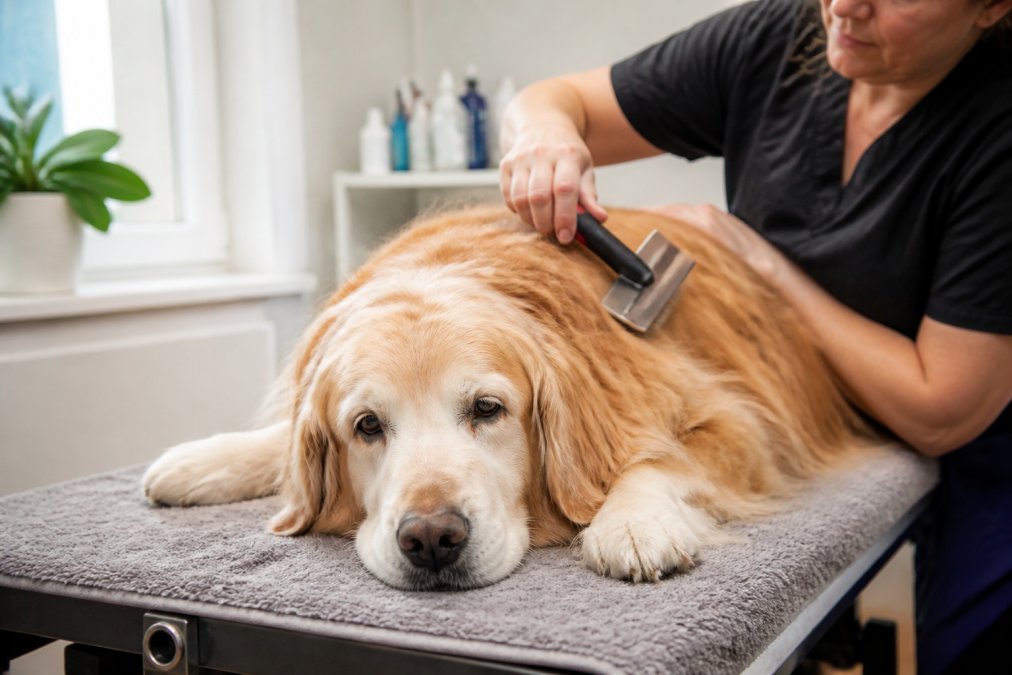
Grooming for Senior and Anxious Pets
Senior and anxious pets need a slower, gentler approach than a standard appointment allows.
Breed-Specific Grooming Requirements and Coat Care
Breed-specific grooming requirements vary widely, and treating every coat the same is the fastest way to a bad result.
Frequently Asked Questions
How often should my pet receive professional grooming?
Most dogs need professional grooming every four to eight weeks, depending on coat type and how quickly it mats. Short-coated breeds can stretch to eight or twelve weeks, while doodles and poodles often need a visit every four to six weeks. Cats generally need less frequent appointments, but senior cats and long-haired breeds benefit from regular sessions. Use a pet grooming frequency guide based on your individual pet's coat, lifestyle, and how much time you spend brushing at home.
What should I put on my pet grooming appointment checklist?
A solid pet grooming appointment checklist includes your pet's vaccination records, a list of any skin conditions or allergies, current medications, and notes on behavior quirks like paw sensitivity. Bring a photo of the haircut style you want, and mention any matting before the appointment so the groomer can plan extra time. Confirm the drop-off and pick-up window. This prep keeps the visit smooth and helps the groomer work safely.
How do I prepare an anxious or senior pet for grooming?
Start by scheduling a quieter time of day and arriving a few minutes early so your pet can settle. Take a short walk before the appointment to burn off nervous energy, and skip a heavy meal right before the visit. Tell the groomer about your pet's triggers, such as loud dryers or nail trimming, so they can adjust handling techniques. For senior pets with arthritis or sensitive skin, ask for a gentle grooming approach with extra breaks. A professional groomer will let your pet set the pace.
Frequently Asked Questions
How much does mobile pet grooming cost compared to a salon visit?
Mobile pet grooming usually costs more than a salon visit because the groomer brings the equipment, water, and power to your driveway. The price depends on your pet's size, coat condition, and the services you choose, such as de-shedding or breed-specific styling. A full-service salon often costs less per visit, but you handle the drive and the wait. Ask each provider for a quote based on your pet's breed and coat, since pricing varies widely by provider and service package.
How often should my pet receive professional grooming?
Most dogs need professional grooming every four to eight weeks, depending on coat type and how quickly it mats. Short-coated breeds can stretch to eight or twelve weeks, while doodles and poodles often need a visit every four to six weeks. Cats generally need less frequent appointments, but senior cats and long-haired breeds benefit from regular sessions. Use a pet grooming frequency guide based on your individual pet's coat, lifestyle, and how much time you spend brushing at home.
What should I put on my pet grooming appointment checklist?
A solid pet grooming appointment checklist includes your pet's vaccination records, a list of any skin conditions or allergies, current medications, and notes on behavior quirks like paw sensitivity. Bring a photo of the haircut style you want, and mention any matting before the appointment so the groomer can plan extra time. Confirm the drop-off and pick-up window, and ask whether the groomer uses a mobile salon or a fixed location. This prep keeps the visit smooth and helps the groomer work safely.
How do I prepare an anxious or senior pet for grooming?
Start by scheduling a quieter time of day and arriving a few minutes early so your pet can settle. Take a short walk before the appointment to burn off nervous energy, and skip a heavy meal right before the visit. Tell the groomer about your pet's triggers, such as loud dryers or nail trimming, so they can adjust handling techniques. For senior pets with arthritis or sensitive skin, ask for a gentle grooming approach with extra breaks. A professional groomer will let your pet set the pace.