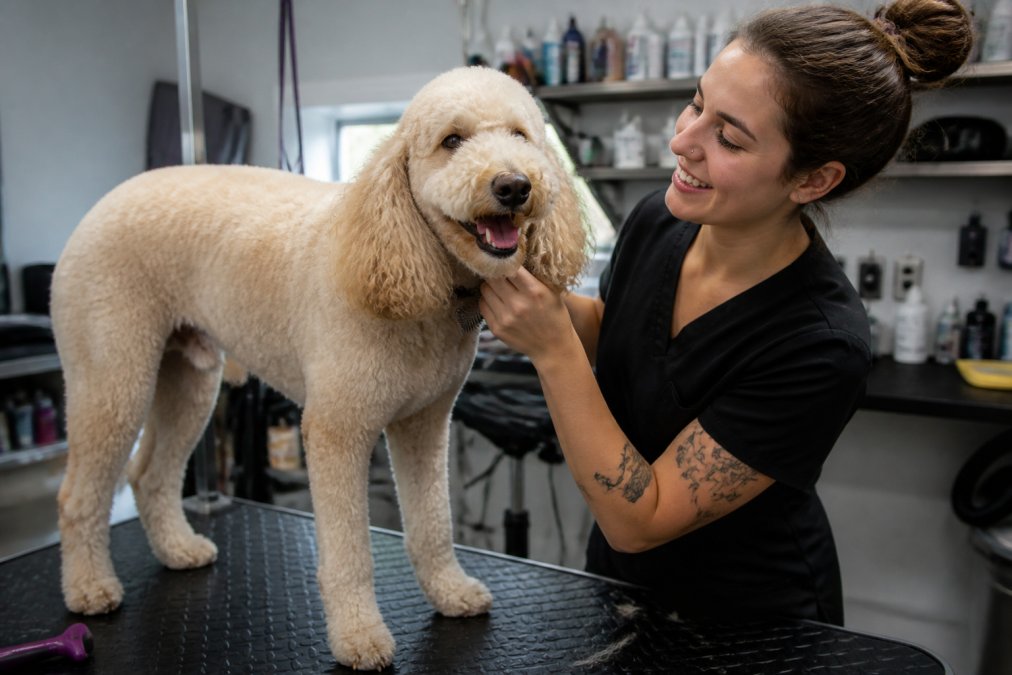
 blog
blog
Personalized Attention for Every Pet: Poodles & Doodles
Table of Contents
- Why Poodles and Doodles Need Personalized Attention
- Best Grooming Styles for Poodles 2026
- Doodle Coat Maintenance Tips for Long-Term Health
- Professional Grooming Frequency for Poodles
- Creating a Stress-Free Grooming Experience
- The Consultation Process: Tailored Care From Day One
- Coat Health and Hygiene Standards
- Frequently Asked Questions
Last Updated: September 21, 2026
Why Poodles and Doodles Need Personalized Attention
Poodles and doodles aren't like other dogs, and they require personalized attention poodles doodles to thrive. Their coats demand a completely different grooming approach than standard breeds, and their temperaments often require a gentler hand during the grooming process. At STEPH'S CUTE CRITTER CUTS & CORI'S CRITTER CREATIONS, we've found that one-size-fits-all grooming doesn't work for these breeds, they need personalized attention for every pet to thrive.
The reason is straightforward: curly and wavy coats mat differently than straight coats. A poodle's coat can hide matting beneath the surface, and doodles inherit unpredictable coat types from their mixed heritage. What works for a Labrador fails spectacularly for a Goldendoodle. Beyond coat structure, many poodles and doodles come from anxious backgrounds or have never experienced grooming before. They need someone who understands their specific needs and takes time to build trust.
Personalized attention for every pet means assessing each dog individually, their coat condition, temperament, age, and health concerns, before the first clipper touches fur. It means adjusting technique mid-groom if a dog becomes stressed. It means knowing that a senior poodle needs different handling than a energetic puppy. This approach prevents matting, reduces anxiety, and delivers results that generic grooming chains simply cannot match.
Best Grooming Styles for Poodles 2026
The best grooming styles for poodles in 2026 balance breed standards with the individual dog's lifestyle and coat health. Modern poodle styling has moved beyond rigid show cuts into practical, customized options that work for real life.
Classic Poodle Cuts and Modern Variations
The continental cut remains the most recognizable poodle style, with shaved hindquarters and pompoms at the joints and tail. However, many owners now prefer the English saddle, which maintains more body coverage while keeping the aesthetic clean and professional. For pet owners seeking lower-maintenance options, the puppy cut, an even length across the entire body, offers simplicity without sacrificing the breed's elegant appearance.
Modern variations have emerged that honor poodle heritage while fitting contemporary lifestyles. The teddy bear cut, while not a traditional show style, has become popular for pet poodles because it maintains a soft, rounded appearance and requires consistent grooming every 4-6 weeks. The lamb cut offers another low-maintenance alternative, with slightly longer hair that creates a fluffy silhouette.
The key decision point is grooming frequency commitment. Shorter styles require more frequent trims. Longer, blended styles extend time between appointments but demand rigorous home maintenance to prevent matting. At STEPH'S CUTE CRITTER CUTS & CORI'S CRITTER CREATIONS, we discuss these trade-offs during consultation so owners choose a style they can actually maintain.
Hand-Scissoring vs. Clipper Work
Hand-scissoring and clipper work produce distinctly different results, and understanding the difference matters for long-term coat health. Hand-scissoring creates softer, more textured finishes and allows for precise blending between lengths. Clippers deliver crisp, clean lines and work faster, making them ideal for anxious dogs who struggle with long grooming sessions.
The best poodle grooming combines both techniques. Clippers handle the body efficiently, while hand-scissors refine the head, ears, and transitions between different lengths. This hybrid approach delivers professional results while keeping grooming time reasonable, critical for dogs with anxiety or mobility concerns.
Many owners don't realize that clipper blade size dramatically affects the final look and how quickly the coat regrows. A #30 blade creates a very short, clean cut that exposes skin. A #10 blade leaves more length and texture. Hand-scissoring allows the groomer to customize length within millimeters, which matters when you're trying to maintain a specific style between appointments.
Doodle Coat Maintenance Tips for Long-Term Health
Doodles inherit unpredictable coats from their mixed heritage, making consistent maintenance essential. A Labradoodle might inherit the poodle's curl, the Labrador's density, or something in between. Goldendoodles present similar variation. This unpredictability means doodle owners must commit to regular grooming and home care, there's no shortcut.
Understanding Curly and Wavy Coat Types
Curly doodle coats resemble poodles and require the most intensive maintenance. These coats mat easily because the curl structure traps dead hair and debris. Wavy coats sit between curly and straight, offering slightly easier maintenance but still prone to matting in high-friction areas. Straight coats, while rarer, appear in some doodles and require different grooming approaches entirely.
The grooming frequency depends directly on coat type. Curly doodles need professional grooming every 6-8 weeks. Wavy coats can stretch to 8-10 weeks. Straight coats might go 10-12 weeks, though this varies by individual dog. Between professional appointments, owners must brush thoroughly 2-3 times weekly to prevent matting.
Many doodle owners underestimate how quickly matting develops. A mat that takes 10 minutes to brush out at week 4 becomes impossible to detangle by week 8. Once matting reaches the skin level, the only solution is shaving, which defeats the purpose of choosing a poodle mix for their aesthetic appeal.
Preventing Matting and Deshedding
Matting prevention starts with understanding where mats form. Doodles mat most heavily behind the ears, under the armpits, along the belly, and around the rear end, anywhere friction and moisture concentrate. Regular brushing in these specific areas prevents most matting problems.
Deshedding during grooming removes loose undercoat that would otherwise mat and shed throughout your home.
Professional Grooming Frequency for Poodles
Professional grooming frequency for poodles depends on the chosen style and the dog's individual coat growth rate. Show poodles require grooming every 4-6 weeks to maintain their distinctive appearance. Pet poodles in shorter styles benefit from grooming every 6-8 weeks.
Creating a Stress-Free Grooming Experience
A stress-free grooming experience determines whether a dog becomes anxious about future appointments or remains calm and cooperative. The difference between a groomer who rushes and one who takes time to build trust is dramatic.
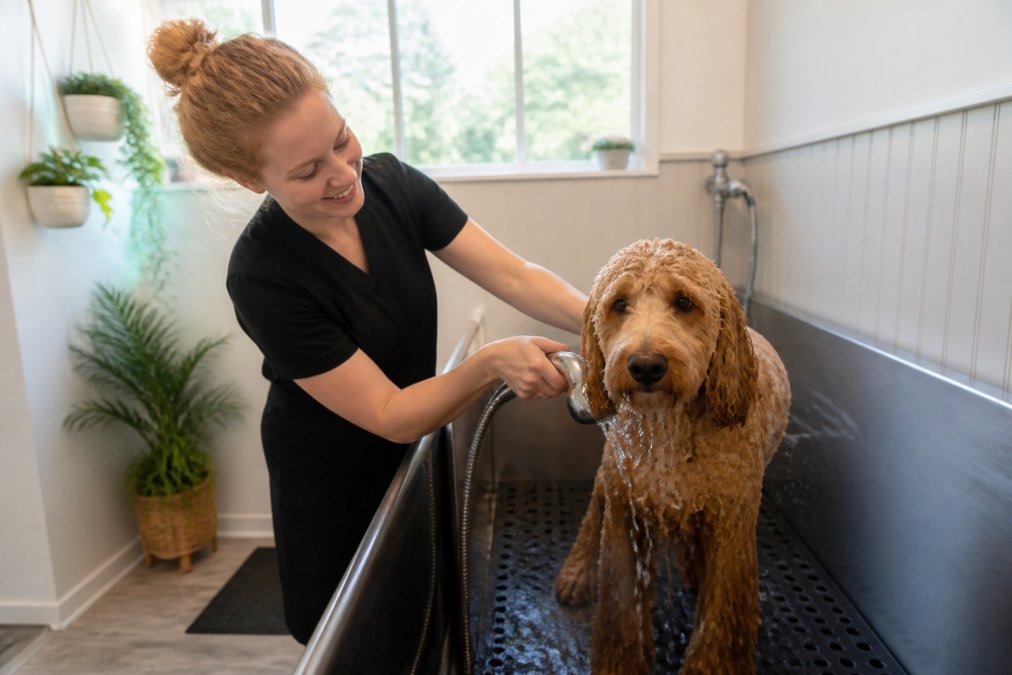
Behavioral Assessment and Anxiety Handling
Before grooming begins, a skilled groomer assesses each dog's temperament and anxiety level. Some dogs arrive already stressed from the car ride. Others have never been groomed and don't know what to expect. A few have had negative experiences with previous groomers and carry that trauma forward.
Safety Protocols for Every Pet
Safety protocols protect dogs during the grooming process. These include proper restraint that prevents falls or escapes, water temperature monitoring to prevent burns, and careful handling around sensitive areas like eyes and ears. A groomer must understand breed-specific health concerns, for example, poodles are prone to ear infections, so careful drying of ear canals after bathing is essential.
The Consultation Process: Tailored Care From Day One
The consultation process is where personalized attention poodles doodles actually begins. This is the conversation where the groomer learns about the dog's history, lifestyle, coat condition, and the owner's expectations. A thorough consultation prevents misalignment, the owner expecting a show cut while the groomer plans a pet-friendly style, for example.
Coat Health and Hygiene Standards
Coat health and hygiene standards matter for both appearance and the dog's wellbeing. A healthy poodle or doodle coat is soft, free from matting, and clean. The skin beneath should be pink or lightly pigmented, never red or inflamed. A dog with a healthy coat has better temperature regulation, less risk of skin infections, and a more comfortable grooming experience.
| Grooming Style | Frequency | Best For | Home Maintenance |
|---|---|---|---|
| Continental Cut | Every 4-6 weeks | Show poodles, owners wanting classic look | High, requires weekly brushing |
| Puppy Cut | Every 6-8 weeks | Pet owners, lower-maintenance preference | Medium, brushing 2x weekly |
| Teddy Bear Cut | Every 4-6 weeks | Doodles, owners wanting soft appearance | High, frequent brushing needed |
| English Saddle | Every 6-8 weeks | Poodles wanting coverage with style | High, weekly maintenance |
| Lamb Cut | Every 8-10 weeks | Low-maintenance preference | Medium, 2x weekly brushing |
Frequently Asked Questions
Why do poodles and doodles require specialized grooming attention?
Poodles and doodles have unique coat structures, curly, dense, and prone to matting, that demand expertise beyond standard grooming. Their coats don't shed like other breeds, meaning dead hair gets trapped and causes painful tangles. Specialized groomers understand breed-specific coat types, know how to detangle without damage, and can assess each pet's individual needs. Personalized attention ensures your pet stays comfortable, healthy, and properly maintained between appointments.
How often should my poodle or doodle visit a professional groomer?
Most poodles and doodles need professional grooming every 6-8 weeks to prevent matting and maintain coat health. Puppies benefit from early, frequent visits to build positive associations with grooming. Senior pets may need gentler handling and more frequent appointments if their skin or joints are sensitive. A groomer who knows your pet can recommend the ideal frequency based on coat texture, activity level, and health status, this is part of personalized care that generic facilities can't provide.
How can I tell if a groomer is actually experienced with anxious or senior pets?
Ask about their behavioral assessment process, experienced groomers evaluate each pet's temperament before starting work. They should explain how they handle nervous pets, what calming techniques they use, and whether they offer shorter sessions or breaks for seniors. Request before-and-after photos of pets similar to yours, especially anxious or older animals. A groomer offering personalized attention will spend time in a consultation understanding your pet's specific needs and health concerns rather than rushing through a standard routine.
What's the difference between personalized grooming and standard chain groomer services?
Personalized grooming means your pet gets individual attention from a groomer who learns their temperament, coat needs, and health considerations over time. You'll have a consultation to discuss your goals, not just drop-off and pick-up. Specialized groomers use hand-scissoring and breed-specific techniques tailored to your poodle or doodle's coat type. They prioritize a calm atmosphere and take time with anxious or elderly pets. This customized approach costs more than high-volume facilities because it delivers better results, reduced stress for your pet, and professional care that actually prevents health issues like matting and skin problems.