 blog
Dog Grooming in DeLand: Professional Care for Your Pet
Table of Contents
- What Professional Dog Grooming Services Include
- How to Choose a Dog Groomer That's Right for Your Pet
- Dog Grooming for Matted Fur: What to Expect
- Preparing Your Dog for a Grooming Appointment
- Why Professional Grooming Matters for Your Dog's Health
- Finding Quality Dog Grooming in Your Area
- Frequently Asked Questions
Last Updated: October 15, 2026
What Professional Dog Grooming Services Include
Professional dog grooming is far more than a quick bath, it's a comprehensive care routine that keeps your pet looking and feeling their best. At Steph's Cute Critter Cuts & Cori's Critter Creations, we tailor our approach to your pet's breed, coat type, and temperament.
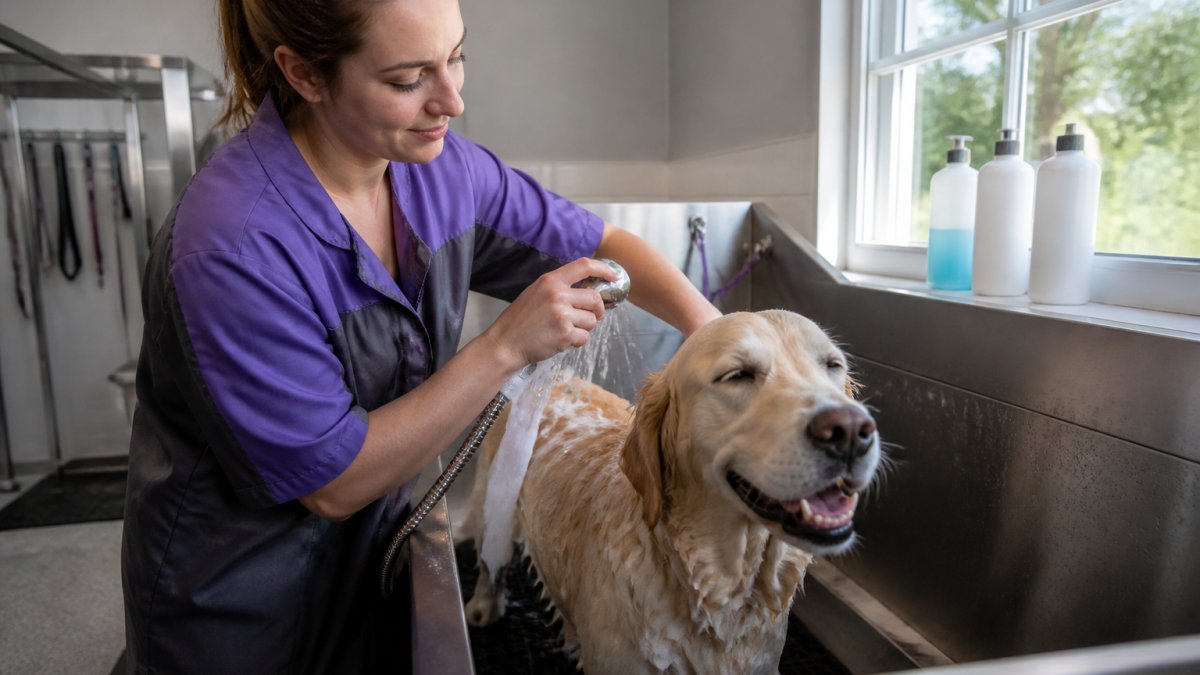
Full grooming typically includes bathing with specialized shampoo, thorough drying, and a complete haircut or breed-standard trim, plus nail trimming, ear cleaning, and brushing to remove loose fur and prevent matting.
Full grooming and baths
A full groom starts with a bath using products suited to your dog's skin and coat, followed by a thorough rinse and professional drying.
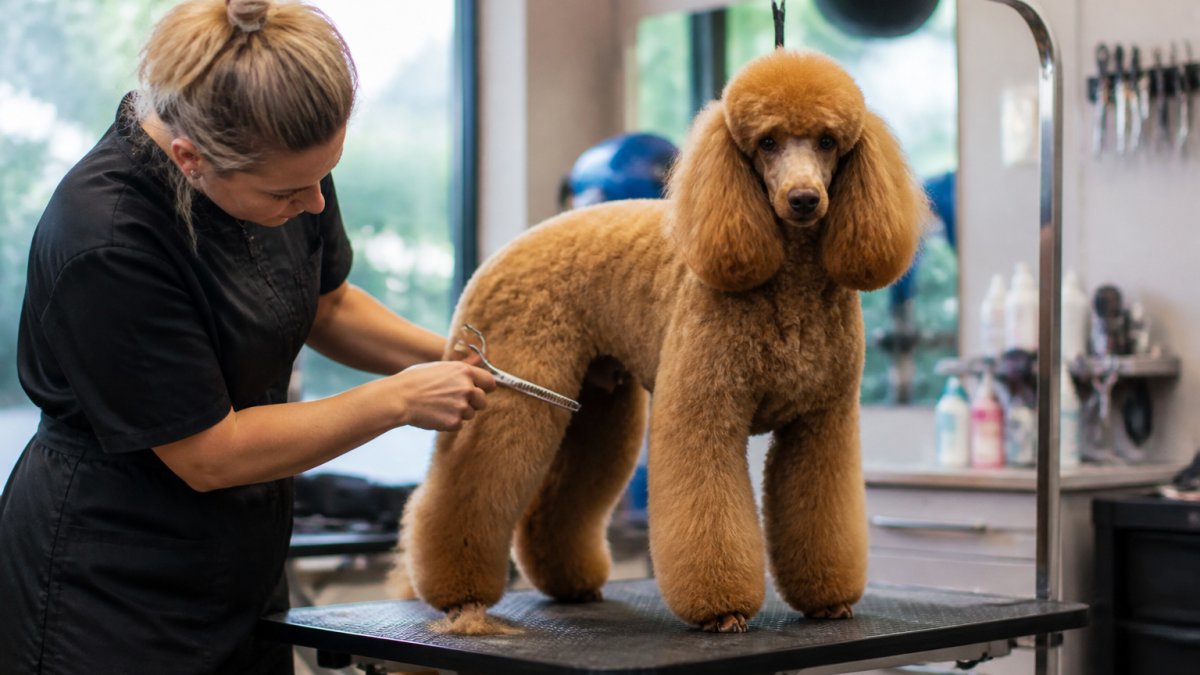
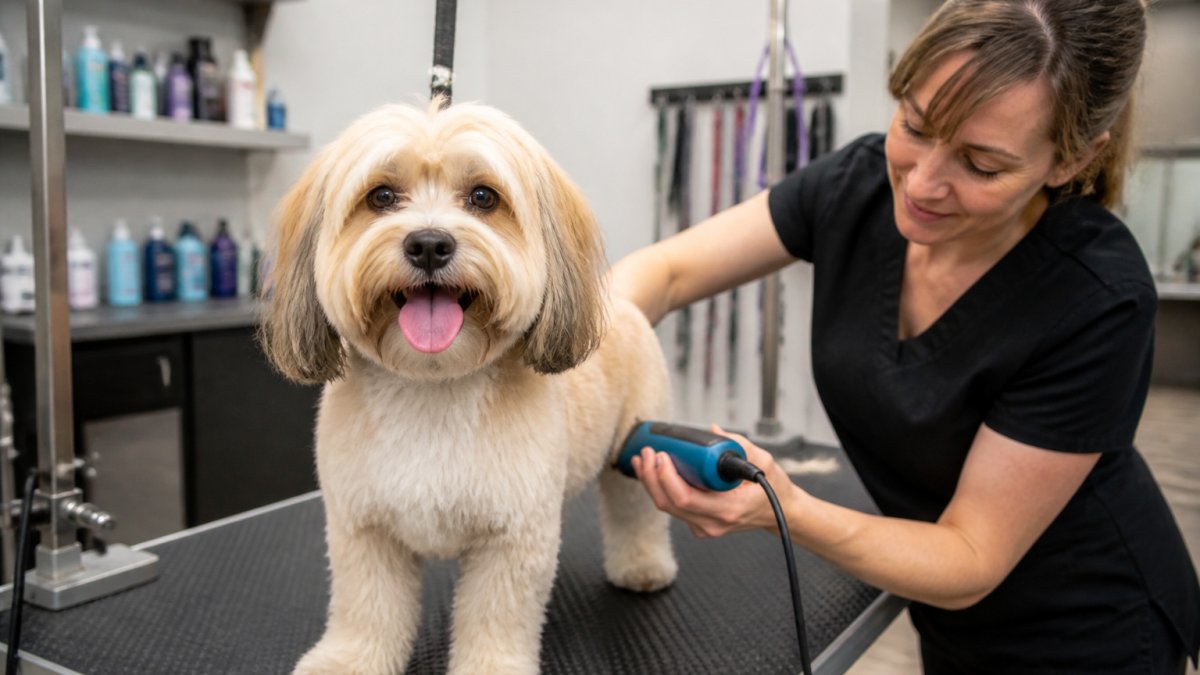
After drying comes the haircut or trim, breed-standard or custom, based on your preferences and coat texture.
Ear cleaning is included in most full grooms: groomers gently clean the ear canal to prevent infections and remove buildup.
Specialized services for different coat types
Not all coats are equal, a Poodle's curls need different techniques than a Labrador's short double coat, and professional groomers adjust accordingly.
Double-coated dogs like Golden Retrievers and German Shepherds benefit from de-shedding services that remove the undercoat and cut shedding at home.
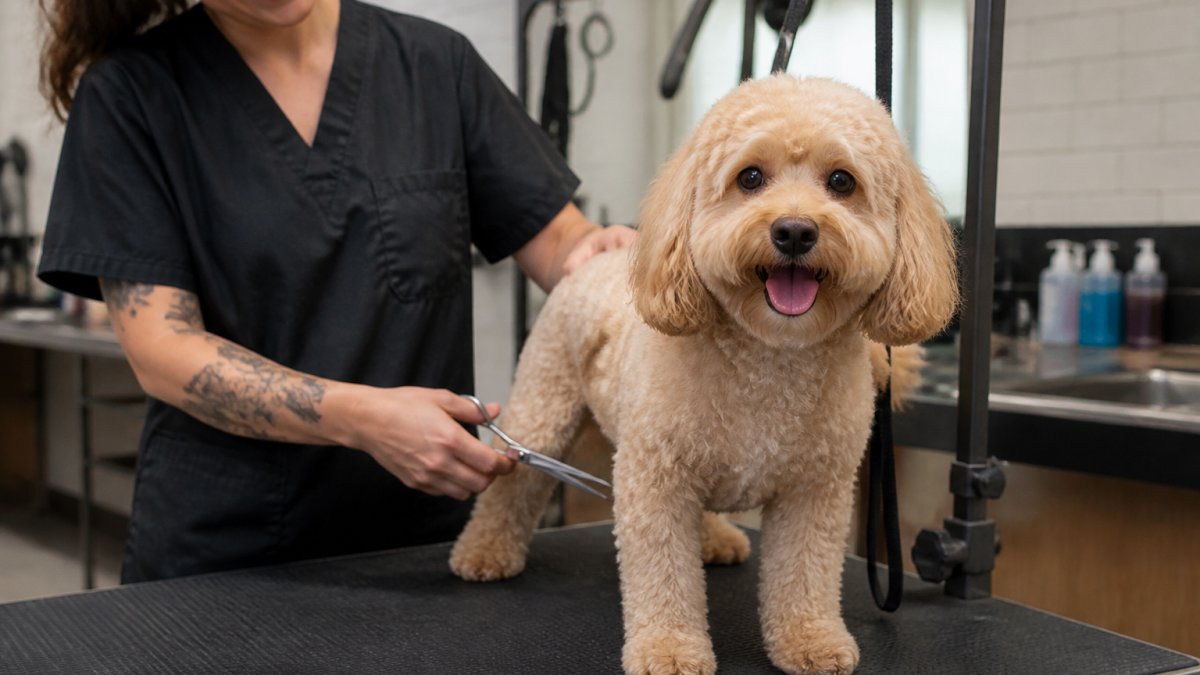
Doodles and other curly-coated dogs need frequent brushing and regular trims to prevent matting.
How to Choose a Dog Groomer That's Right for Your Pet
What separates a good fit from a bad one comes down to five things you can verify before booking: handling style, coat expertise, safety and health policy, scheduling logistics, and communication about results. Use the criteria below to compare any shop, including ours.
1. Handling style: one-on-one vs. high-volume
Ask directly: "How many dogs are groomed at the same time as mine?" A shop running one dog per groomer start to finish can pause when a dog stresses, spot skin issues mid-appointment, and adjust technique.
Follow-up questions worth asking:
- Do you use restraints, and if so, which ones and when?
- What happens if my dog panics mid-groom, do you stop, take a break, or call me?
- Do you ever use sedation?
2. Coat and breed expertise
"Do you groom my breed?" is too vague. Better: "How many [breed] do you groom monthly, and what's your standard trim for that coat?" A groomer who works with your breed regularly knows the breed-standard pattern, common problem areas (ear canals on floppy-eared breeds, sanitary areas on double coats, matting behind the ears on Doodles), and realistic timelines.
If your dog has a coat challenge, heavy matting, a seasonally blowing double coat, or tight tangles, describe it before booking and ask what's realistic in one session. A groomer promising to fully demat severe mats in one visit is overpromising.
3. Safety and health policy
Ask:
- Vaccination requirements: Most shops require current rabies and distemper/parvo vaccinations. Some also require bordetella. Confirm what proof they accept.
- Sick-dog policy: What happens if your dog has kennel cough, a skin infection, or diarrhea? A good shop reschedules rather than exposing other dogs.
- Senior and special-needs dogs: Do they adjust handling for arthritic, blind, deaf, or post-surgery dogs? Do they use non-slip mats and shorter sessions?
- Emergency protocol: Who is the vet on call if something goes wrong, and how do they reach you?
4. Scheduling, lead time, and cancellation terms
Availability varies widely, some shops book two to four weeks out for weekends but fit weekdays within days; others run waitlists. Ask:
- Typical lead time for a first appointment vs. a recurring client
- Whether they offer standing appointments (every 4, 6, or 8 weeks, depending on coat)
- Cancellation and no-show policy, most shops charge a fee if you cancel within 24-48 hours
- Estimated appointment length: a bath-and-tidy on a short-coated dog might run 1-2 hours; a full groom on a matted Doodle can run 3-4 hours or more
5. Communication and transparency
A groomer who communicates well will:
- Confirm the trim style before starting (breed standard, puppy cut, summer shave, or custom)
- Tell you upfront if the coat condition changes the plan or the time
- Note any skin, ear, or paw issues they observed
- Give you a realistic at-home brushing schedule for your coat type
Quick comparison checklist
| Factor | What to verify |
|---|---|
| Handling | One-on-one vs. kenneled between stations; restraint policy; no sedation |
| Coat expertise | Monthly volume for your breed; realistic outcome for matted or double coats |
| Safety policy | Vaccination proof required; sick-dog reschedule policy; emergency vet contact |
| Senior/special-needs care | Non-slip surfaces, shorter sessions, gentle handling |
| Scheduling | Lead time, standing appointments, cancellation window, appointment duration |
| Communication | Pre-groom consultation, post-groom notes, at-home brushing guidance |
Run any shop you're considering, including this one, through the same six rows. The answers, not the marketing copy, tell you whether it's the right fit for your dog.
Dog Grooming for Matted Fur: What to Expect
Matted fur is one of the most common issues groomers see, and one of the most preventable.
Matted-fur grooming takes longer than a standard groom and may need multiple visits, a groomer might demat first, then do a full groom once the coat is mat-free.
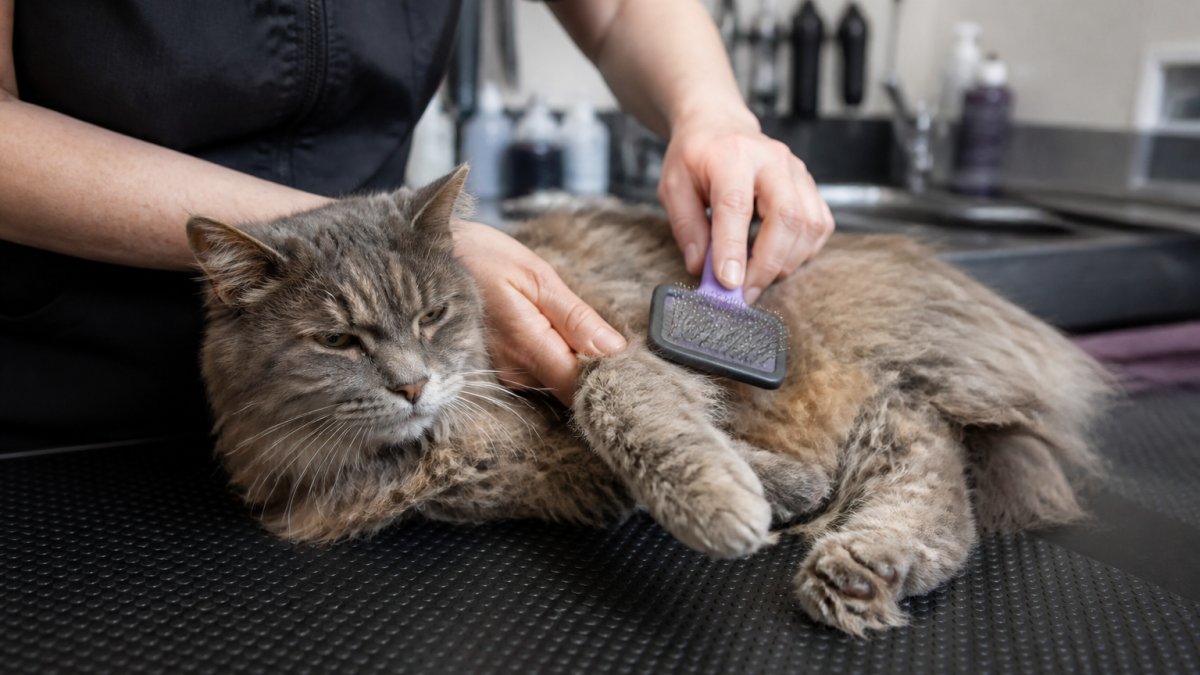
Prevention is far easier than removal. Regular brushing, especially for curly and double-coated breeds, stops mats forming.
Preparing Your Dog for a Grooming Appointment
How you prepare your dog before the appointment shapes how they experience grooming. A calm, well-prepared dog is easier to work with and more likely to have a positive visit.
Pre-appointment steps to reduce anxiety
Get your dog used to handling: brush regularly, touch their paws, ears, and face during calm moments, and if they're anxious about water, try a short, positive bath at home beforehand.
Exercise your dog before the appointment, a dog who's had a good walk or playtime arrives calmer, and a tired dog is a cooperative dog.
If your dog has never been groomed, consider a brief first visit.
What to communicate with your groomer
Before your appointment, share your dog's needs and temperament: health issues, skin sensitivities, behavioral quirks, how they respond to stress, and what has calmed them in the past.
Be specific about what you want, breed-standard trim, puppy cut, or something creative, and bring photos if you have a style in mind. Clear communication means better results.
Ask when your dog will be ready for pickup, some groomers work first-come, first-served, others schedule specific slots. Knowing the time helps you plan your day.
Why Professional Grooming Matters for Your Dog's Health
Many owners see grooming as cosmetic, but it's a critical part of your dog's health care.
Nail trimming prevents painful overgrowth and joint problems, long nails change how your dog walks, stressing joints and spine over time.
Ear cleaning prevents infections, especially in floppy-eared or hairy-eared dogs.
A well-groomed coat is healthier: bathing removes allergens, parasites, and irritants, while brushing improves circulation and prevents the matting that traps moisture and causes infections.
Finding Quality Dog Grooming in Your Area
Local dog grooming search results mix shop pages and directory listings, making side-by-side comparison hard. Most listings show a phone number, services, and maybe a starting price, but not the details that determine whether a shop is right for your dog. Here's how to compare on the criteria that matter.
What drives the final quote
Grooming prices are quoted per dog, not per service, because the variables stack. Expect to be asked:
- Size and weight, a 10-lb. Yorkie and a 90-lb. Goldendoodle are not the same appointment
- Coat type and condition, short single coat, double coat, curly coat, or heavily matted
- Requested service, bath-and-tidy, full groom with haircut, de-shedding treatment, or breed-standard trim
- Temperament, anxious, senior, or special-needs dogs often need extra time
Ask for a range, and what would push you to the top of it.
Questions to ask before you book
Use the same list for every shop so the comparison is apples-to-apples:
- What's the typical price range for my dog's size and coat?
- How long will the appointment take, and will I get a call when my dog is ready?
- What vaccinations do you require?
- What's your cancellation policy?
- Do you groom senior dogs, anxious dogs, or dogs with medical conditions?
- How far out are you booked for a first appointment?
- Do you offer standing appointments?
Write the answers down. Patterns emerge fast, one shop may be cheaper but booked three weeks out; another may cost more but can see your dog this week and specializes in anxious dogs.
Reading reviews without getting fooled
Read reviews for patterns, not scores. Look for:
- Repeated praise for a specific trait, "great with my anxious rescue," "caught an ear infection early," "always finishes on time"
- Repeated complaints about the same thing, lateness, inconsistent cuts, poor communication about pickup time
- Recency, a shop that was excellent two years ago may have changed ownership or staff
- Response style, how the owner replies to a negative review tells you how they'll handle a problem with your dog
A shop with a few critical reviews answered thoughtfully usually beats one with only five-star reviews and no engagement.
Visiting before you commit
If your dog is anxious, senior, or has never been professionally groomed, ask about a brief meet-and-greet, many shops let your dog walk through, meet the groomer, and get a treat. It's the best way to reduce first-visit stress.
When you visit, check:
- Smell, clean, not like wet dog or harsh chemicals
- Sound level, calm, not a wall of barking and dryer noise
- Surfaces, non-slip mats on tables and in tubs
- Separation, are dogs kenneled next to each other, or given space?
Booking expectations
Most shops book first-time appointments one to three weeks out, with weekends filling fastest; recurring clients usually book the next visit at pickup. If your dog needs a specific groomer, ask to request the same person each time, consistency matters, because the groomer learns your dog's tolerances and preferred trim.
Look up state licensing and consumer complaint records for pet groomers
Frequently Asked Questions
What should I ask a dog groomer before booking an appointment?
Ask about their experience with your dog's breed, coat type, and any health concerns. Inquire how they handle anxious or senior pets, what services are included in a full groom, and their cancellation policy. Ask if they're willing to discuss your dog's specific needs during a consultation before the appointment. This helps you understand whether they're the right fit for your pet's personality and requirements.
How do I prepare my dog for a grooming appointment?
Start by familiarizing your dog with the grooming environment if possible. Brush their coat before arrival to remove tangles, and take them for exercise beforehand so they're calm. Let your groomer know about any behavioral concerns, health issues, or sensitivities. Arrive a few minutes early so your dog can acclimate, and keep your own demeanor relaxed, dogs pick up on owner anxiety. Communicate any specific styling preferences or areas of sensitivity clearly.
How often should I have my dog professionally groomed?
Grooming frequency depends on your dog's breed, coat type, and lifestyle. Dogs with longer coats typically need grooming every 4-8 weeks to prevent matting and maintain coat health. Short-haired breeds may only need grooming every 8-12 weeks. Senior dogs and those with skin sensitivities may benefit from more frequent, gentle grooming. Your groomer can recommend a schedule based on your dog's specific needs and coat condition.
What makes professional dog grooming different from grooming at home?
Professional groomers have specialized training in handling different breeds, coat types, and temperaments. They use professional-grade tools and products, understand breed-standard trims, and can safely manage anxious or difficult pets. They're experienced with health concerns like skin sensitivity or matting, and provide services like nail trimming and ear cleaning that require expertise. A professional groomer creates a calm environment designed specifically for pet care, which reduces stress and produces better results than home grooming.
Finding the right groomer for your dog is an investment in their health and happiness. At Steph's Cute Critter Cuts & Cori's Critter Creations, we prioritize personalized attention and stress-free care for every pet. We understand that each dog is unique, and we adjust our grooming approach to match your pet's individual needs and temperament. Book a grooming appointment with us and experience the difference that professional, compassionate care makes for your dog.