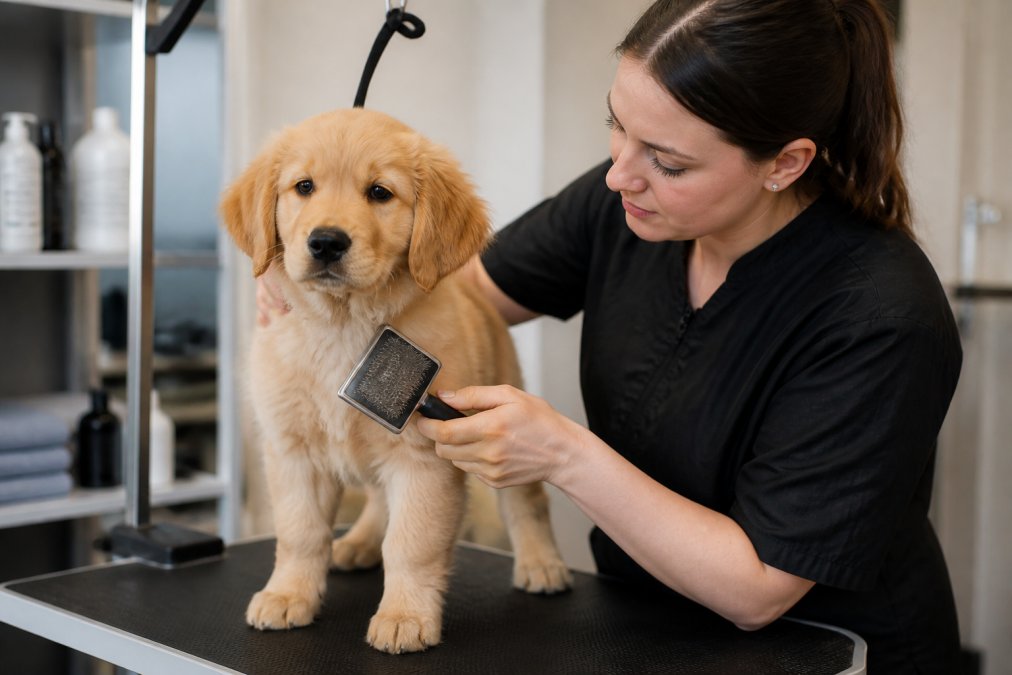
 how-to
At What Age Should a Puppy Start Getting Groomed?
Table of Contents
- The Right Age to Start Professional Grooming
- Vaccination Requirements Before Your Puppy's First Grooming
- How to Desensitize Your Puppy to Grooming at Home
- Puppy Grooming Socialization: Building Confidence Early
- First Puppy Grooming Appointment Tips for Success
- Essential Puppy Grooming Tools for Beginners
- What to Expect During Your Puppy's First Professional Grooming
- Conclusion
- Frequently Asked Questions
Last Updated: September 18, 2026
The Right Age to Start Professional Grooming
Your puppy's first grooming appointment is a big milestone. Most puppies can begin professional grooming between 6 to 8 weeks of age, though some breeds benefit from waiting until 12 weeks. The timing depends on vaccination status, breed, and coat type.
Starting your puppy's grooming journey early builds positive associations with handling, bathing, and grooming tools. This foundation makes every future appointment easier and less stressful for your pet.
A puppy that gets comfortable with grooming early becomes an adult dog that enjoys the experience. A puppy that waits too long may develop anxiety around the grooming table.
Vaccination Requirements Before Your Puppy's First Grooming
Before your puppy visits a professional groomer, vaccination status is critical. Most groomers require proof of core vaccinations to protect your puppy from serious diseases that spread in grooming environments.
Puppies typically receive their first vaccinations at 6 weeks of age, followed by boosters every 3 to 4 weeks until 16 weeks old. Your veterinarian will provide a vaccination record that most groomers require before the first appointment.
Core vaccinations protect against distemper and parvovirus, which spread easily in environments where multiple dogs gather. A grooming salon poses exposure risk if your puppy isn't fully protected.
Check with your veterinarian about the exact vaccination timeline for your puppy's breed and age. Once your puppy has received at least two rounds of vaccinations, most professional groomers will accept them.
How to Desensitize Your Puppy to Grooming at Home
Home desensitization is the best preparation for professional grooming. Starting at 4 to 6 weeks of age, before fear periods emerge, builds a foundation that prevents lifelong anxiety.
Week 1-2: Tool Familiarization
Let your puppy see and sniff grooming tools during playtime without using them. Play soft background sounds (like a hair dryer on low) so your puppy associates the noise with a calm environment, not fear.
Week 3-4: Handling Protocol
Handle your puppy's paws, ears, and face regularly:
- Paws: Gently hold each paw for 5 seconds, massage between the toes, and simulate nail trimming motions with your fingers. Reward with treats immediately after.
- Ears: Gently fold the ear flap and touch the inner ear with a soft cloth to desensitize your puppy to ear handling.
- Face and muzzle: Massage around the muzzle and gently hold the face still for a few seconds to prepare your puppy for face washing and drying.
- Tail: Handle and gently brush the tail, as groomers will need to work around this sensitive area.
Perform each handling session for 2-3 minutes, 3-4 times weekly. Stop before your puppy shows stress. This teaches your puppy that handling is safe and predictable.
Week 5-6: Water Introduction
Introduce water gradually with positive reinforcement. Start with a damp washcloth on your puppy's coat during play, then progress to a shallow bath (2-3 inches of lukewarm water). Never force your puppy into water or restrain them roughly. If your puppy shows fear, pause and return to the damp-cloth stage before trying again.
Week 7-8: Grooming Table Acclimation
Practice grooming table time at home using a sturdy table, bench, or low platform. Have your puppy stand on it for short periods (30 seconds initially, building to 5 minutes) and reward calm behavior. This is critical because the grooming table is often where puppies feel most vulnerable.
Navigating the Fear Period (8-12 Weeks)
Many puppies experience a developmental fear period between 8 and 12 weeks of age. During this window, previously confident puppies may suddenly show anxiety around grooming tools and water. This is normal and temporary. Continue gentle exposure and positive reinforcement. If your puppy shows signs of fear (trembling, hiding, refusing treats), slow down the desensitization timeline and spend an extra week on the previous step.
| Desensitization Phase | Age Range | Focus Area | Duration | Frequency |
|---|---|---|---|---|
| Tool familiarization | 4-6 weeks | Visual and olfactory exposure | 5-10 minutes | Daily |
| Handling protocol | 6-8 weeks | Paws, ears, face, tail touch | 2-3 minutes | 3-4 times weekly |
| Water introduction | 8-10 weeks | Damp cloth → shallow bath | 5 minutes | 2-3 times weekly |
| Grooming table acclimation | 10-12 weeks | Standing on elevated surface | 5-10 minutes | 2-3 times weekly |
| Fear period management | 8-12 weeks | Gentle reinforcement of all above | Variable | Ongoing |
Positive Reinforcement Strategy
Use high-value treats (small pieces of chicken, cheese, or commercial training treats) immediately after each desensitization step. Pair grooming experiences with play and praise. Never punish fear or anxiety. Instead, create positive associations by making grooming feel like a reward, not a punishment.
By the time your puppy reaches 12 weeks of age and is fully vaccinated, they will have been exposed to every element of professional grooming in a controlled, positive environment. This foundation transforms the first professional appointment from a scary unknown into a familiar routine.
Puppy Grooming Socialization: Building Confidence Early
A well-socialized puppy handles new experiences with confidence, including visits to the groomer. Expose your puppy to different sounds, textures, and environments. Many groomers allow brief pre-appointment visits where puppies can see the space, smell the environment, and meet the staff without being groomed. This familiarity reduces fear on appointment day.
First Puppy Grooming Appointment Tips for Success
The first professional grooming appointment sets the tone for your puppy's future grooming experiences. Success depends on preparation, choosing the right groomer, and managing expectations.
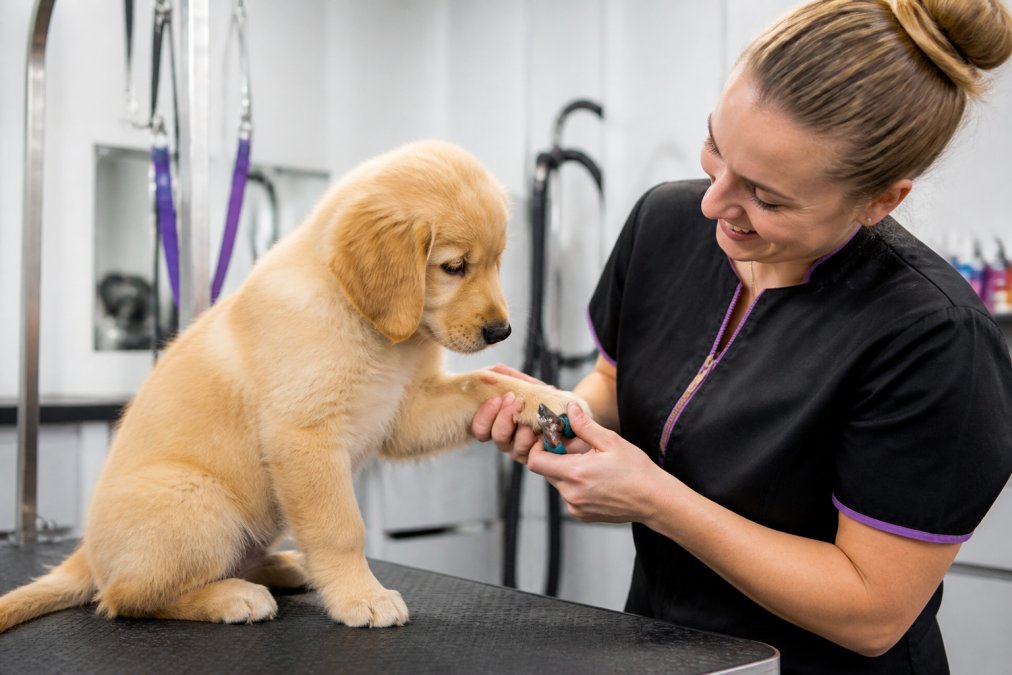
Selecting a Puppy-Specialized Groomer
Not all groomers are equally skilled with puppies. Use this checklist to evaluate groomers before booking:
- Ask about puppy-specific training: Does the groomer have formal training or certification in puppy handling and fear-free grooming techniques?
- Request references from other puppy owners: Ask how many puppies they groom monthly and their approach for first-time appointments.
- Inquire about appointment length: A groomer who allocates 45-60 minutes for a puppy's first appointment prioritizes comfort over speed.
- Ask about handling anxious puppies: How do they respond if a puppy cries, freezes, or resists? Do they take breaks or reschedule if the puppy is too stressed?
- Confirm vaccination verification process: A groomer who carefully checks vaccination records demonstrates safety standards.
- Visit the salon in person: Observe the environment. Is it clean, calm, and organized? Are other dogs handled gently? Does the staff seem patient and kind?
- Ask about their first-appointment protocol: Do they offer a shorter, simpler service for puppies (bath and basic trim only)? This shows they understand puppy needs.
Preparing Your Puppy Before the Appointment
Schedule the appointment during a calm time of day, morning appointments are often better because the salon is less busy. Keep the first appointment short and simple: request a basic bath and simple trim rather than a full groom. Let your groomer know about your puppy's temperament, fears, or behavioral quirks. Avoid feeding a large meal 2-3 hours before the appointment.
During the Appointment
Arrive early and stay calm. Your puppy picks up on your energy. Ask your groomer about the grooming table and what to expect. Know that your puppy may cry or whine during their first appointment, this is normal. A good groomer handles this calmly without forcing or rushing. If possible, ask whether you can observe part of the appointment.
After the Appointment
Praise your puppy generously and act as though the appointment was routine and positive. Ask your groomer for feedback: What went well? What was challenging?
Essential Puppy Grooming Tools for Beginners
Having the right tools at home helps with desensitization and basic maintenance between professional appointments. You don't need expensive equipment to start.
What to Expect During Your Puppy's First Professional Grooming
Understanding the grooming process helps you prepare your puppy and know what to ask your groomer about.
Conclusion
Starting your puppy's grooming journey at the right age and with the right preparation sets them up for a lifetime of positive experiences. Begin desensitization at home, ensure your puppy is vaccinated, and choose a groomer who understands puppies. At STEPH’S CUTE CRITTER CUTS & CORI’S CRITTER CREATIONS, we provide professional pet grooming services to keep your furry friends looking and feeling their best.
Frequently Asked Questions
Can I take my 3-month-old puppy to the groomer?
At 3 months old, your puppy can visit a professional groomer if they've received their core vaccinations and booster shots on schedule. However, many groomers recommend waiting until 12-16 weeks when vaccination protection is stronger. Before booking, confirm your puppy's vaccination status with your veterinarian and discuss timing with your groomer. Early visits focused on handling and bathing rather than full grooms can help your puppy adjust to the grooming environment.
What's the best age to get a puppy groomed for the first time?
The ideal age for a puppy's first professional grooming is 8-12 weeks, once core vaccinations are complete and your veterinarian gives clearance. This timing allows your puppy to start grooming socialization during a critical developmental window. If your puppy has a double coat or longer hair, earlier introduction to bathing and brushing at home helps prepare them. Some breeds benefit from a sanitary trim or puppy trim before their first full groom.
Do puppies need a full haircut during their first visit?
Most puppies don't need a full groom on their first visit. Instead, groomers typically focus on bathing, drying, nail trimming, and ear cleaning to build positive associations. A puppy trim or sanitary trim may be offered to address specific areas. This gentler approach reduces grooming anxiety and helps your puppy develop confidence with handling exercises. Full grooms can follow once your puppy is comfortable with the grooming table and professional handling.
How can I prepare my puppy for their first grooming session at home?
Start desensitization early by touching your puppy's paws, ears, and face during calm moments, using positive reinforcement like treats and praise. Practice brushing with appropriate grooming tools for your puppy's coat texture, and introduce them to the sound of running water during baths. Handle their nails gently and let them become comfortable with the grooming table at home. These at-home handling exercises build confidence and reduce stress when they visit a professional groomer for the first time.