 how-to
How to Keep Your Doodle's Coat Healthy Year-Round
Quick Summary
A healthy doodle coat needs brushing down to the skin, not just over the top, using a slicker brush with fine flexible pins followed by a metal greyhound comb check. Bathe with a pH-balanced dog shampoo, dry thoroughly while brushing, and keep a steady grooming schedule that increases during the puppy coat change.
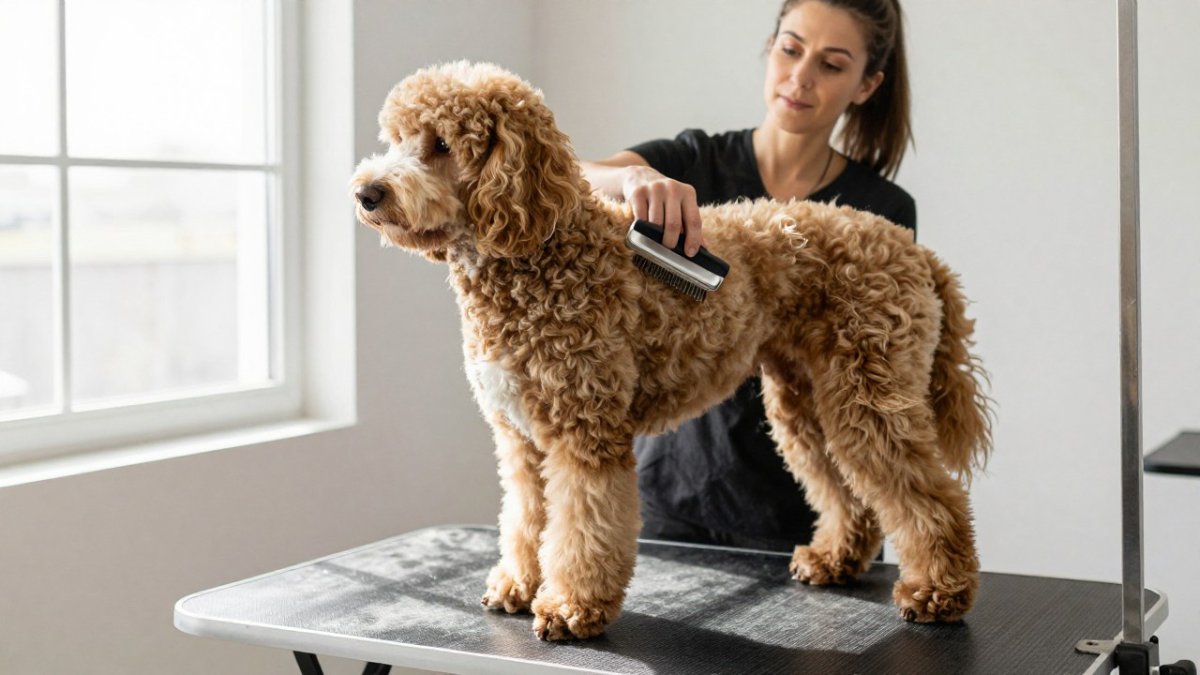
- Line brush in sections about half an inch apart, working down to the skin.
- Check each brushed section with a metal greyhound comb; if it snags, brush it again.
- Use a pH-balanced dog shampoo and a conditioner suited to curly or wavy coats.
- Dry the coat thoroughly, brushing while blow-drying on low heat.
- Professional grooming is generally recommended every four to eight weeks for most doodles.
Table of Contents
- Why a Doodle Coat Needs More Than Occasional Brushing
- Choosing a Slicker Brush for Dogs and Other Grooming Tools
- Line Brushing Step by Step to Prevent Matting
- Bathing, Drying and Conditioning for Coat Health
- How Often to Groom a Goldendoodle and Other Doodles
- Nutrition, Puppy Coat Changes and Seasonal Care
- Booking Your Doodle's Next Grooming Appointment
- Frequently Asked Questions
Why a Doodle Coat Needs More Than Occasional Brushing
Doodle coats are different from most dog coats. A Goldendoodle, Labradoodle or Bernedoodle often has a curly or wavy texture that tangles easily and holds loose hair close to the skin.
Keeping a doodle coat healthy year-round means brushing down to the skin, bathing correctly, drying thoroughly and grooming on a steady schedule. Each step protects the skin and keeps the coat soft, clean and easy to care for.
Why the coat is prone to problems:
- Curly hair catches loose fur that would normally fall out on other breeds.
- Tight curls trap moisture, dander and dirt close to the skin.
- Mats pull on the skin, which can cause discomfort and skin irritation.
Many owners think the coat looks neat, only to find a dense mat when they part the hair. That is why checking the coat by brushing into the skin, not just over the top, is recommended.
Choosing a Slicker Brush for Dogs and Other Grooming Tools
A slicker brush is the workhorse of doodle coat care, but not every slicker brush is built for a curly or wavy coat.
Match the tool to the job:
- Slicker brush (fine, flexible pins): Lifts loose hair and opens light tangles on the body, legs and tail. This is your daily driver.
- Slicker brush (stiffer pins): Useful on denser, coarser coats or on the heavier furnishings around the legs, but too stiff a pin on a soft puppy coat can scratch. Keep one of each only if your dog's coat is thick.
- Metal greyhound comb: The truth-teller. A comb with medium-to-coarse teeth glides through a brushed section and catches what the brush missed. If the comb snags, the section is not done, no matter how smooth the surface looks.
- Detangling spray: A silicone-based or conditioning spray adds slip so hair releases instead of snapping. Mist the section, not the whole dog.
- Dematting tool or small rake: For stubborn knots only, used in short strokes at the edge of the mat, never ripped through the middle.
- Blow dryer on low heat: Dries the coat down to the skin and helps straighten curl so tangles are easier to find next time.
Pin and comb specifics that actually matter:
- Pin length around 3/4 inch reaches through a medium doodle coat without bottoming out on the skin.
- Comb teeth spaced roughly 1/8 to 1/4 inch apart catch tangles a slicker glides over; a finer comb is for finishing, not for working through a mat.
- A slicker with a self-cleaning retractable pin base saves time on cleanup but tends to have less flex, fine for short coats, less ideal for long curls.
Tool maintenance is the step most guides skip. A slicker brush loaded with packed hair stops reaching the skin, so it stops doing its job.
Here is a quick reference to the grooming tools covered above and what each one is best for.
| Tool | Best for | Key difference |
|---|---|---|
| Slicker brush (fine, flexible pins) | Daily lifting of loose hair and light tangles | Flexible pins bend with the coat instead of scraping the skin |
| Slicker brush (stiffer pins) | Denser coats and heavier furnishings on the legs | Too stiff for soft puppy coats, which can scratch |
| Metal greyhound comb | Checking that a section is fully brushed | Snags reveal sections the brush missed |
| Detangling spray | Adding slip so hair releases instead of snapping | Mist the section, not the whole dog |
| Dematting tool or small rake | Stubborn knots only | Used in short strokes at the edge of the mat |
| Blow dryer on low heat | Drying the coat down to the skin | Helps straighten curl so tangles are easier to find |
Line Brushing Step by Step to Prevent Matting
Line brushing is the method most groomers use to avoid matting.
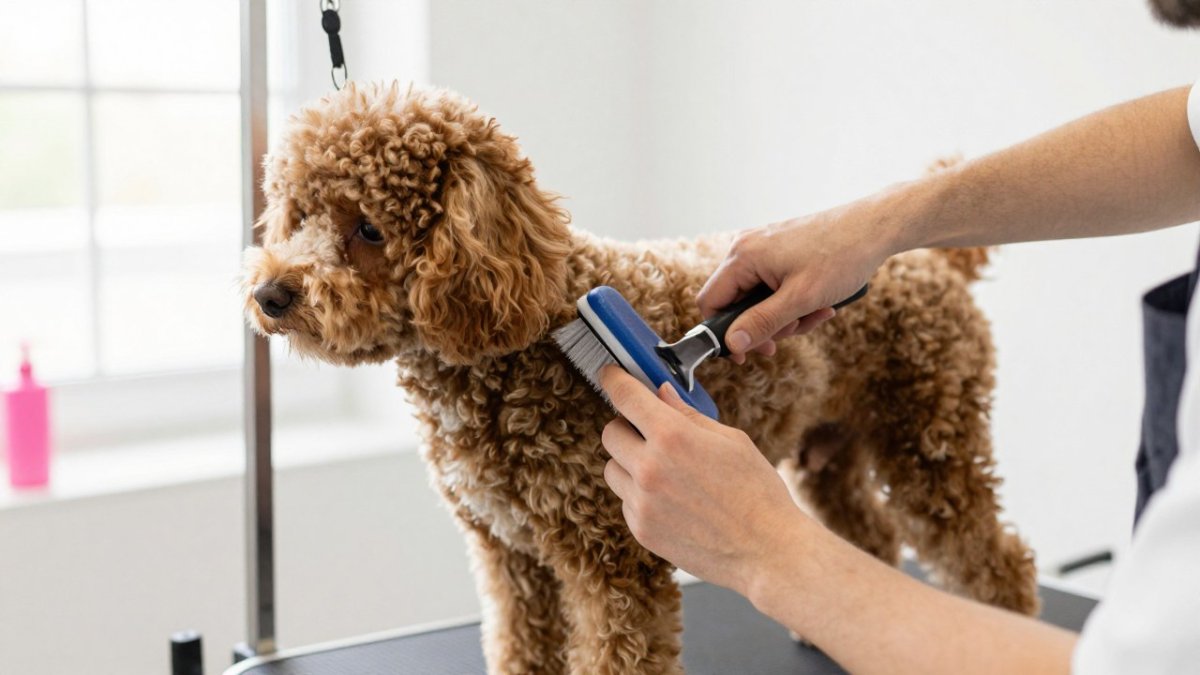
Step 1: Mist the coat. Lightly spray a detangling spray onto the section you plan to brush.
Step 4: Move to the next line. Work along the body in lines about half an inch apart.
Step 5: Check with the comb. Run the metal comb through the brushed section.
Step 6: Finish the whole coat. Go over the legs, chest, belly, ears and tail.
Tips for a smooth session:
- Keep sessions short and calm, especially for puppies.
- Use treats and praise to build a positive habit.
- Stop if the dog shows discomfort, and check for skin irritation.
Watch out: pulling hard on a mat can hurt the skin and make the dog dislike brushing.
Bathing, Drying and Conditioning for Coat Health
Bathing helps remove dirt, oils and loose hair, but bathing too often or with the wrong product can dry out the skin. The right bathing schedule depends on the individual dog, so ask your groomer for guidance.
A simple bathing routine:
- Brush the coat thoroughly before the bath. Water sets any tangles, so start with a clean, detangled coat.
- Wet the coat with lukewarm water, down to the skin.
- Use a pH-balanced dog shampoo. Avoid human shampoo, which can irritate the skin.
- Rinse completely. Leftover shampoo can cause itchiness.
- Apply a conditioner suited for curly or wavy coats. Leave it on for the time shown on the label, then rinse well.
- Squeeze out excess water. Do not rub hard, since this can create tangles.
- Dry thoroughly. Use a blow dryer on low heat while brushing, or let the coat air-dry in a warm room if the dog tolerates it.
Drying is where many owners run into trouble. A coat that stays damp near the skin can develop odor and matting. Brush while blow-drying so the hair dries in its natural position.
For summer coat care, rinse the coat after swimming or time outdoors, and keep the coat trimmed to a length you can maintain. For winter, watch for dry skin caused by indoor heat and cold air.
How Often to Groom a Goldendoodle and Other Doodles
Brushing frequency depends on coat length and how quickly the coat tangles, and a groomer can suggest a professional grooming interval that fits your dog.
General guide:
- Home brushing: Several times a week, or daily for long coats.
- Bath: Every few weeks, based on the dog's needs.
- Professional grooming: Every four to eight weeks for most doodles.
- Trims and faces: Often needed between full grooms to keep the coat neat.
A Goldendoodle's schedule may differ from that of a Labradoodle or a Bernedoodle, since coat type varies even within the same mix. Changes in season, age and activity also affect how often the coat needs attention.
If brushing sessions feel harder, or mats return quickly, it may be time for a professional visit. Our doodle grooming services page lists the care schedules we offer for each coat type.
Nutrition, Puppy Coat Changes and Seasonal Care
The nutrients that drive coat condition:
- Omega-3 fatty acids (EPA and DHA): Support skin barrier function and give the coat shine. Cold-water fish oil is the most common source; most practitioners find a dog needs a consistent daily dose for several weeks before coat changes show.
- Omega-6 fatty acids (linoleic acid): Support the skin's moisture barrier. Most complete dog foods already include these, so a deficiency is more likely on a home-cooked or unbalanced diet than on a commercial one.
- Protein quality: Hair is protein. A food with a named animal protein as the first ingredient supports the coat's structure; a diet short on quality protein shows up as a dull, brittle coat before it shows anywhere else.
- Hydration: A dog that drinks enough water has more supple skin and a less brittle coat. Adding water or a splash of low-sodium broth to meals is a simple way to raise intake, especially in winter when indoor heat dries everything out.
A veterinarian should guide any major diet change or supplement, and a persistent skin or coat problem is worth a vet visit.
The puppy coat change, the phase most guides skip:
Doodles go through a coat transition from soft puppy fur to adult coat, and the timing varies by mix and individual dog.
What to do during the transition:
- Brush more often than the adult schedule, daily is reasonable during the heaviest shedding phase.
- Check with the comb, not just the brush, in the high-mat zones: behind the ears, under the legs, around the collar and harness, and the tail base.
- Book a professional groom during the transition to trim the coat to a length you can actually maintain at home; a shorter cut during the change prevents a full shave-down later.
- Keep sessions short and reward-based so the puppy does not learn to dread grooming before the adult coat even arrives.
Seasonal care that goes beyond 'trim in summer, moisturize in winter':
- Summer: Humidity makes curly coat hold moisture against the skin, which is where odor and hot spots start. Rinse and dry thoroughly after swimming or a wet walk, and keep the coat trimmed to a length air can move through.
- Winter: Indoor heat and cold outdoor air combine to dry the skin. Watch the paws and the coat between the toes, where snow and ice ball up.
- Spring and fall: Shedding picks up as the coat turns over. Increase brushing frequency for a few weeks rather than changing tools.
Review the routine every few months and whenever the coat texture visibly changes, the puppy transition and the first adult shed are the two moments when a routine that worked stops working.
Booking Your Doodle's Next Grooming Appointment
Professional grooming can help keep the coat healthy between home sessions. A groomer can remove heavy mats safely, trim the coat to a manageable length, and check the skin and ears. Booking regularly helps prevent problems from building up.
Since pricing depends on the size of the dog, coat condition and the services chosen, please check our website or contact us directly for current pricing and availability. You can book your doodle's next appointment at STEPH'S CUTE CRITTER CUTS & CORI'S CRITTER CREATIONS, where our team takes time with every pet and works with each dog's coat and temperament.
Ask for a grooming plan that fits your dog's coat, lifestyle and season, and bring up any concerns about tangles, skin or behavior. Regular visits, combined with daily or weekly brushing at home, are the simplest way to keep your doodle's coat healthy year-round.
Frequently Asked Questions
How do you maintain a doodle coat at home?
Maintain a doodle coat by line brushing two to three times a week, using a slicker brush down to the skin and a metal greyhound comb to confirm there are no tangles left behind. Bathe with a pH-balanced dog shampoo and a conditioner, then dry completely with a blow dryer on low heat or a high-velocity dryer. Keep the coat trimmed on a regular schedule so it stays manageable between professional visits.
How often should you brush a doodle?
Most doodles need brushing two to three times a week at home, with daily brushing for dogs in heavy coat or those prone to tangling. Frequent short sessions prevent mats better than one long session every few weeks. Brushing after walks or time outdoors is especially useful because burrs and debris can knot the coat quickly.
What kind of brush is best for a doodle's coat?
A slicker brush with fine, fairly flexible pins is the most common choice for doodle coats because it reaches down through the dense curls to the skin. Pair it with a metal greyhound comb to check for knots the brush missed. Clean the brush regularly by removing trapped hair, since a clogged brush pulls more than it detangles.
How often should a Goldendoodle be professionally groomed?
The right professional grooming interval for a Goldendoodle depends on coat length, texture and activity level. Dogs with tight curls or those kept in a shorter cut may need visits more often. Ask your groomer to set a schedule based on your dog's coat and lifestyle.