 how-to
How to Prepare Your Puppy for a Stress-Free First Grooming
Last Updated: November 12, 2026
Quick Summary
Prepare your puppy for a stress-free first grooming by starting puppy grooming practice at home as soon as they arrive, using short ten-minute sessions with treats to build tolerance for handling, brushing, and clipper sounds. Aim for a first professional visit once the vaccine series is complete and your veterinarian gives the go-ahead.
- Practice handling at home for ten minutes a day, touching paws, ears, face, tail, and belly with treats.
- Introduce clippers and dryers at a distance for five seconds, then reward calm behavior.
- Use puppy-safe shampoo and lukewarm water for a short, happy first bath at home.
- Confirm vaccines are current and bring the record to the first appointment.
- Expect a first visit focused on a bath and light tidy of face, paws, and nails.
Table of Contents
- Start Early: Understanding Puppy Grooming Age and Readiness
- How to Prepare Your Puppy for First Grooming at Home
- Using Treats and Praise to Build Calm Behavior
- Bathing Your Puppy Safely With Puppy-Safe Shampoo
- Your Puppy Grooming Checklist Before the Appointment
- Puppy First Grooming Appointment: What to Expect
- Breed- and Coat-Specific Preparation Tips
- Booking Your Puppy's First Grooming Visit
- Frequently Asked Questions
Start Early: Understanding Puppy Grooming Age and Readiness
Most new puppy owners wait too long. By the time they call a groomer, the puppy is already wary of hands, brushes, and strange sounds, and the first visit becomes a wrestling match instead of a learning moment.
Puppy grooming is the practice of introducing a young dog to handling, brushing, bathing, and salon equipment in short, positive steps before the first full appointment. For a deeper guide on the right starting age, read our article on at what age should a puppy start getting groomed.
Puppy grooming age is less about a birthday than about readiness. A puppy is ready for a first salon visit when they can:
- Stand calmly for a few minutes of handling
- Tolerate gentle touches on paws, ears, and face
- Stay calm around a running clipper or dryer at a distance
- Recover quickly from small surprises
Some puppies hit these marks at twelve weeks. Others need until five or six months. Both are normal.
Vaccination and Health Requirements Before a Salon Visit
Salons are shared spaces, so most groomers ask that puppies be current on core vaccines before a first appointment. Your veterinarian sets the exact timeline for your puppy's age and lifestyle, and the American Animal Hospital Association vaccination guidelines explain why those early shots matter. Call ahead and ask what your groomer requires. Bring your vaccine record to the first visit, and mention any health issues, medications, or skin problems when you book.
How to Prepare Your Puppy for First Grooming at Home
Learning how to prepare puppy for first grooming at home comes down to short, calm practice sessions. Ten minutes a day, done gently, builds more tolerance than one long session ever will.
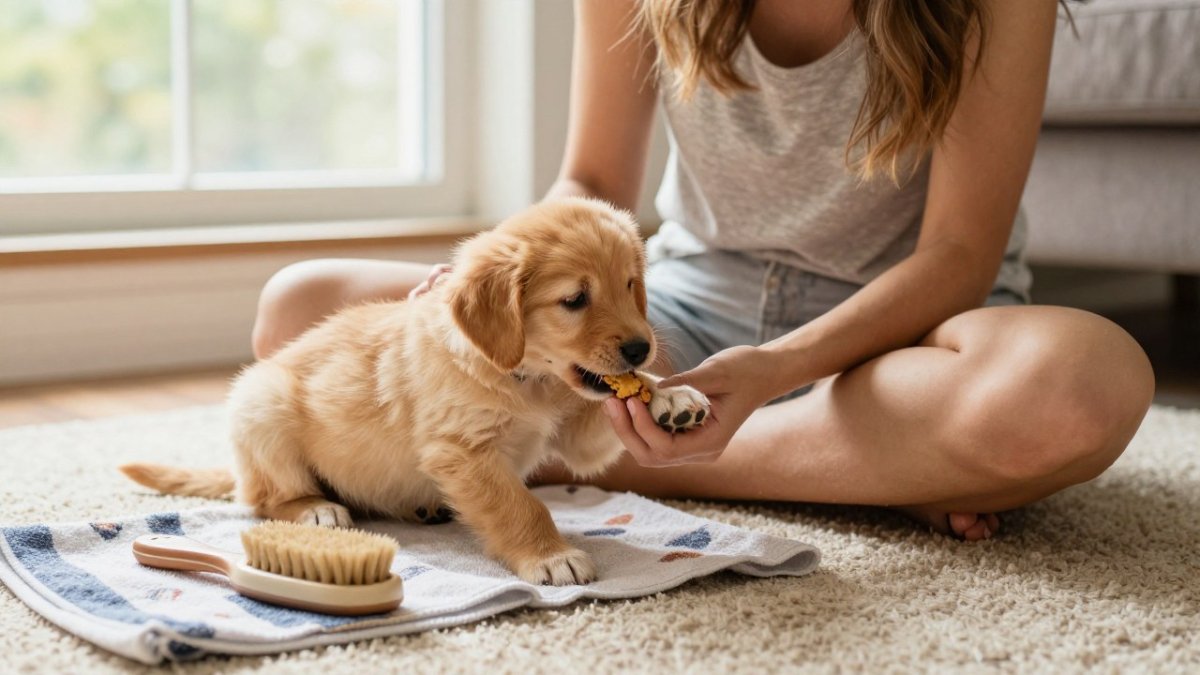
The woman is American.
Start with these steps:
- Sit on the floor with your puppy and offer a treat.
- Touch one paw for two seconds, then treat and release.
- Repeat with ears, chin, tail, and belly over several days.
- Add a soft brush for a few strokes, then stop while your puppy is still happy.
- End every session on a win.
A common mistake is pushing through a puppy's squirming to "get it done." That teaches the puppy that hands mean restraint. Stop while things are still easy.
Handling Practice: Paws, Ears, Face, Tail, and Belly
Handling practice is the habit of touching every part of your puppy's body the way a groomer will, always paired with treats. Work through each area in short turns:
- Paws: press each paw pad lightly, as if checking for debris
- Ears: lift the ear flap and look inside for a second
- Face: stroke the muzzle and around the eyes
- Tail: run your hand from base to tip
- Belly: rub gently while your puppy lies on their side
If your puppy pulls away, go slower. Never force a hold.
Introducing Brushing, Tools, and Grooming Sounds
Let your puppy meet grooming tools before they do any work. Set a brush and clippers on the floor and reward any calm sniffing. Turn clippers on across the room, treat, and turn them off.
Try these steps:
- Run the clippers near your puppy for five seconds, then treat
- Let the blow dryer blow from a safe distance while your puppy eats
- Brush for a few strokes, then swap the brush for a treat
- Keep sessions to five or ten minutes
This is desensitization in plain terms: small doses of a new thing, always followed by something good. It is the single most useful skill for a calm first appointment.
Using Treats and Praise to Build Calm Behavior
Positive reinforcement is the fastest route to a puppy who stands still on the table. Reward the behavior you want the moment it happens, not after.
What works in practice:
- Use tiny, soft treats so you can reward often
- Reward calm stillness, not just finished tasks
- Praise in a quiet, steady voice, not a wild one
- Practice in different rooms so calm travels with your puppy
- Keep a treat within reach during every handling session
Watch out: if your puppy freezes, tucks their tail, or tries to bolt, stop and back up a step. For more on this, see our guide to calming steps for stress free dog grooming for nervous pets.
Bathing Your Puppy Safely With Puppy-Safe Shampoo
A first bath at home teaches your puppy that water is fine. Use a puppy-safe shampoo, lukewarm water, and a non-slip mat in the tub or sink.
Follow this order:
- Brush out loose coat first.
- Wet the coat fully with lukewarm water.
- Apply puppy-safe shampoo and lather gently, avoiding eyes and ears.
- Rinse until the water runs clear.
- Follow with a puppy-safe conditioner if your puppy's coat needs it.
- Towel dry, then use a blow dryer on low, held well away from the skin.
Keep the bath short. A quick, happy bath beats a long, thorough one.
Your Puppy Grooming Checklist Before the Appointment
A puppy grooming checklist keeps the first visit smooth. Run through these items the week before:
- Confirm your puppy's vaccines are current and bring the record
- Ask the groomer what they require for a first visit
- Note any skin issues, lumps, or sensitivities
- Write down your puppy's usual potty and meal times
- Pack a favorite treat or toy for comfort
- Book a time when you are not rushed
Share your puppy's temperament with the groomer. Tell them what your puppy loves and what spooks them.
Puppy First Grooming Appointment: What to Expect
Setting realistic expectations before you walk in prevents disappointment and keeps the session positive.
Here is what a typical first appointment looks like:
| Stage | What Happens | Why It Matters |
|---|---|---|
| Check-in | Groomer reviews vaccine record and temperament notes | Sets the plan for the visit |
| Meet-and-greet | Puppy sniffs the table and tools with treats | Builds trust before work starts |
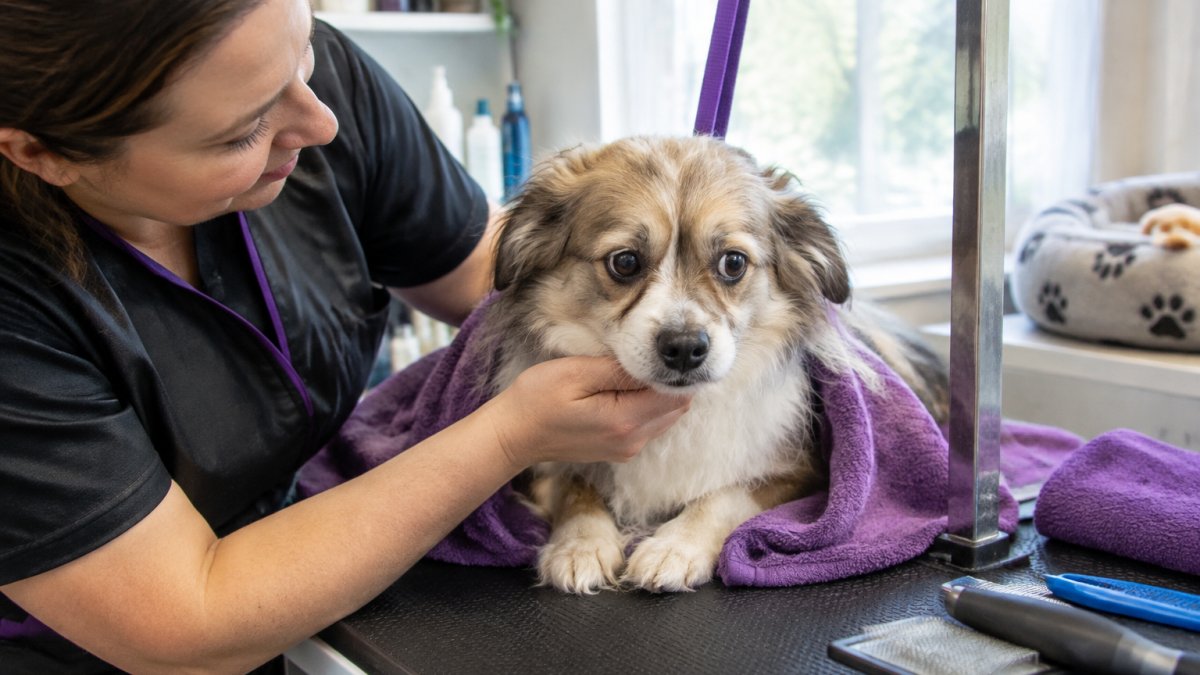
| Bath and dry | Gentle wash with puppy-safe shampoo | Teaches water and dryer tolerance |
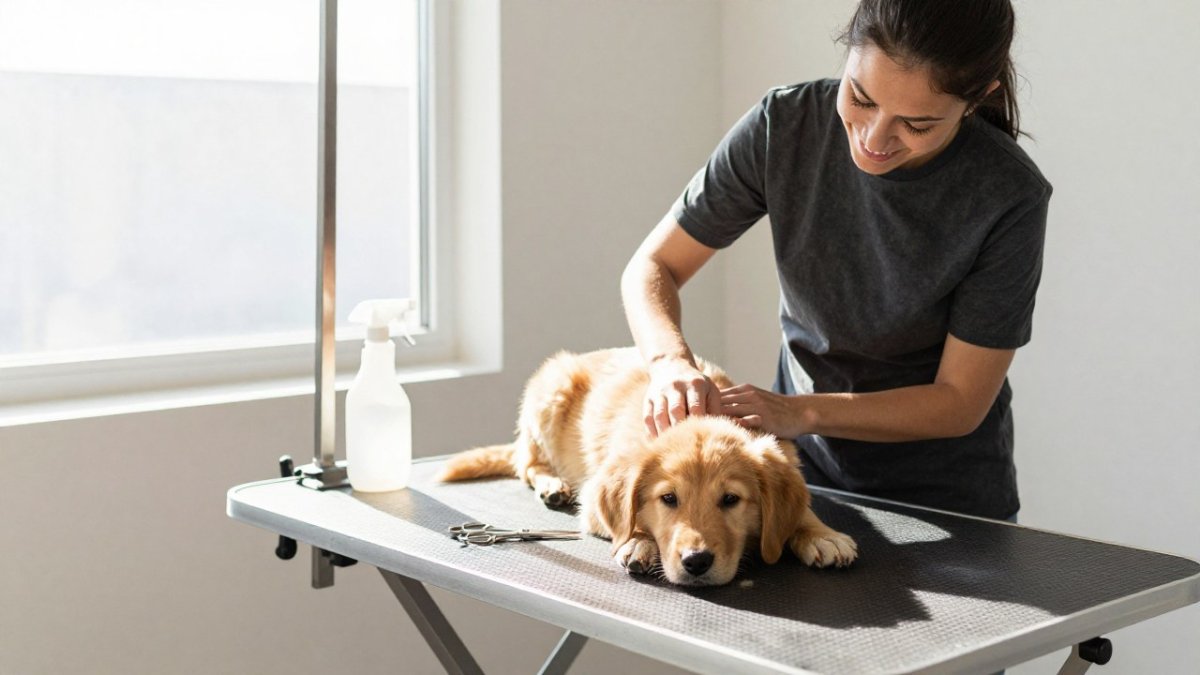
| Light tidy | Face, paws, and nails only | Keeps the session short and positive |
| Pickup | Groomer shares notes on how it went | Guides the next visit |
Realistic Scope, Duration, and What May Be Skipped
Ask when you book how long the first appointment is expected to take and which services are included.
Ask when you book: How long is the first appointment expected to take? Which services are included, and which may be deferred?
Watch out: if a groomer promises a full haircut and complete service on a first visit for a young puppy, ask how they plan to keep the session low-stress, a rushed full groom on a first-timer often backfires.
What to Do After the Appointment
The hours after the first visit matter as much as the visit itself. A simple recovery and follow-up plan reinforces calm behavior and catches problems early:
- Praise and treat calm behavior as soon as you are home and again when the puppy settles. Pair the end of grooming with something good.
- Check the skin and coat for redness, irritation, nicks, or clipper burn, especially in the armpits, groin, and behind the ears. Call the groomer if you see anything concerning.
- Watch for stress carryover, some puppies are clingy, tired, or slightly withdrawn for a few hours. Offer a quiet space, fresh water, and a normal meal schedule.
- Note what went well and what didn't so you can share it at the next visit and adjust your at-home practice.
- Schedule the next appointment while the positive experience is fresh, and ask the groomer what to practice at home in between.
A calm ten-minute tidy beats a stressful full groom every time. For a fuller walkthrough, read our complete guide to the first grooming visit for puppy.
Breed- and Coat-Specific Preparation Tips
Coat type changes your prep plan and your goals for the first appointment. A short-coated puppy needs less brushing, while a curly or long coat mats fast and needs daily attention. The right prep depends on how the coat grows, sheds, and tangles.
Match prep to coat:
- Short coats (beagle, boxer, Labrador): brush weekly with a rubber curry or bristle brush, bathe less often, and focus first-visit goals on handling tolerance and nail trims rather than coat work.
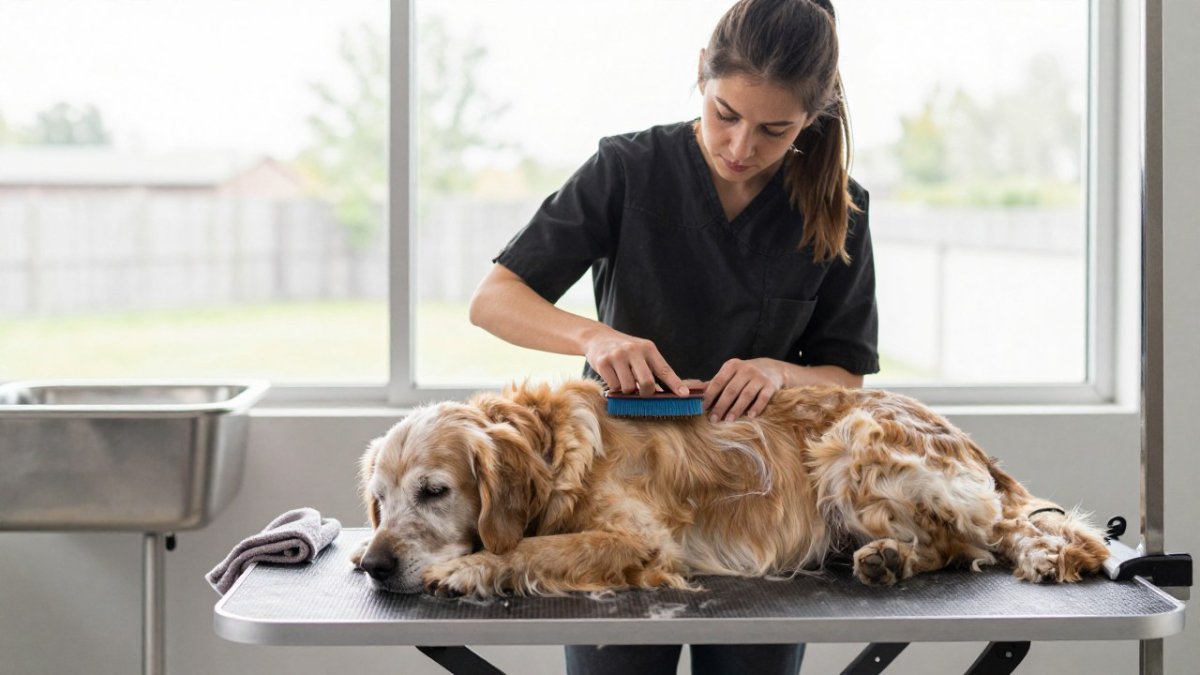
- Double coats (husky, golden retriever, German shepherd): brush several times a week with an undercoat rake to manage shedding, and expect the first session to focus on bath and blow-dry tolerance rather than a full trim.
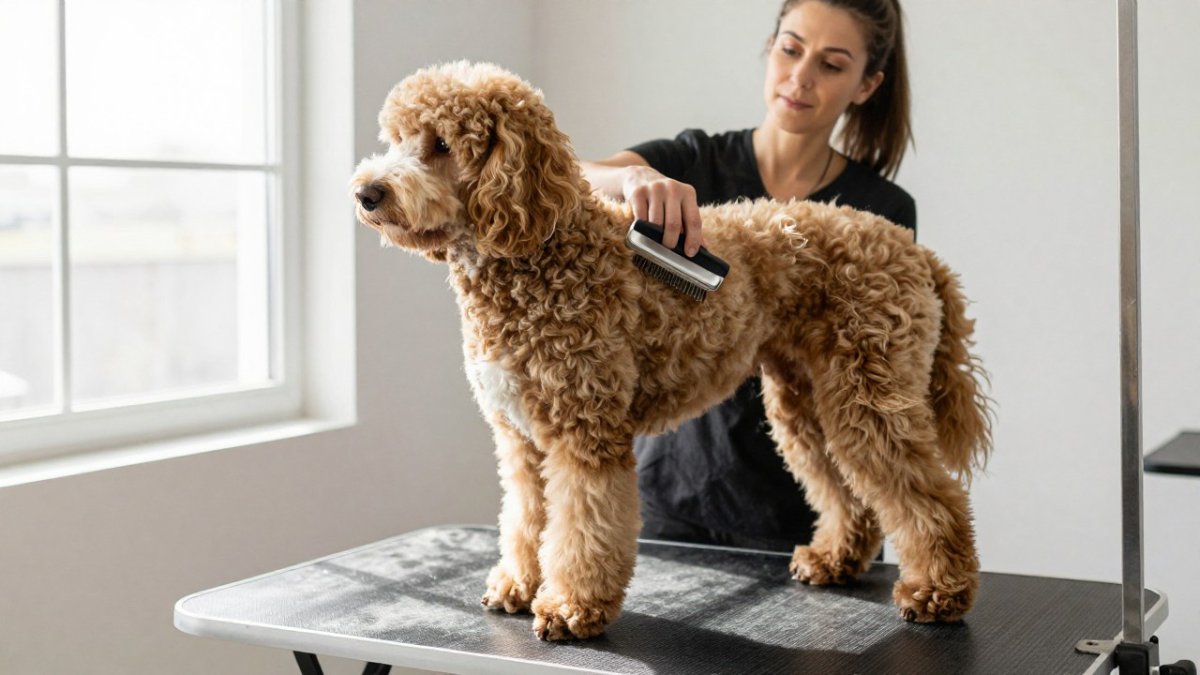
- Curly coats (poodle, doodle mixes): comb daily to the skin to prevent mats, and ask the groomer to assess coat condition at the first visit, many curly-coated puppies need a short introductory session before any full clip.
- Long coats (shih tzu, Yorkie, Maltese): check behind the ears, under the legs, and around the collar for tangles daily, and expect the first visit to prioritize a face and paw tidy over a full body trim.
Why Coat Type Changes the First-Visit Plan
Coat type affects how long grooming takes, how much handling the puppy must tolerate, and what tools the groomer will use.
Tell the groomer your puppy's breed or mix and share what you have noticed at home: where tangles form, whether the puppy tolerates brushing, and how the coat feels after a bath.
Poodles and doodles need early, regular combing because their coats tangle close to the skin. Our puppy grooming supplies checklist covers the brushes and tools for each coat type.
Booking Your Puppy's First Grooming Visit
Ready to book? Call ahead, share your puppy's age and vaccine status, and ask what the first visit includes. You can view our full grooming service and book your puppy's first grooming visit when you are ready.
A slow, positive start pays off for years. Your puppy learns that grooming is safe, and every visit after the first gets easier.
The first grooming visit sets the tone for every appointment that follows.
Frequently Asked Questions
At what age should a puppy have their first grooming appointment?
Most puppies are ready for a first professional grooming visit once their vaccination series is complete and your veterinarian gives the go-ahead. Before that, you can start at-home puppy grooming preparation as early as 8 weeks with short, gentle handling sessions. Always confirm vaccination and parasite-prevention requirements with the salon before booking.
How long does a puppy's first grooming appointment take?
Ask the salon how long a first visit is expected to take and what it includes, so you can plan your pickup. Ask the salon when booking so you can plan pickup and avoid leaving your puppy waiting.
What should I bring to my puppy's first grooming appointment?
Bring your puppy's vaccination records, a leash and collar, and a list of any health issues, allergies, or sensitivities. Pack a few high-value treats if the groomer allows them, and note your contact number in case they need to reach you. Share your puppy's temperament, favorite toys, and any handling areas they dislike. A puppy grooming checklist with these items helps the groomer tailor the visit and reduces stress for everyone.
How can I get my puppy used to being brushed and handled?
Start with 5 to 10 minute sessions and touch the paws, ears, face, tail, and belly gently while offering treats and praise. Use a soft brush first and reward calm behavior. Introduce grooming tools and sounds, like clippers or a blow dryer, at a safe distance before they touch the coat. Daily brushing and positive reinforcement build handling tolerance, making the first grooming visit calmer and easier for your puppy.