 how-to
7 Grooming Tips for Senior Dog Skin That Really Help
Last Updated: November 8, 2026
Quick Summary
Grooming senior dog skin means shorter, gentler sessions with soft tools and lukewarm water. Brush three to four times a week for five to ten minutes, bathe every four to six weeks, and check the skin during every session so irritation is caught early.
- Brush most senior dogs three to four times a week for five to ten minutes.
- Plan one bath every four to six weeks using lukewarm water and a gentle shampoo.
- Rinse until the water runs clear, then rinse again to prevent itching.
- Brush the back end, hind legs, and behind the ears first, where mats start.
- Call your vet for sores that ooze, growing lumps, or itching that disrupts sleep.
Table of Contents
- Why Senior Dog Skin Needs a Different Grooming Approach
- A Senior Dog Bathing and Brushing Routine That Protects Skin
- Choosing Soft Brushes and Gentle Tools for Thin or Sensitive Skin
- Grooming Tips for Senior Dog Skin on Legs
- Face Grooming Tips for Senior Dog Skin
- Signs of Skin Allergies in Dogs and When to Call the Vet
- Book a Gentle Senior Grooming Appointment
- Frequently Asked Questions
Why Senior Dog Skin Needs a Different Grooming Approach
An older dog's skin gets thinner, drier, and slower to heal, so the grooming routine that worked at age three can cause real discomfort at age twelve. At STEPH'S CUTE CRITTER CUTS & CORI'S CRITTER CREATIONS, we treat grooming tips for senior dog skin as a care plan, not a cosmetic chore. The goal is simple: keep the coat clean and mat-free without irritating fragile skin.
How Aging Changes Skin, Coat, and Comfort
Skin loses elasticity and oil production over the years. That leaves the coat duller and more prone to tangles.
Stiff joints change the picture too. A dog with arthritis struggles to stand for long stretches. Some can no longer turn to groom their own back end. That spot becomes a mat magnet.
The takeaway: shorter sessions, softer tools, and more patience. A senior dog does not need less grooming. It needs gentler grooming.
A Senior Dog Bathing and Brushing Routine That Protects Skin
The right senior dog bathing and brushing routine is short, warm, and calm. Plan one bath every four to six weeks, and brush in between rather than waiting for tangles to form.
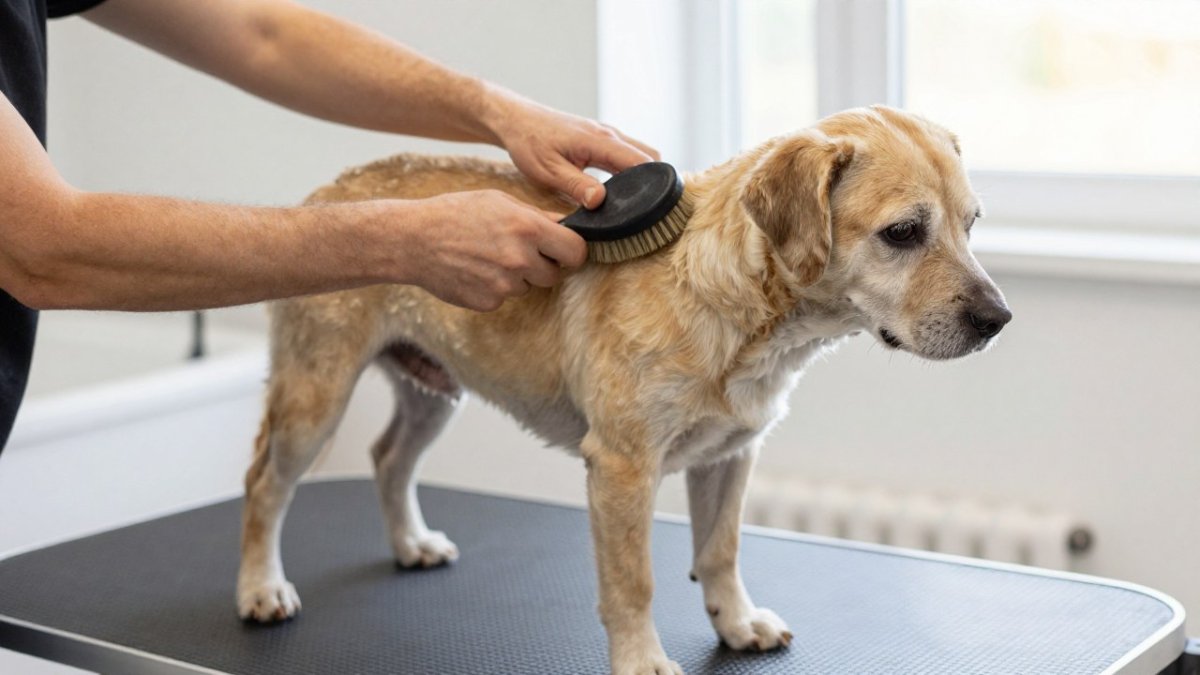
Follow this order:
- Brush first. Remove loose hair and small tangles before water tightens them.
- Check the skin. Part the coat and look for redness, lumps, or sores.
- Bathe with lukewarm water. Hot water strips oil and stings thin skin.
- Use a gentle shampoo. Rinse twice as long as you think you need to.
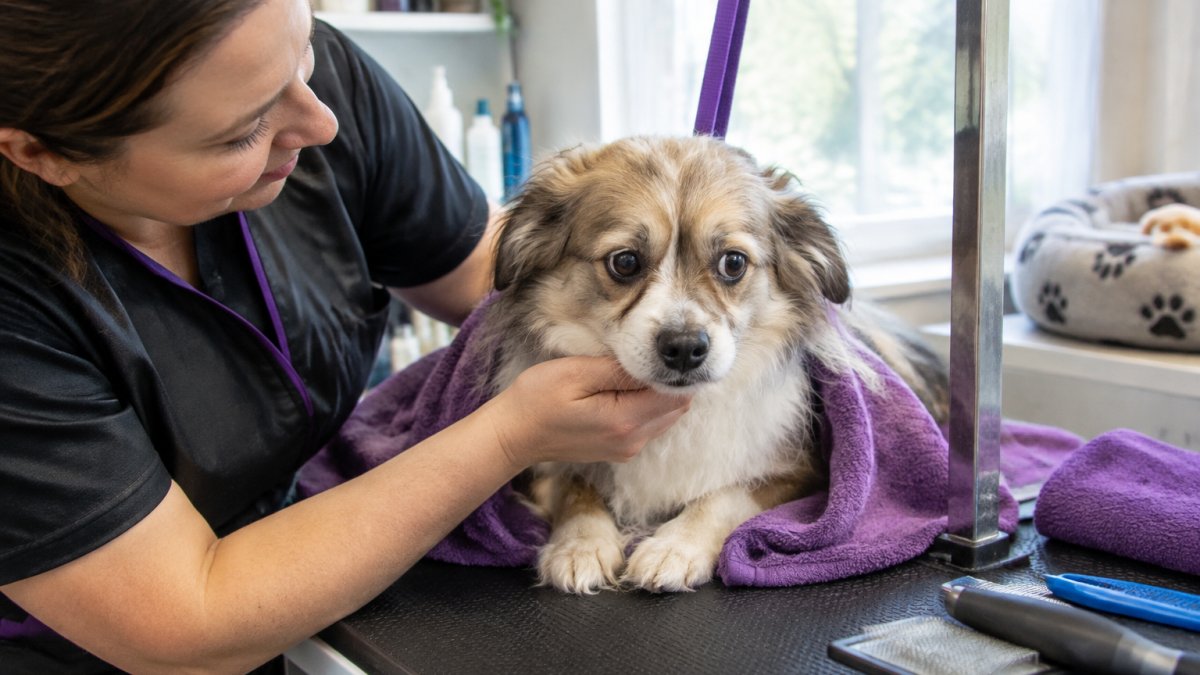
- Towel dry, then air dry. Never rub hard. Pat, then let the coat finish drying in a warm room.
A Bathing and Drying Protocol for Fragile Skin
Older skin tolerates a narrower range of temperatures and dries more slowly, so the details matter more than the products. Water that feels comfortably warm on your inner wrist is a good starting point for a senior dog.
Work in this sequence:
- Wet the coat thoroughly with a handheld sprayer or a cup, starting at the neck and moving back. Avoid blasting water directly into the ears or face.
- Apply shampoo diluted in a cup of warm water so it spreads evenly and rinses out faster. Full-strength shampoo concentrated in one spot is harder to clear from thin skin.
- Wash the body first, the head last. The face and ears are the most sensitive areas, and a dog that has already been handled calmly is more tolerant by the time you get there.
- Rinse until the water runs clear, then rinse again. Residue left in the coat is one of the most common causes of itching after a bath. Pay extra attention to the armpits, groin, and between the toes, where shampoo pools.
- Squeeze, don't wring. Press a towel gently along the body to lift water, then pat dry. Rubbing hard against thin skin causes redness and can tug at loose hair.
- Finish with low, warm air from a dryer, moving constantly. Never point hot air at one spot, and never let a senior dog sit damp in a cool room, older dogs chill faster and have less body fat to hold heat.
Watch out: a dog that shivers during or after a bath is telling you the water or the room is too cold. Warm the room first, keep the bath short, and dry the belly and legs before the back, since those areas lose heat fastest.
Brushing Frequency and Short Sessions
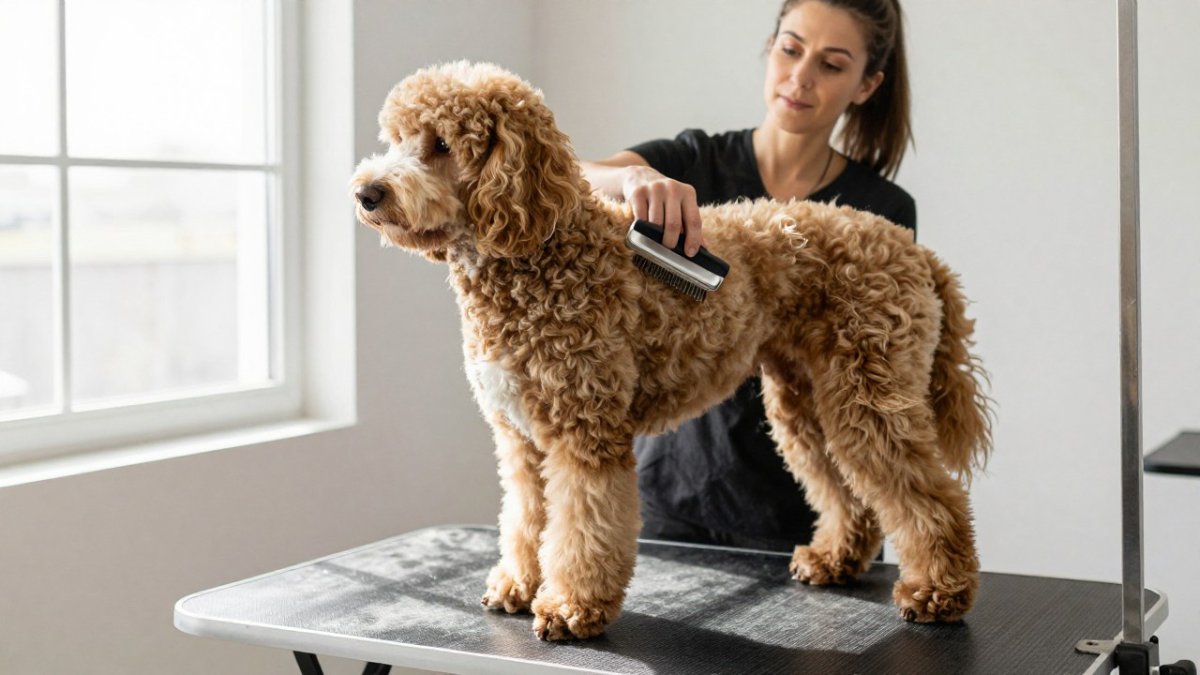
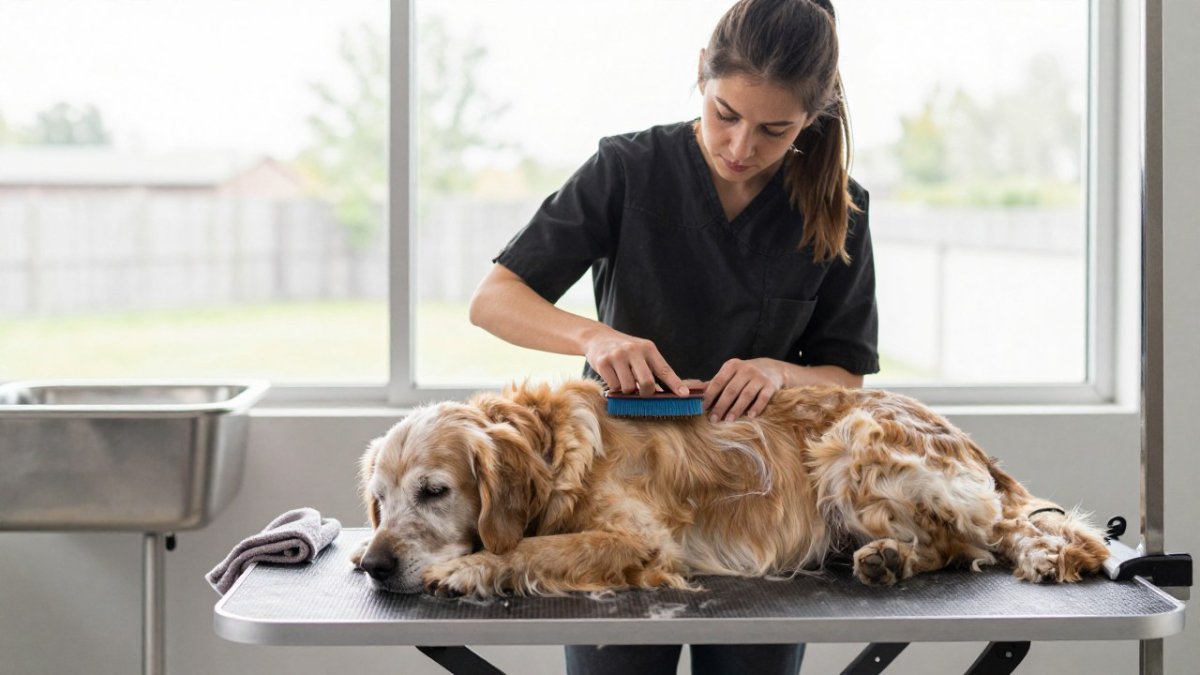
Brush most senior dogs three to four times a week for five to ten minutes. Short sessions beat one long marathon. A dog that gets sore after fifteen minutes will fight the brush next time.
For double-coated breeds, a weekly session with a de-shedding tool helps. For short coats, a soft brush and a quick once-over is plenty.
A practical pattern is to brush the areas the dog can no longer reach first, the back end, the hind legs, and behind the ears, because those are where mats start.
Here is the bathing and brushing rhythm we recommend for older dogs with fragile skin.
| Step | What to do | Frequency or detail |
|---|---|---|
| Brush first | Remove loose hair and small tangles before water | Three to four times a week |
| Check the skin | Part the coat, look for redness, lumps, sores | Every session |
| Bathe | Use lukewarm water and a gentle shampoo | One bath every four to six weeks |
| Rinse | Rinse until water runs clear, then rinse again | Twice as long as you think |
| Dry | Pat with a towel, then air dry in a warm room | Never rub hard |
| Session length | Keep brushing short | Five to ten minutes |
Choosing Soft Brushes and Gentle Tools for Thin or Sensitive Skin
The best brush for a senior dog has soft bristles, rounded tips, and no sharp metal teeth. Start there and add tools only as the coat demands them.
A simple kit covers most needs:
- Soft-bristled brush for daily smoothing and loose hair
- Rubber curry comb for short coats and for massaging without scratching
- Slicker brush with flexible pins for medium coats, used with a light hand
- Wide-tooth comb for checking tangles near the skin
- Detangling spray to loosen knots before you pull
A common mistake is pressing hard with a slicker brush. Let the pins do the work. If you meet resistance, stop and work the knot loose with your fingers first.
This is also where personalized care pays off. For a deeper look at why that matters, see why personalized pet grooming services beat one-size-fits-all care.
Grooming Tips for Senior Dog Skin on Legs
Legs and feet collect the most debris and hide the most skin problems.
Older dogs often lick or chew at their legs. That can signal irritation, dry skin, or joint pain. Check between the toes for mats, burrs, and redness.
Use a soft brush in short strokes down each leg. Do not tug at mats near the ankle, where skin is thinnest.
If your dog snaps or pulls a leg away, stop. Pain in a limb is a reason to call your vet, not to push through.
Face Grooming Tips for Senior Dog Skin
Face grooming tips for senior dog skin focus on the muzzle, chin, and around the eyes, where hair traps moisture and food. Wipe the chin after meals with a damp cloth.
Use a soft washcloth or a small soft brush on the face. Never use clippers near the eyes unless your dog is calm and still.
Watch out: a sudden buildup of discharge or a bad smell near the ears or mouth is not a grooming problem. It needs a vet visit.
Signs of Skin Allergies in Dogs and When to Call the Vet
Skin allergies in dogs show up as itching, redness, hair loss, and repeated licking or chewing, often at the paws, ears, and belly. Senior dogs can develop allergies late in life, and their thinner skin shows irritation faster.
A Head-to-Tail Skin Check You Can Repeat Every Session
Run this check during every brushing session, parting the coat down to the skin as you go. It takes about two minutes and gives you a baseline to compare against week to week.
- Head and ears. Lift the ear flap and look for redness, discharge, or a sour smell. Check the muzzle and chin for crusting or hair loss.
- Neck and shoulders. Part the coat and look for flakes, greasy patches, or a collar rubbing a bare spot.
- Back and flanks. Run your hands with the coat and then against it. You are feeling for new lumps, scabs, and areas the dog flinches at.
- Belly and groin. These areas have the thinnest skin and show redness and rash first.
- Legs and paws. Check between the toes and around the paw pads for mats, burrs, redness, and chewing damage.
- Tail base and rear. This is a common spot for fleas, hot spots, and mats a dog can no longer groom away.
Note anything new, a lump, a sore, a patch of redness, and track whether it changes over the next few days. A photo taken in the same light each week is a simple way to see whether a spot is growing or healing.
When a Skin Change Needs Veterinary Attention
Grooming can support skin health, but it cannot diagnose or treat skin disease. Call your vet promptly if you see:
- A sore that oozes, bleeds, or does not heal within a few days
- A lump that is new, growing, or changing shape
- Itching that disrupts sleep, eating, or the dog's normal routine
- Widespread redness, rash, or hair loss
- A bad smell, discharge, or greasy skin that does not improve after a bath
- A dog that snaps, cries, or pulls away when a specific area is touched
A common pattern is for older dogs to develop dry, flaky skin or medication-related changes that look like allergies but need a vet's diagnosis. Follow your veterinarian's guidance on any topical product or remedy before applying it, and never use human shampoos, lotions, or over-the-counter creams on a dog unless your vet has approved them.
Our article on 7 signs of skin allergies in dogs walks through the warning signs in more detail.
Book a Gentle Senior Grooming Appointment
Some coats need more than home care, and that is where we come in. Our services are offered by appointment only, which allows for personalized attention in a welcoming environment.
If your dog gets anxious, our guide to calming steps for stress-free dog grooming for nervous pets is worth a read before your visit. When you are ready, you can review our full grooming services and book an appointment at either of our two locations.
Aging skin does not have to mean a scruffy coat or a stressed dog. It means softer tools, shorter sessions, and a groomer who knows how to adapt.
Frequently Asked Questions
How often should you bathe a senior dog?
Most senior dogs do well with a bath every four to six weeks, but that depends on coat type, skin condition, and how active your dog is. Dogs with sensitive skin or allergies may need a gentler schedule set by their vet. Use lukewarm water, a hypoallergenic or gentle shampoo, and rinse thoroughly. If your senior dog has mobility limits, a nonslip surface and supportive positioning make bathing safer and less stressful.
What brush is best for a senior dog with thin or delicate skin?
A soft-bristled brush or a rubber curry comb is usually the safest choice for thin, delicate senior dog skin. A slicker brush can work on longer coats if you use a light touch and keep the pins away from the skin. Avoid harsh metal tools and never pull through mats. Short, frequent sessions with a soft brush remove debris and loose hair without scraping sensitive areas.
When should a senior dog's skin problem be checked by a veterinarian?
See a vet if you notice lumps, sores, redness, scabs, unusual odor, or hair loss that does not improve, or if your dog chews, licks, or scratches constantly. Skin changes in older dogs can have several causes, and some need treatment. A step-by-step skin check during brushing and bathing helps you spot changes early. Your groomer can point out what they see, but a veterinarian diagnoses and treats medical conditions.
How can I make grooming more comfortable for a senior dog with arthritis?
Use a nonslip surface and supportive positioning so your dog can lie down or sit during grooming. Keep sessions short and offer positive reinforcement with treats and praise. Brush sensitive areas gently and avoid forcing stiff joints into awkward positions. If your dog shows pain or stress, stop and try again later. A professional groomer can help adapt the routine to your dog's mobility limitations.