 how-to
Grooming Tips for Senior Cats: A 2026 Guide
Table of Contents
- Why Grooming Becomes Harder for Older Cats
- How Often to Brush a Cat as They Age
- Dealing with Matted Fur on an Older Cat
- Selecting Senior Cat Grooming Tools That Work
- Bathing Your Senior Cat Safely and Stress-Free
- Nail Trimming and Claw Maintenance for Elderly Cats
- When to Seek Veterinary Help for Grooming Issues
- Frequently Asked Questions
Last Updated: October 7, 2026
Why Grooming Becomes Harder for Older Cats
As cats age, arthritis, reduced flexibility, and sensitive skin make self-grooming painful or impossible, making grooming tips for senior cats essential to their comfort.
At STEPH'S CUTE CRITTER CUTS & CORI'S CRITTER CREATIONS, we know grooming tips for senior cats require a different approach than grooming young, healthy pets.
With the right technique and tools, at-home grooming is manageable, and professional grooming becomes more valuable with age.
How Often to Brush a Cat as They Age
Brushing frequency depends on coat type and mobility. Most senior cats need brushing more often than younger cats, even short-haired ones.
Brushing frequency for long-haired seniors
Long-haired seniors need brushing 3-4 times weekly; daily is ideal if tolerated.
Long hair mats quickly around the armpits, belly, and rear, trapping moisture and irritating skin.
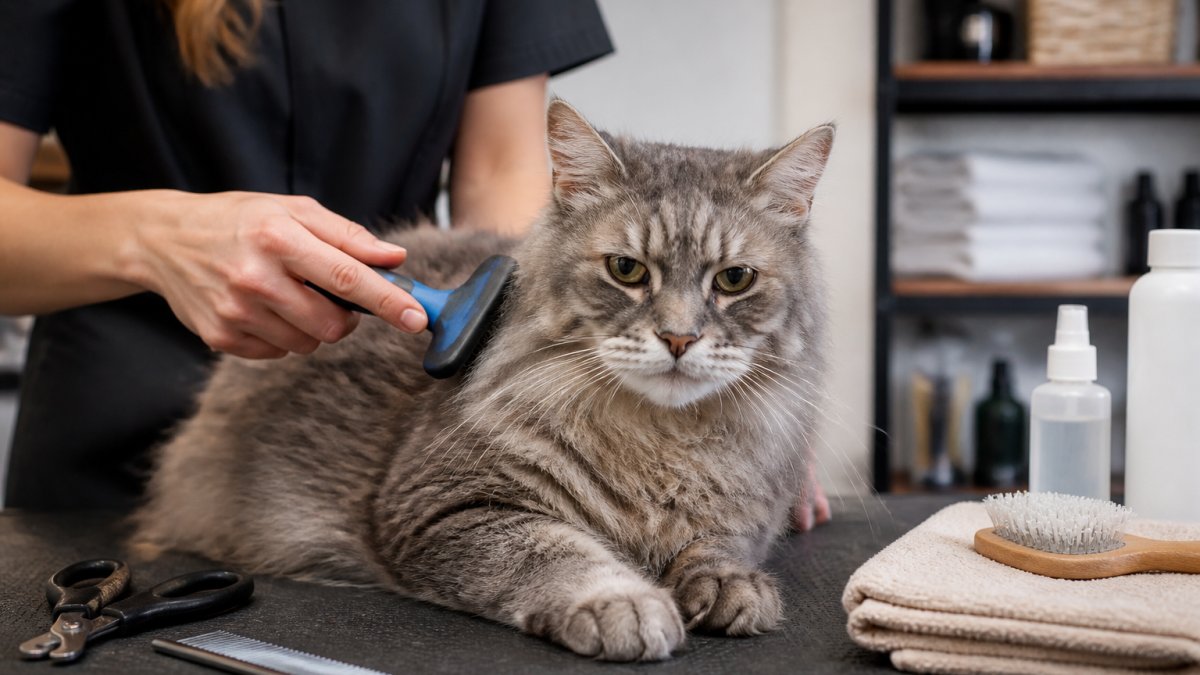
Start with a wide-tooth comb to loosen tangles, then follow with a slicker brush. Keep sessions to 10-15 minutes and stop if your cat shows stress or pain.
Watch for signs of skin sensitivity. If your cat has dry, flaky skin or seems uncomfortable during brushing, consult your veterinarian.
Brushing frequency for short-haired seniors
Short-haired seniors need brushing 1-2 times weekly; even short coats benefit from regular attention with age.
Short-haired cats shed constantly; without brushing, loose hair accumulates, creating dander and reducing air circulation. A quick brushing removes it and keeps the coat healthy.
Use a rubber brush or soft slicker with gentle strokes; most short-haired cats enjoy it if you keep it light and brief.
Dealing with Matted Fur on an Older Cat
Matted fur is one of the most common senior cat grooming problems.
Never cut mats out yourself with scissors, mats lie close to the skin, and one slip causes injury.
Start with a wide-tooth comb, working from the outer edge inward in short, gentle strokes.
For severe matting, professional grooming is safest.
Prevention beats treatment: brush regularly to catch loose hair before it tangles, focusing on mat-prone areas, behind the ears, under the arms, the belly, and the rear.
Selecting Senior Cat Grooming Tools That Work
The right tools make grooming easier for both of you. Senior cats often have sensitive skin and handling anxiety, and the best choice depends on whether your cat has thin, fragile skin, dense mats, or both.
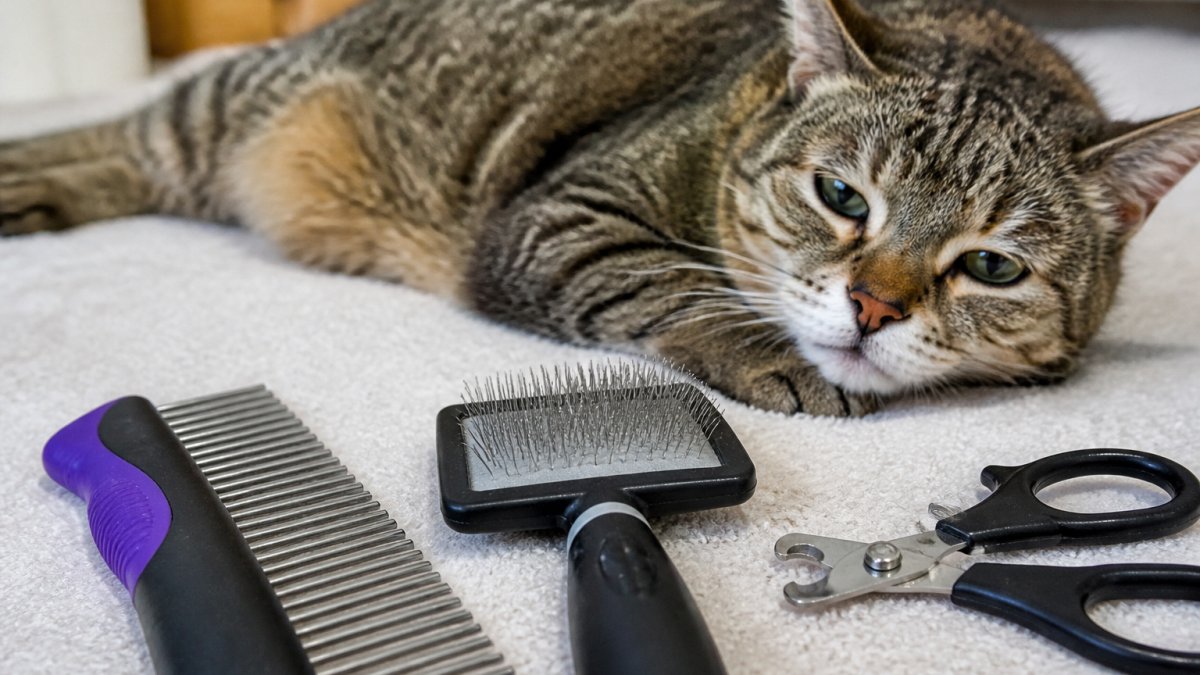
Tools for cats with thin, fragile skin
As cats age, skin loses elasticity and becomes paper-thin, so a standard slicker with stiff wire pins can scratch or tear it. Look for:
- Soft-tip slicker brush: The pins have rounded, coated tips that glide over thin skin without scratching. Test the pins on the back of your hand first, if they feel sharp to you, they're too sharp for your cat.
- Rubber curry brush: A nubbed rubber brush removes loose hair through gentle friction. It's nearly impossible to injure skin with one, making it the safest option for cats with fragile skin or those on blood thinners.
- Baby brush or soft bristle brush: A soft-bristle human baby brush works well for short-haired seniors with thin skin. The bristles are gentle enough for daily use.
Tools for cats with dense mats
Senior cat mats form tight, felted clumps a standard comb can't penetrate. Use tools designed to break mats apart without pulling skin:
- Mat splitter or mat rake: A tool with a short, hooked blade that slices through mats vertically. Use it to break large mats into smaller sections before combing. Never use it parallel to the skin, always cut into the mat, not across it.
- Wide-tooth comb with rounded tines: After splitting, a wide-tooth comb with rounded tines works through the loosened hair without scraping skin. Start at the outer edge of the mat and work inward in small sections.
- Detangling spray or cornstarch: Cornstarch is inexpensive and safe. Work a small amount into the mat with your fingers, let it sit for a few minutes, then comb. Detangling sprays designed for cats also work but check for alcohol-free formulas.
Tools for cats with arthritis or limited mobility
If your cat can't comfortably stand or lie in certain positions, reach matters more than tool type:
- Long-handled comb: A comb with a longer handle lets you reach the belly and rear without contorting your cat into a painful position.
- Grooming mitt: A mitt fits over your hand and lets you brush with a flat palm, which is less intimidating to a cat who flinches at a brush coming toward them.
- Electric clipper with a quiet motor: For cats with severe matting who can't tolerate combing, a quiet clipper can remove mats safely. Look for one rated under 60 decibels, loud clippers stress cats and make the job harder.
Tools to avoid
- Dog grooming tools: Dog brushes and clippers are designed for thicker skin and denser coats. They're too aggressive for feline skin, especially senior feline skin.
- Furminator-style deshedding blades: These cut hair at the skin level and can irritate thin senior skin. They're also easy to overuse, creating bald patches.
- Dull clippers: Dull blades crush nails and pull hair instead of cutting. Replace blades or clippers as soon as they start snagging.
Bathing Your Senior Cat Safely and Stress-Free
Most cats dislike baths, and seniors dislike them more due to mobility issues and stress sensitivity. Still, occasional baths remove loose hair, reduce dander, and keep the coat healthy.
Bathe your senior cat only when necessary, typically 2-4 times per year, or as recommended by your veterinarian. Overbathing dries out the skin.
Preparing the space and water temperature
Set up before bringing your cat in: towels, cat-safe shampoo, a rinsing cup, and a non-slip mat within arm's reach.
Use warm water around 85-90°F (29-32°C), tested on your inner wrist. Too hot burns sensitive skin; too cold causes shivering and anxiety.
Fill the tub with just 2-3 inches of water, shallow is less frightening, and use a non-slip mat to prevent sliding and panic.
Let your cat explore the closed bathroom first; some feel calmer in a smaller space.
Arthritis-friendly bathing positions
Arthritis makes standard bathing positions painful. Instead of holding your cat upright or forcing them to stand, try these low-stress postures:
- Towel-lined sink or tub floor: Place a folded towel on the bottom of the sink or tub. This gives your cat traction and lets them lie down if standing hurts. A cat who can lie down during the bath is far less likely to struggle.
- Side-lying position: For cats with severe hip or knee arthritis, let them lie on their side in shallow water. Support their head with one hand and wash the exposed side with the other. This avoids putting weight on painful joints.
- Supported standing: If your cat can stand but tires quickly, place one hand under their belly to take weight off their hind legs. Use your other hand to wash. Keep the bath under 5 minutes.
- Never scruff: Scruffing pulls on the neck and can aggravate arthritis in the spine. It also increases stress. Use a towel wrap or a grooming harness instead if you need extra control.
Handling techniques for cats with arthritis
Lower your cat in slowly, letting them feel the water with their paws first, and talk in a calm, quiet voice throughout.
Wet the coat with a cup of warm water, avoiding the face and ears.
Keep baths to 5-10 minutes; seniors tire quickly, and stress can trigger health problems, especially with heart conditions or high blood pressure.
Lift your cat out slowly, wrap them in a warm towel, and pat dry gently, vigorous rubbing hurts arthritic joints.
Behavioral desensitization for cats who fear baths
If your senior cat no longer tolerates baths due to pain or anxiety, don't force it. Re-introduce gradually:
- Start with dry runs: Bring your cat into the bathroom, give a treat, and leave. Repeat daily for a week. No water involved.
- Add water sounds: Run a trickle of water while your cat eats treats nearby. This builds a positive association with the sound.
- Touch with a damp cloth: Wipe one paw with a warm, damp washcloth. Treat. Repeat on different body parts over several days.
- Partial bath: Wash just one leg or the rear with a cup of warm water. Treat and dry. Build up to a full bath over weeks, not days.
If your cat flinches, growls, or tries to bite, stop immediately. Never push through pain, consult your vet about pain management first.
Nail Trimming and Claw Maintenance for Elderly Cats
Use sharp stainless steel clippers at a 45-degree angle, cutting only the clear or white part of the nail.
With dark nails, you can't see the quick, so cut less rather than more and trim frequently in small amounts.
Many seniors resist nail trimming due to arthritis or anxiety.
After trimming, check between the toes for debris or matting, areas seniors often can't reach.
When to Seek Veterinary Help for Grooming Issues
Some grooming problems need veterinary care. Know when to call your vet.
Hair loss or bald patches: Excessive shedding or bald patches indicate a health problem requiring veterinary evaluation.
Your vet can recommend grooming modifications based on your cat's health, including specific shampoos or pain management strategies.
Grooming your senior cat takes patience, the right tools, and realistic expectations.
If home grooming becomes too stressful for your cat or too challenging for you, professional grooming helps.
Frequently Asked Questions
How often should you brush a senior cat?
Most senior cats benefit from brushing 2-3 times per week, though long-haired seniors may need daily attention to prevent matting and dander buildup. Frequency depends on coat type, mobility, and whether your cat can still self-groom effectively. Cats with arthritis or mobility issues often need more frequent brushing since they can't reach all areas. Start with twice weekly and adjust based on your cat's coat condition and comfort level.
Why has my older cat stopped grooming herself?
Older cats often stop self-grooming due to arthritis, reduced flexibility, dental pain, or cognitive changes. Arthritis makes it painful to contort into grooming positions, while dental disease can cause discomfort when licking. Skin sensitivity and dull coats may also discourage grooming behavior. If your senior cat shows signs of grooming decline, it's worth a veterinary consultation to rule out pain, thyroid issues, or other health concerns affecting her hygiene habits.
What grooming tools are safest for an older cat with arthritis?
Choose lightweight tools with soft bristles: slicker brushes with ergonomic handles, wide-tooth combs for gentle detangling, and grooming wipes for quick cleanups without requiring the cat to be bathed. Avoid metal combs that pull, and skip harsh deshedding tools that can irritate sensitive skin. Keep sessions short and support your cat's body to minimize strain on arthritic joints. Handheld tools are often easier on both you and your cat than large, awkward grooming implements.
How can I treat my senior cat's matted fur safely?
For minor mats, use a wide-tooth comb and work gently from the outside in, never pulling. For stubborn tangles, apply a small amount of cornstarch or mat-removal spray designed for cats, then comb slowly. Never use scissors near the skin, as older cats' skin is fragile and easily injured. For severe matting close to the body or over large areas, seek professional grooming help rather than risk injury. If matting is accompanied by skin irritation or your cat shows pain, consult your veterinarian.