 how-to
How to Prevent Matting in Winter Dog Coats
Table of Contents
- Why Winter Coats Are Prone to Matting
- How Often to Brush a Long-Haired Dog
- Step-by-Step Brushing Technique to Prevent Mats
- Preventing Dog Matting Under Sweaters
- Dog Conditioner for Preventing Mats
- Safe Dematting Techniques for Dogs
- Drying Your Dog Properly After Winter Baths
- Frequently Asked Questions
Last Updated: October 17, 2026
Why Winter Coats Are Prone to Matting
Understanding how to prevent matting in winter dog coats starts with recognizing that winter coats create the perfect storm for matting.
Coats also trap moisture, so the undercoat stays damp longer after walks.
Long-haired and double-coated breeds are hit hardest.
Owners often leave coats on for hours, and constant pressure and movement create mats harder to remove than summer tangles.
How Often to Brush a Long-Haired Dog
Brush your long-haired dog at least three times per week during winter, once a week isn't enough.
For dogs wearing sweaters or coats regularly, brush every other day. It takes only 10-15 minutes and prevents mats from forming, prevention is far easier than dematting.
Here's the rhythm that works best:
- Daily: Quick check of high-risk areas (ears, armpits, tail base)
- Every 2-3 days: Full brushing session with a slicker brush
- Weekly: Deep grooming with an undercoat rake to remove loose fur
Skip a week and you'll find mats that take 30 minutes to remove. After walks, dry your dog thoroughly, damp fur mats faster than anything else.
Step-by-Step Brushing Technique to Prevent Mats
How you brush matters as much as how often. Most owners brush the surface and miss the undercoat where mats actually form.
Brush Down to the Skin
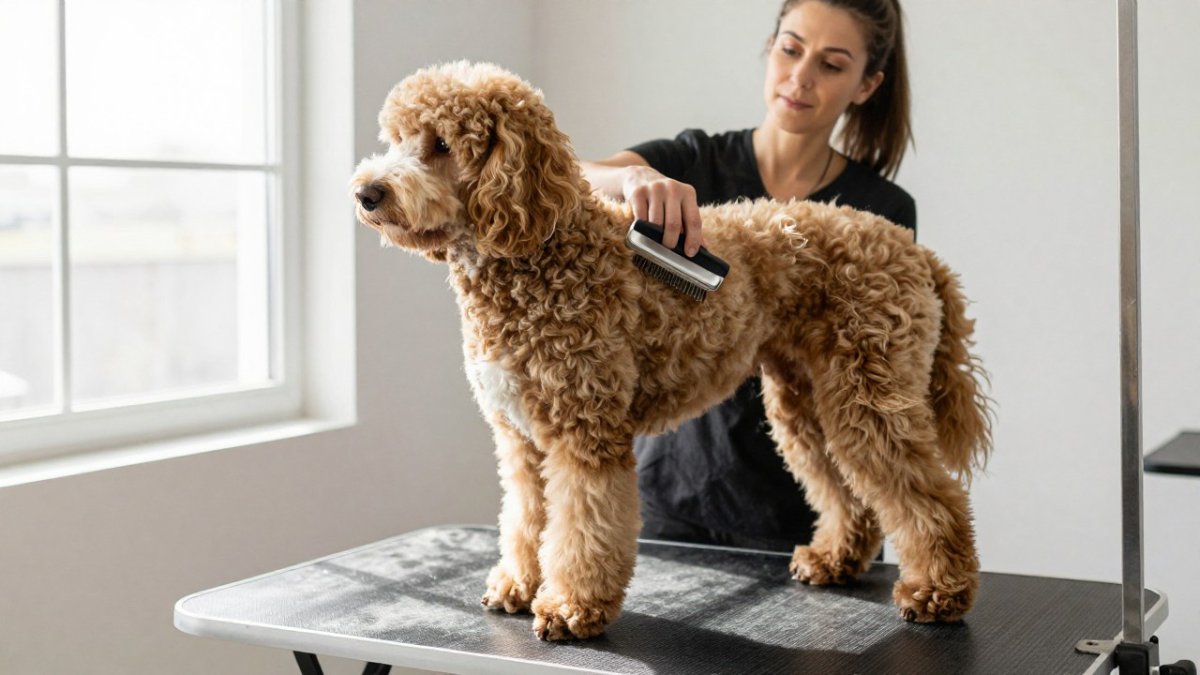
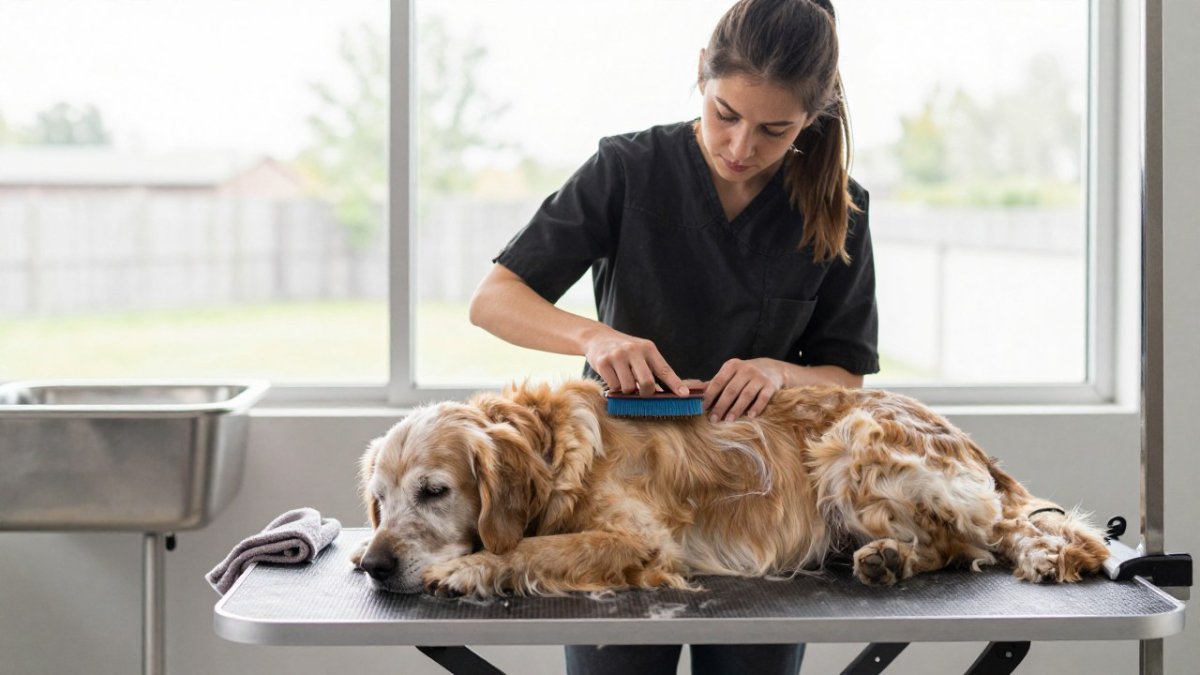
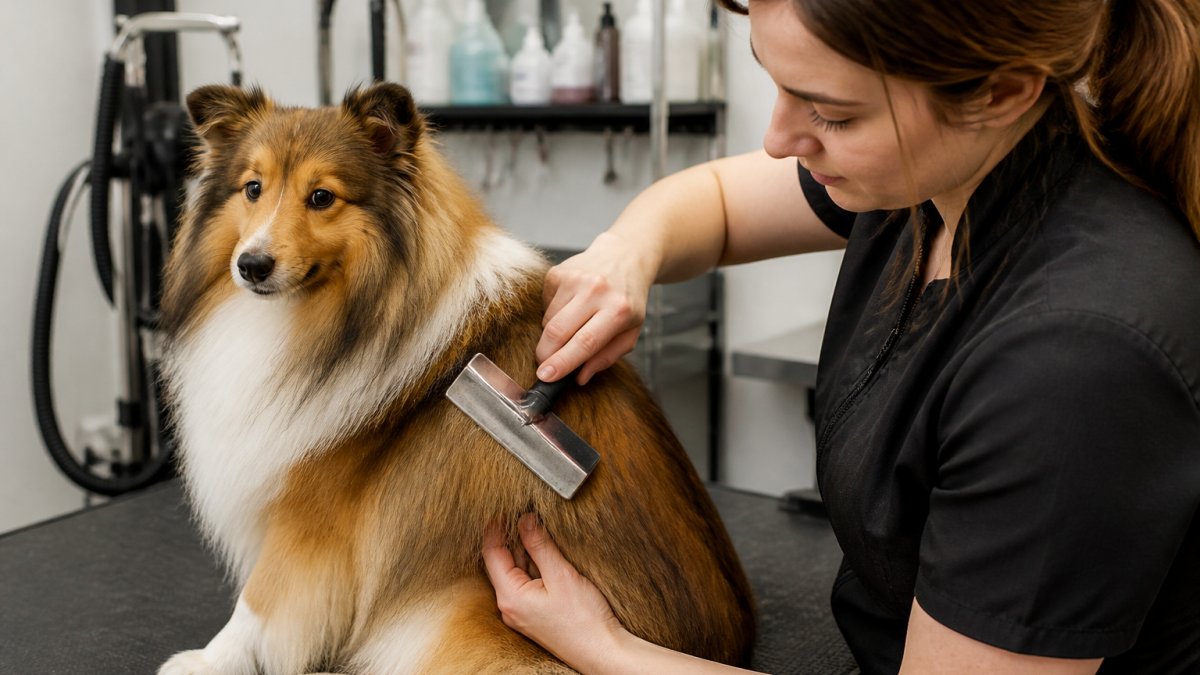
Start with a slicker brush. Place it against your dog's skin and brush outward, reaching all the way to the base of the hair, not just the top layer.
Focus on High-Risk Areas
Mats cluster where friction and moisture concentrate.
Behind the ears is the worst zone, the collar rubs there constantly and sweaters bunch up. Check it first. Armpits mat fast because the legs move against that area all day; lift each leg gently and brush the underside thoroughly. Under the tail base is another trouble spot, brush in multiple directions. Between the back legs and inner thighs stay warmer and trap moisture, so brush carefully and check for early mats.
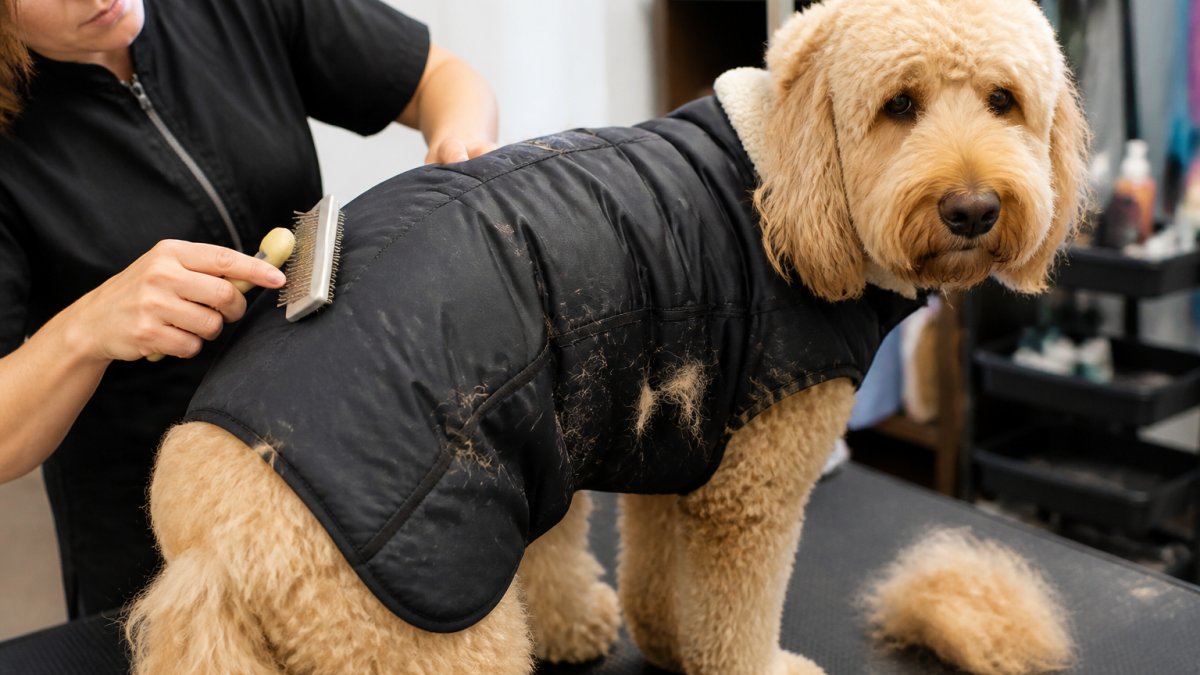
Preventing Dog Matting Under Sweaters
Sweaters and coats are necessary in winter but cause matting if you don't manage them. The trick is reducing friction and moisture, starting with how the garment is built and fits.
How garment construction drives friction
Matting under clothing comes from three forces: rubbing (fabric sliding against hair), pressure (fabric pressing hair into itself), and trapped moisture (sweat and snowmelt held against the skin). Lining, seams, and coverage determine how much of each your dog experiences.
- Lining: A smooth, satin-like or moisture-wicking lining lets hair glide instead of catching. Fleece and sherpa linings grab hair and hold it in a rubbed position, a common pattern behind mats on the shoulders and chest.
- Seams: Flat-locked or taped seams lie flush against the coat. Raised, bulky seams, especially along the back, chest, and leg openings, create a hard edge that hair wraps around. Run a finger along every interior seam before buying.
- Coverage: Full-coverage suits protect more of the body but create more contact zones. A shorter jacket reduces friction points but leaves the belly and legs exposed to snow and salt.
The fit check in common matting zones
A garment can look right on the rack and still be wrong on the dog. Check these zones with the coat on, the dog standing and walking:
- Neck and behind the ears: You should be able to slide two fingers under the collar or neck opening. If fabric bunches behind the ears when your dog looks up, it will rub there.
- Chest and shoulders: The front panel should lie flat with no wrinkles. If you can pull more than about an inch of slack, it will shift and rub; if it's taut against the fur, it's too tight.
- Under the front legs: Lift each leg through its full range. The leg opening should not dig into the armpit or drag fur when the leg swings forward.
- Belly strap: Slide a flat hand under it. It should sit snug but not compress the coat. A visible indentation in the fur means a friction line.
- Back length: The rear hem should not ride up over the tail base when your dog sits or walks, bunching there is a classic mat starter.
- Rear leg openings: Watch your dog walk and squat. Openings that catch on the thighs or drag across the inner leg will rub continuously.
If any zone fails, size up, size down, or try a different cut. A garment that needs constant adjusting is the wrong garment.
A coat-on and coat-off care schedule
How often the garment is worn should drive how often you check and clean underneath it:
- Every time the coat comes off: Run your fingers through the chest, shoulders, armpits, behind the ears, and tail base. Feel for warmth, dampness, or small knots, two minutes catches most problems early.
- After every wear: Air the garment and hang it so the lining dries completely. A damp lining pressed back onto the dog is one of the fastest routes to matting.
- Every 3-4 wears, or weekly in wet weather: Brush the dog's coat fully before the next wear, focusing on the zones the garment touches.
Fabric choices for mat-prone dogs
Knit sweaters cause more friction than smooth fabrics. If your dog mats easily, choose a smooth outer shell with a slick interior lining, and avoid heavy cable knits, sherpa linings, and raised appliqués inside. Cotton blends and smooth synthetics slide better than pure wool.
When the dog resists clothing
Some dogs tense up, tuck their tail, or refuse to walk in a coat, and a tense dog shifts the garment constantly, its own matting risk. Acclimation steps that help:
- Put the garment on for a few minutes at a time indoors, with treats, before expecting a full walk.
- Start with a lighter, less restrictive layer and build up to a full coat.
- Check that the leg openings and belly strap aren't the source of discomfort; a dog that freezes often has a strap digging in.
Ask your groomer at STEPH'S CUTE CRITTER CUTS & CORI'S CRITTER CREATIONS which styles work best for your dog's coat type, they can feel the coat and recommend a cut and lining that reduce friction for your specific dog.
Dog Conditioner for Preventing Mats
Conditioner is one of the most underrated tools for preventing mats. The right conditioner makes brushing easier and reduces matting significantly.
Use a conditioner designed for dogs, not human products, dog skin has a different pH, and human conditioner can irritate it and make matting worse.
Leave-in conditioners work well between baths: spray lightly on damp fur and brush through.
Safe Dematting Techniques for Dogs
Sometimes mats form despite your best efforts. Removing them safely matters more than speed, and the most important skill is knowing which mats you can work out at home and which ones you should stop touching.
First, decide: workable or not?
Before you reach for a tool, assess the mat with your fingers. A mat is generally workable at home if:
- It sits on the surface of the coat and you can slip a finger underneath it.
- It's smaller than roughly a thumbnail and hasn't tightened against the skin.
- The skin beneath looks normal, no redness, swelling, odor, or moisture.
Stop and seek professional help if:
- The mat is tight against the skin and you cannot get a finger under it.
- The skin beneath is red, raw, moist, odorous, or has a sore or discharge.
- The mat is large, widespread, or has been there for days or weeks.
Why scissors near the skin are dangerous
It's tempting to snip a mat out with scissors, but mats pull skin up into the knot. The skin beneath a tight mat can be only a fraction of an inch from where you'd cut, and a dog that moves suddenly turns a small snip into a serious wound. If a mat must be cut, that's a job for a groomer with mat splitters and clippers designed to get under the knot safely.
Working out a small, surface mat
- Loosen with your fingers first. Gently separate the matted hair into smaller sections, working from the outer edge inward. Pause if your dog tenses.
- Apply a detangling spray and let it soak for a few minutes to lubricate the hair and reduce the force needed.
- Use a mat splitter or dematting comb on tight spots. Angle the tool and work sideways from the outer edge inward, never push it straight down toward the skin.
- Follow with a slicker brush at the edge of the mat, working inward in small strokes.
- Comb through when done with a metal comb to confirm no snags remain.
Never pull a mat out with force. You'll hurt your dog, tear out healthy hair, and the damaged coat is more likely to mat again in the same spot.
Skin and health warning signs beneath mats
A mat isn't just cosmetic. Hair pulled tight against skin traps moisture and restricts airflow, and the skin underneath can become irritated or infected. Watch for:
- Redness or darkening of the skin under or around the mat.
- Soreness or flinching when the area is touched.
- Odor or discharge, a sign the skin may be infected.
Any of these means the matting needs more than routine grooming. Have a groomer or veterinarian check the area before you attempt removal yourself.
When to call a professional
Large or tight mats should go to a professional groomer, who has the right tools and experience to remove them safely. If the skin is red or irritated under a mat, don't try to remove it yourself, have a groomer or vet check it first. A groomer can also tell you whether a partial or full clip-out is kinder than hours of dematting.
Drying Your Dog Properly After Winter Baths
How you dry your dog after a bath matters as much as how you brush.
Never just towel dry and let your dog air dry, that leaves moisture in the undercoat where mats form.
Dry in sections, starting with the head and working backward.
Never bathe your dog right before putting on a sweater.
Learning how to prevent matting in winter dog coats is achievable with consistent brushing and proper coat care.
At STEPH'S CUTE CRITTER CUTS & CORI'S CRITTER CREATIONS, we help pets stay comfortable and mat-free year-round. If matting becomes overwhelming, professional grooming appointments keep your dog's coat healthy and tangle-free.
Frequently Asked Questions
How often should you brush a dog with a long winter coat?
Dogs with long coats need brushing at least 3-4 times per week during winter months, and daily if possible. Winter conditions, cold, snow, and indoor heating, create the perfect environment for mats to form. Brush before and after outdoor activities, and always brush before your dog wears a sweater or winter coat. Regular brushing removes loose hair and prevents tangles from developing into stubborn mats.
Can dog sweaters cause matting?
Yes, sweaters and winter coats can cause matting if your dog's coat isn't properly prepared. Friction from the fabric, combined with moisture and body heat, creates ideal conditions for tangles. To prevent matting under sweaters, brush your dog thoroughly before putting on any clothing, ensure the coat is completely dry, and brush again after removing the sweater. Choosing a well-fitting sweater also reduces friction and friction-related matting.
Does dog conditioner help prevent matting?
Yes, dog conditioner helps prevent mats by making the coat smoother and easier to brush. A good conditioner reduces friction between hair strands and adds slip to the coat, making tangles less likely to form. Use conditioner during winter baths and consider a leave-in conditioner between washes. Apply conditioner primarily to the undercoat and mid-shaft of the hair, then brush through while damp to distribute it evenly and prevent mats from forming.
When should you ask a professional groomer for help with mats?
If mats are close to the skin, painful, or extensive, seek professional help. Groomers have specialized tools and techniques to safely remove matted fur without damaging the skin underneath. If your dog shows signs of skin irritation, redness, or discomfort when you touch matted areas, a professional can assess the situation and provide safe dematting or trimming. Attempting to remove severe mats at home risks injuring your dog's skin.