 how-to
Professional Grooming for Seasonal Coat Changes
Table of Contents
- Why Professional Grooming Matters for Seasonal Coat Changes
- How Seasonal Transitions Affect Your Pet's Coat
- Dog Grooming for Shedding: Managing Heavy Fur Loss
- Undercoat Removal for Dogs: Safe De-Shedding Techniques
- How Often to Groom a Dog During Seasonal Changes
- Dog Grooming Between Appointments: At-Home Maintenance
- Preparing Your Pet for a Seasonal Grooming Appointment
- Frequently Asked Questions
Last Updated: October 9, 2026
Why Professional Grooming Matters for Seasonal Coat Changes
Seasonal coat changes affect your pet's comfort, health, and appearance, which is why professional grooming seasonal coat care is essential. As temperatures shift, your dog's coat transitions dramatically, and managing it is about health, not just looks.
Professional grooming seasonal coat management handles what at-home care cannot: heavy shedding, damaged hair, and coat health through temperature shifts.
Here's what makes professional grooming essential during seasonal transitions:
- Removes excess loose fur before it covers your home
- Prevents mats and tangles that worsen with seasonal shedding
- Identifies skin issues early when they appear
How Seasonal Transitions Affect Your Pet's Coat
Most dogs have a double coat with an undercoat and guard hairs, and the undercoat sheds heavily when seasons shift (Dog Shedding: When Dogs Shed Most and How to Manage It).
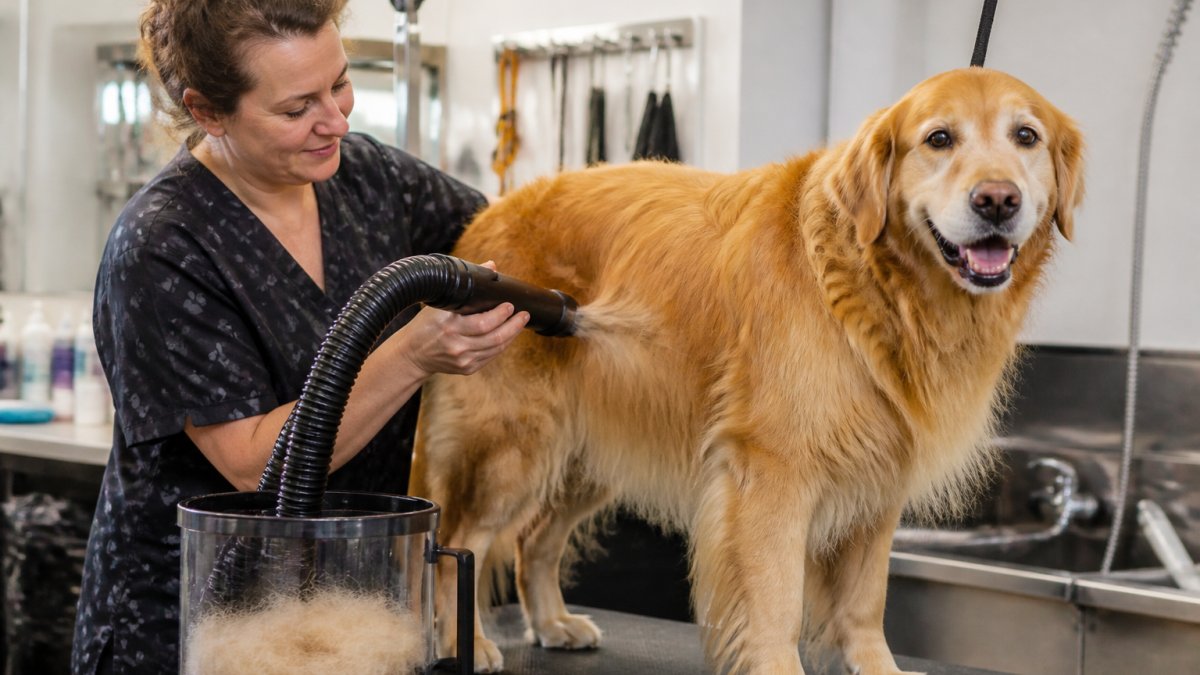
Spring brings the heaviest shedding as the winter coat loosens in clumps. Summer grooming removes excess fur for temperature regulation. Fall triggers a second shedding cycle as a thicker winter coat grows in.
Different coat types respond differently to seasonal changes:
- Double coats (Labs, Golden Retrievers, German Shepherds): Heavy shedding twice yearly; need regular de-shedding
- Single coats (Poodles, many Doodles): Minimal shedding; need regular trimming to prevent matting
- Curly coats (Poodles, Doodles): Prone to matting during seasonal transitions; need frequent professional maintenance
Dog Grooming for Shedding: Managing Heavy Fur Loss
Heavy shedding during seasonal transitions can feel overwhelming, fur everywhere, constant vacuuming, and a coat that mats and itches. Professional dog grooming for shedding addresses this directly, but results depend on the coat type.
Why loose undercoat is more than a housekeeping problem
The undercoat is the dense, woolly layer beneath the guard hairs. It insulates in winter and sheds in waves as daylight and temperature shift. When shed undercoat stays trapped against the skin:
- It traps moisture and body heat, which creates a warm, damp microclimate that favors irritation and yeast overgrowth.
- It packs down into felted mats, especially behind the ears, under the collar, in the armpits, and around the tail base.
- It blocks air circulation, so the skin stays damp longer after swimming, bathing, or a rainy walk.
Removing that trapped layer restores airflow and lets skin dry normally, clearing dead undercoat before it mats, not stopping hair growth.
What actually happens during a professional de-shedding session
A thorough de-shedding appointment is a sequence:
- Assessment. The groomer checks coat type, skin condition, and where undercoat is packed, identifying mats before any tool touches the coat.
- Pre-loosening. A conditioning treatment or warm bath loosens packed undercoat so tools glide instead of snagging.
- Mechanical removal. Depending on coat type, the groomer uses a de-shedding comb, undercoat rake, or high-velocity dryer, which pushes air through the coat and ejects loose fur without dragging a blade across the skin.
- Detail work. Ears, armpits, tail base, and britches get hand attention because mats hide there.
- Skin check and finish. The groomer inspects for redness, hot spots, parasites, or bald patches and flags anything needing a veterinarian.
Matching the method to the coat type
The same tool that helps a Labrador can damage a Poodle's coat or a terrier's wire jacket.
- Double coats (Labs, Golden Retrievers, German Shepherds, Huskies): The undercoat is meant to shed. De-shedding combs and undercoat rakes work with light pressure in the direction of growth. Never shave a double coat to reduce shedding, the guard hairs protect against sunburn, insects, and temperature swings, and shaving can disrupt regrowth.
- Curly and wool coats (Poodles, many Doodles): These shed very little but mat easily because dead hair stays trapped in the curl. They need regular trimming and combing rather than de-shedding rakes, which pull and break the coat.
- Wire coats (many terriers): Hand-stripping removes dead jacket hair at the root and keeps the coat's texture; clipping softens the coat over time. A groomer will recommend which approach suits the dog.
- Short, single coats (Beagles, Boxers, many toy breeds): Minimal undercoat, so a rubber curry or soft slicker is usually enough. Heavy de-shedding tools can scratch bare skin.
How often, and when to stop
During peak spring and fall shedding, most double-coated dogs benefit from a professional de-shedding session every 4 to 6 weeks, with brushing at home two to three times weekly.
Stop and reassess if you see:
- Bald patches, thinning along the flanks, or a coat that fails to regrow
- Red, raw, or greasy skin, or a persistent odor
- Constant scratching, chewing, or head shaking
- Fur loss that is patchy rather than an even shed
Those are not normal seasonal shedding patterns and warrant a veterinary visit rather than another grooming appointment.
The at-home reality check
Brushing at home removes surface fur and distributes natural oils, but rarely reaches the packed undercoat a high-velocity dryer or properly angled rake can lift, which is why diligent brushers still see clumps on the floor. The professional session clears the deep layer; home brushing maintains it.
Undercoat Removal for Dogs: Safe De-Shedding Techniques
Undercoat removal is the part of seasonal grooming most likely to go wrong at home. The tools are widely sold, the instructions thin, and the damage, broken guard hairs, scratched skin, patchy regrowth, often shows up weeks later.
The guard-hair rule
The single most important principle in de-shedding: remove dead undercoat, protect the guard hairs. Guard hairs are the longer, coarser outer layer that give the coat its color, shed water, block sun, and insulate. Rakes and de-shedding combs reach the woolly underlayer, but will grab and cut guard hairs if used with too much pressure, at the wrong angle, or on a coat without a true undercoat.
Method-by-method: what each tool is for
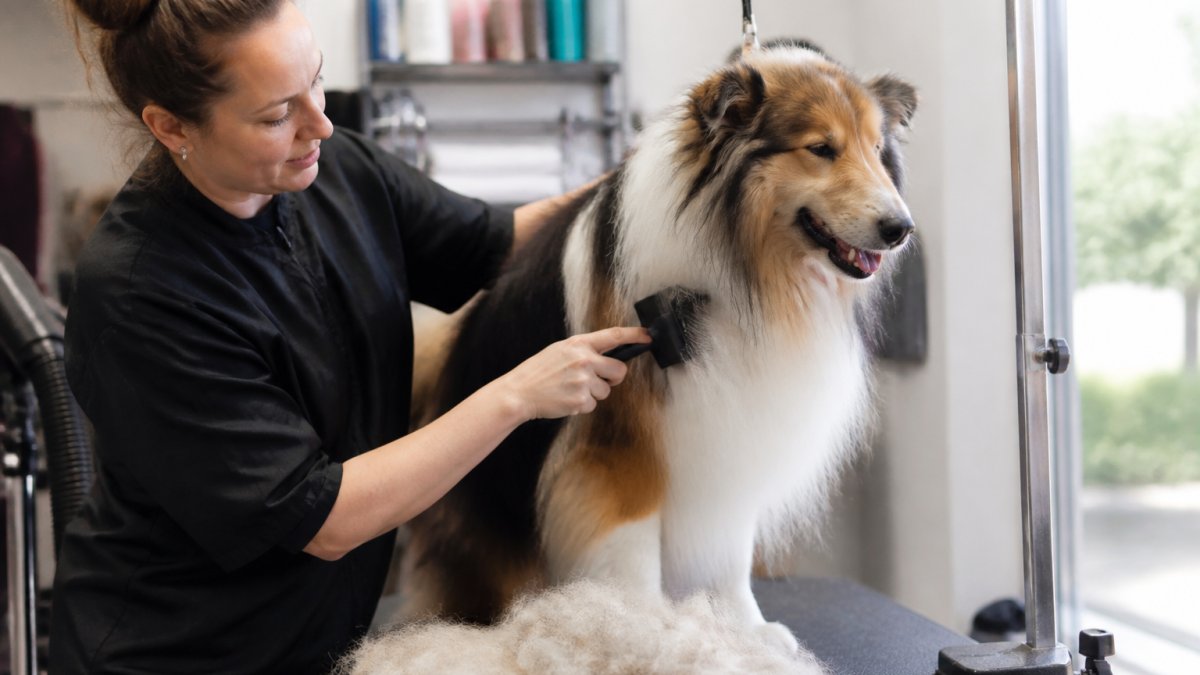
- High-velocity dryer. The safest first step for most double coats. Air pushes through the coat to lift and eject loose undercoat without a blade touching the skin, and it shows how much undercoat is present before deciding on further tools.
- Undercoat rake. A row of short teeth on a handle, designed to reach the underlayer. Use light, gliding strokes in the direction of hair growth. Do not dig, press to the skin, or use on curly or single coats.
- De-shedding comb. Finer and gentler than a rake, useful for finishing and for coats with moderate undercoat. Same rules: light pressure, direction of growth, stop if the comb snags.
- Slicker brush. For surface tangles and daily upkeep, not for deep undercoat removal. Pressing a slicker into the skin causes brush burn.
Coat-type decision guide
| Coat type | Undercoat present? | Appropriate de-shedding approach | Avoid |
|---|---|---|---|
| Double coat (Lab, Golden, Husky, Shepherd) | Yes, seasonal | High-velocity dryer, then rake or de-shedding comb with light pressure | Shaving; heavy pressure with any blade tool |
| Curly / wool (Poodle, Doodle) | Minimal shedding, mats instead | Regular trimming, combing, and professional maintenance | Undercoat rakes; de-shedding blades |
| Wire (many terriers) | Varies | Hand-stripping or clipping as advised by a groomer | Rakes that break the wire texture |
| Short single coat (Beagle, Boxer) | Little to none | Rubber curry or soft slicker for surface hair | Any deep de-shedding tool |
Pressure, angle, and the stop signal
The correct technique is lighter than most owners expect: the tool should glide across the coat surface, not scrape skin. Angle the teeth to follow the lay of the hair and work in small sections.
The stop signal is simple: if the tool snags, the dog flinches, or you see broken hairs rather than soft, fluffy undercoat, stop. Snagging means you are pulling live coat or hitting a mat, and continuing causes the exact damage de-shedding is supposed to prevent.
The shaving question, answered plainly
Shaving a double-coated dog does not meaningfully reduce shedding and removes the insulation and UV protection the coat provides (Double-Coated Dog Breeds: Care, Grooming, and Shedding). For most double-coated breeds, de-shedding plus trimming of feathering and sanitary areas is the appropriate seasonal approach.
Narrow exceptions, severe matting that cannot be safely worked out, or a veterinarian's instruction for a skin condition, are decisions to make with a professional, not a default seasonal choice.
When professional de-shedding is the right call
At-home brushing handles maintenance. Professional de-shedding is appropriate when:
- The undercoat is packed and the coat feels dense and woolly rather than soft
- Mats have formed in the armpits, behind the ears, or around the tail base
- The dog is shedding heavily and home brushing is not keeping up
- The dog is senior, anxious, or has mobility issues that make home grooming difficult
A professional can assess coat condition, choose the right tool sequence, and identify skin problems needing veterinary attention.
How Often to Groom a Dog During Seasonal Changes
Grooming frequency during seasonal transitions depends on coat type, shedding level, and lifestyle. Most dogs need more frequent professional grooming in spring and fall when shedding peaks.
Dog Grooming Between Appointments: At-Home Maintenance
Professional grooming is essential, but maintenance between appointments extends its benefits and prevents problems.
Effective at-home maintenance includes:
- Brush 2-3 times per week for double-coated dogs during shedding season
- Brush 1-2 times per week for single-coated dogs year-round
- Check for mats and tangles after outdoor activities or swimming
- Use the right brush for your dog's coat type (slicker brush for tangles, undercoat rake for double coats)
Matted hair traps moisture and creates conditions for skin problems.
Brush in the direction of hair growth, not against it, and use gentle pressure to avoid scratching skin.
Consistent brushing between professional appointments keeps the coat healthier, extends time between sessions, and helps your groomer do better work.
Preparing Your Pet for a Seasonal Grooming Appointment
How you prepare your pet affects the experience and results.
If your pet gets anxious in busy environments or around strangers, let your groomer know before the appointment.
Preparation steps for a successful grooming appointment:
- Brush your dog thoroughly before arriving to remove loose fur and mats
- Bathe your dog 1-2 days before if the groomer doesn't provide baths
- Trim nails or let the groomer handle this during grooming
- Check for skin issues and mention them to your groomer
Senior pets need extra consideration.
First-time grooming experiences set the tone for your pet's future relationship with grooming, so choose a groomer who takes time with puppies.
Professional grooming for seasonal coat changes isn't a luxury, it's essential pet care.
At STEPH'S CUTE CRITTER CUTS & CORI'S CRITTER CREATIONS, we understand how seasonal coat changes affect your pet.
Frequently Asked Questions
Does professional grooming help with shedding?
Yes. Professional grooming removes loose fur and excess undercoat before it ends up on your furniture and clothes. De-shedding treatments during seasonal transitions can help reduce shedding. Regular professional grooming also keeps your pet's skin healthy, which reduces stress-related shedding and supports a stronger, healthier coat overall.
How often should a dog be groomed during shedding season?
During heavy shedding seasons (spring and fall), most dogs benefit from professional grooming every 4-6 weeks. Your groomer can assess your dog's specific coat type and shedding intensity to recommend the ideal schedule for your pet.
Can a groomer safely remove a dog's undercoat?
Yes, professional groomers use specialized de-shedding tools and techniques designed to remove loose undercoat without damaging the topcoat or irritating the skin. Never shave a double-coated dog; instead, undercoat removal preserves the coat's natural insulation while eliminating excess fur. Always discuss your dog's coat type with your groomer before the appointment.
How can I maintain my dog's coat between professional grooming appointments?
Brush your dog 2-3 times per week with a slicker brush or undercoat rake to remove loose hair before it sheds. During seasonal transitions, increase brushing as needed. Bathe your dog when needed with a moisturizing shampoo, and use a high-velocity dryer after baths to help remove loose fur. Regular brushing also helps you spot skin irritation or mats early.