 ultimate-guide
Is Professional Grooming Worth the Cost?
Last Updated: November 7, 2026
Quick Summary
Professional grooming is worth the cost because it is routine health maintenance, not a luxury add-on. A trained groomer works through the entire coat and catches mats, hot spots, overgrown nails, and ear problems early, and for most coats that costs less than correcting a neglected one later.
- Many dogs do well on a professional grooming schedule of every four to eight weeks.
- Doodles, poodles, and double-coated breeds usually need grooming every four to six weeks.
- Skipping grooming lets mats tighten against the skin and can cause moist dermatitis.
- Ask for the quote in writing and ask what would push the price up.
- Confirm the groomer's liability insurance and vaccination policy before you book.
Table of Contents
- The Benefits of Professional Dog Grooming
- Professional Dog Grooming vs. At-Home Grooming
- What Does Dog Grooming Include?
- How Often Should Dogs Be Groomed?
- The Hidden Costs of Skipping Professional Grooming
- How to Choose a Groomer You Can Trust
- Book Your Pet's Grooming Appointment
- Frequently Asked Questions
The Benefits of Professional Dog Grooming
Professional grooming is a scheduled appointment with a trained groomer who bathes, brushes, trims, and inspects your pet from nose to tail. It is not a luxury add-on; it is routine health maintenance that catches problems early and keeps coats healthy between visits. This guide explains what professional grooming involves, when at-home care is enough, and how to judge whether professional grooming is worth the cost for your dog.
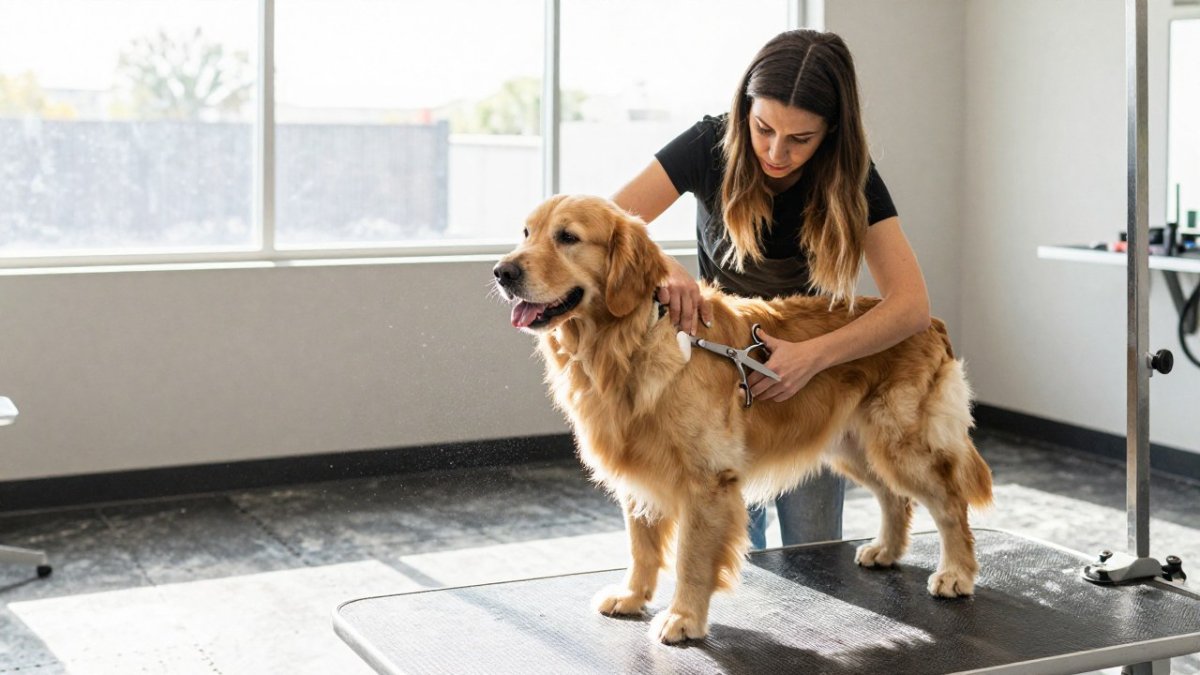
The benefits of professional dog grooming go well beyond a fresh haircut. A trained groomer works through the entire coat, not just the visible top layer, and that full pass surfaces things owners miss at home: mats forming behind the ears, a hot spot starting under the collar, nails grown into the paw pad, or an ear canal that needs a vet's attention.
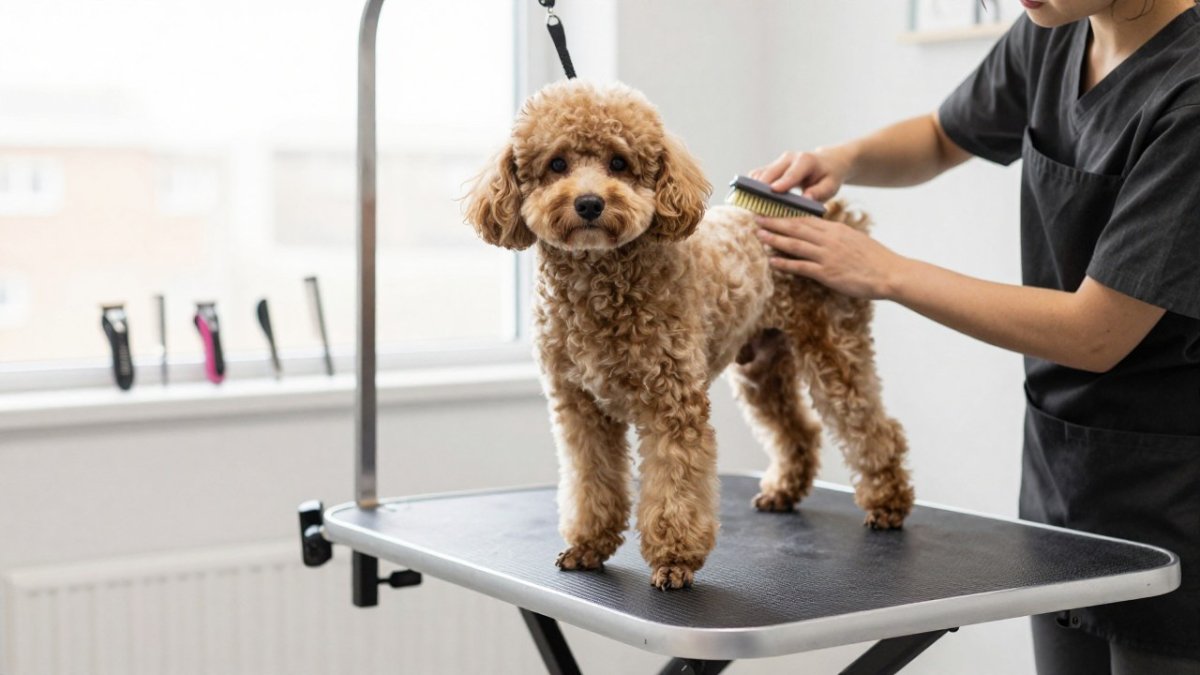
Handling skill matters as much as tools. Experienced groomers read body language and use gentle restraint. Anxious dogs and senior pets often do better with a groomer than with a bath at home.
Professional Dog Grooming vs. At-Home Grooming
Home grooming wins on one measure only: it costs nothing beyond supplies. Professional dog grooming vs. at-home grooming is really a question of time, skill, and what your dog's coat actually needs. For a short-coated dog that tolerates baths, home care between professional visits is entirely reasonable. For a doodle, poodle, or double-coated breed, home effort rarely keeps pace with what the coat demands.
The honest trade-offs:
- At-home: cheaper per session, but you supply the tools, the time, and the patience. Nail trimming and sanitary trims are the two tasks most owners avoid, and both affect comfort.
- Professional: you pay for skill and equipment, and you get a consistent result plus a second set of eyes on skin and ears. The catch is scheduling and cost.
A common mistake is buying clippers and assuming the haircut will follow. Technique takes practice, and a nervous first attempt can make a dog harder to groom later. Why personalized pet grooming services beat one-size-fits-all care explains why a groomer who adjusts to your dog's coat and temperament gets better results than a generic routine.
What Does Dog Grooming Include?
A standard grooming appointment covers bathing, brushing, and drying, plus a haircut or trim where the coat requires one. Full grooms may also include nail trimming, ear cleaning, a sanitary trim, and paw care. Ask the salon what is included before you book.
Here is how a typical full groom breaks down:
| Service | Included in a Full Groom | Often an Add-On |
|---|---|---|
| Bath and blow-dry | Yes | , |
| Brushing and de-shedding | Yes | Heavy de-shedding |
| Haircut or breed trim | Yes | Creative or specialty styling |
| Nail trimming | Yes | , |
| Ear cleaning | Yes | Medicated treatment |
| Sanitary trim | Yes | , |
| Paw pad trim | Yes | , |
| De-matting | Light only | Severe matting |
Many groomers quote a full groom as a single price rather than itemizing each line, so the useful question is often "what would change my quote." Four factors do most of the work:
- Dog size and coat volume. A large, thick-coated dog takes longer to bathe, dry, and trim than a small, short-coated one, and drying time alone can double the appointment.
- Coat condition. A maintained coat that gets a standard trim is one price; a coat with packed undercoat or tight mats is a different job that takes more time and gentler handling.
- Temperament and handling needs. A dog that needs breaks, a second set of hands, or a slower pace takes longer than a dog that stands calmly.
- Service depth. A bath-and-tidy is not the same as a full haircut, and specialty styling is its own line item.
Ask for the quote in writing and ask what would push it up. A groomer who can name the triggers, matting, size, handling, is telling you how the price is built. A quote given over the phone is an estimate, because coat condition is only fully visible once the dog is on the table.
Professional grooming to keep pets clean and well-maintained covers how each service supports coat and skin health over time.
How Often Should Dogs Be Groomed?
Many dogs do well on a professional grooming schedule of every four to eight weeks. The right interval depends on coat type, coat condition, and how much brushing happens at home. Short-coated breeds can stretch to six to eight weeks; doodles, poodles, and double-coated breeds usually need four to six.
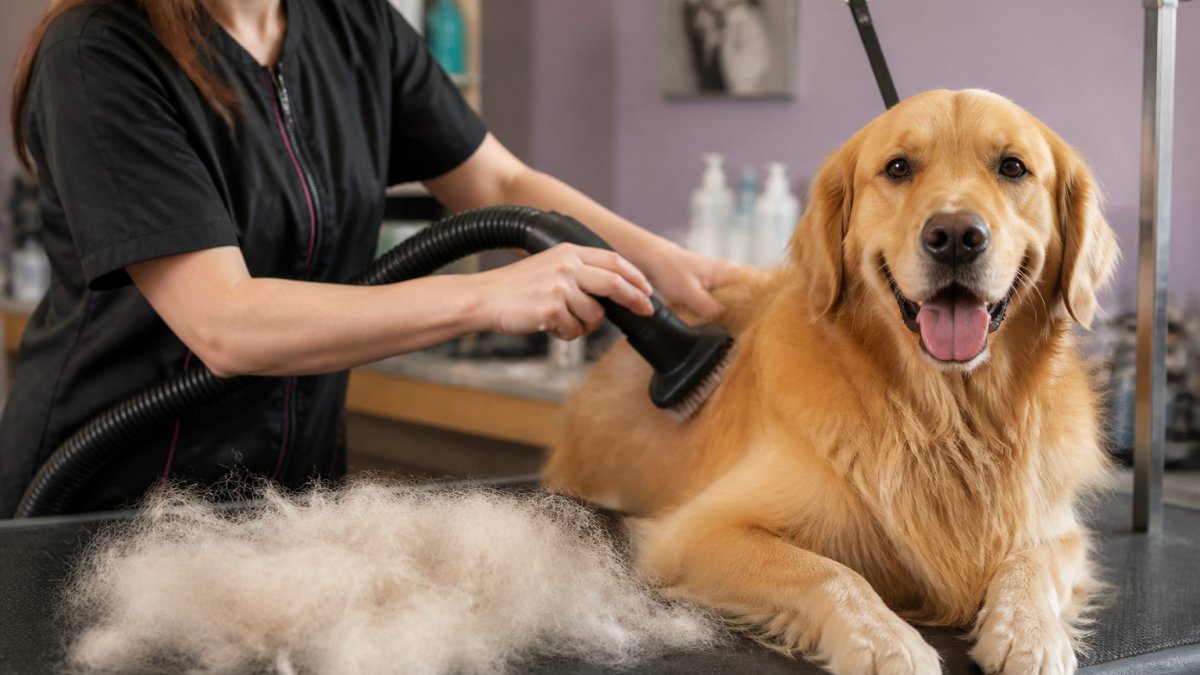
Shedding season changes the math. During a heavy shed, a de-shedding appointment removes loose hair and compacted undercoat that a home brush cannot reach, which reduces matting and keeps the coat healthier. Senior pets and dogs with skin problems may need a gentler, more frequent routine rather than a longer gap. Our grooming frequency guide walks through what to expect for different coats and ages.
The Hidden Costs of Skipping Professional Grooming
Skipping grooming does not save money; it moves the cost somewhere less convenient. Mats tighten against the skin, trap moisture, and can cause itchiness, dryness, and moist dermatitis. Nails that grow too long change how a dog stands and walks. Loose hair and compacted undercoat hold heat and dirt and make home brushing painful for the dog.
The corrective work is the real expense. A coat that has been left for months can need a shave-down rather than the trim the owner wanted, and severe matting can take multiple sessions to resolve. Regular appointments keep the coat in a condition where a standard groom stays standard.
How to Choose a Groomer You Can Trust
Choose a groomer by asking direct questions about handling, experience, and what happens during the appointment. A good groomer welcomes them. Ask how nervous pets are handled, whether you can see the grooming area, what happens if a dog becomes stressed, and how they accommodate senior pets or pets with skin conditions.
The harder skill is judging the answers. A groomer who says "we're gentle with anxious dogs" is giving you a slogan; one who describes a specific process, where the dog waits, how breaks are given, when they stop and call the owner, is showing you a system. Listen for the second kind.
Run through this checklist before you book:
- Ask how the groomer handles anxious or reactive dogs, and what they do if a dog won't settle
- Confirm the groomer has experience with your dog's coat type and breed
- Ask what a full groom includes and what costs extra
- Request to see before-and-after photos of dogs like yours
- Ask about scheduling, including weekend availability
- Confirm how the groomer handles senior pets or skin issues
- Ask whether the shop carries liability insurance and what its vaccination policy is
- Ask what happens if your dog is injured or becomes ill during the appointment
A few of those answers separate a professional operation from a hobbyist with clippers. Insurance and a written policy on injuries are among the clearest signals that a business takes risk seriously. A vaccination requirement protects every dog in the building. A groomer who can explain sanitation, how tables and tools are cleaned between dogs, is telling you they understand cross-contamination.
Watch out: a groomer who won't let you see the grooming area or answer questions about handling is giving you information through the refusal. You are not being difficult by asking; you are doing the same diligence you would before any service that involves sharp tools and a pet you can't supervise.
Watch how the groomer talks about your dog. Someone who asks about temperament, health, and coat history before quoting a service is showing you their process. 7 things to know about professional pet groomers gives you more questions worth asking before you commit.
Book Your Pet's Grooming Appointment
The cost question comes down to what you are buying. You are paying for skill, equipment, time, and a trained eye on your pet's skin and coat, and for most coats that is cheaper than correcting a neglected one later. If you are ready to stop guessing and put your dog on a routine that fits its coat, book a grooming appointment at one of our two locations.
At STEPH'S CUTE CRITTER CUTS & CORI'S CRITTER CREATIONS, we groom by appointment only, so every pet gets personalized attention. Our grooming services include baths and full grooms, and we offer flexible scheduling. We specialize in Poodles and Doodles and welcome anxious, elderly, and first-time pets.
Deciding whether professional grooming is worth the cost is easier once you match the schedule to your dog's coat instead of a generic interval. If you are unsure what your pet needs, start with a conversation about coat type, temperament, and health history. Get started with STEPH'S CUTE CRITTER CUTS & CORI'S CRITTER CREATIONS and build a grooming routine your pet can actually enjoy.
Frequently Asked Questions
Why is professional grooming important?
Professional grooming does more than keep your pet looking neat. A trained groomer checks for skin problems, ear infections, nail overgrowth, and early signs of mats that can trap moisture and cause irritation. They also remove loose hair and compacted undercoat that home brushing often misses. For anxious or elderly pets, a groomer with handling skills can make the experience calmer and safer than a stressful bath at home.
How often should a dog be professionally groomed?
Most dogs benefit from a professional grooming appointment every 4 to 8 weeks, depending on coat type, breed, and lifestyle. Dogs with curly or double coats, like Poodles and Doodles, often need more frequent visits to prevent matting. Your groomer can recommend a schedule based on your dog's coat condition and how well you maintain it between visits.
Can professional grooming help prevent matting and skin problems?
Yes. Mats and compacted undercoat trap moisture and dirt against the skin, which can lead to itchiness, dryness, and moist dermatitis. A professional groomer uses proper tools and technique to remove loose hair and prevent mats from forming. They also spot skin issues early, before they become painful or costly to treat. Regular appointments keep coat care manageable and reduce the risk of emergency grooming for severe matting.
Is professional grooming worth it for short-haired dogs?
Even short-haired dogs benefit from professional grooming. They still shed, produce earwax, and need nail trimming and paw care. A groomer can remove loose hair more thoroughly than a home brush, check for skin problems, and keep nails at a healthy length. For short-coated breeds, appointments may be less frequent, but routine maintenance still supports skin health and comfort.