 listicle
Why Personalized Pet Grooming Services Beat One-Size-Fits-All Care
Last Updated: October 30, 2026
Quick Summary
Personalized pet grooming builds every appointment around one animal's coat, skin, age, and temperament instead of running every pet through the same sequence. A routine that fits the pet can keep skin calmer, coats looser, and visits shorter, while helping groomers spot changes early.
- Curly and wavy coats mat fastest and need combing down to the skin, not just surface brushing.
- A common starting interval is every 4-6 weeks for double coats and curly or wavy coats.
- Stress-aware handling means one pet at a time, a calm environment, and stopping when a pet flinches.
- Brief your groomer on coat goals, handling limits, health notes, behavior, and changes since the last visit.
- Matted fur traps moisture and creates the damp conditions where skin infections start.
Table of Contents
- Why Personalized Pet Grooming Services Produce Healthier Pets
- Coat Care That Fits Your Pet: Brushing, Bathing, and Mat Prevention
- How Often Should Dogs Be Groomed? A Personalized Schedule
- Pet Grooming for Anxious Dogs: Stress-Aware Handling and Consent
- What to Tell a Dog Groomer So Your Pet Gets the Right Care
- What Full-Service Dog Grooming Includes Beyond the Bath
- Early Detection and Skin Health: The Quiet Benefit of Regular Grooming
- Booking Your Pet's Personalized Grooming Appointment
- Frequently Asked Questions
Why Personalized Pet Grooming Services Produce Healthier Pets
Personalized pet grooming is the practice of building every appointment around one animal's coat, skin, age, and temperament instead of running every pet through the same sequence. A routine that fits the pet can keep skin calmer, coats looser, and visits shorter.
The benefits of personalized pet grooming services go well beyond appearance. A groomer who knows your dog's coat type can spot changes early, from a new hot spot to a lump that wasn't there last time.
Below, we'll show you exactly what changes when grooming is built around the individual pet, and how to ask for it.
Coat Care That Fits Your Pet: Brushing, Bathing, and Mat Prevention
A coat care plan starts with two questions: what kind of hair grows on this pet, and how fast does it tangle? A short-coated beagle and a curly Doodle need completely different schedules, tools, and shampoos.
Brushing removes dead hair and dirt before they pack into the undercoat. Bathing resets the skin and coat, but too often strips natural oils. Mat prevention is the part owners underestimate: mats tighten against the skin, trap moisture, and pull with every step. Pair professional grooming with these tips to prevent matting in winter dog coats.
Matching the Routine to Coat Type and Breed-Specific Needs
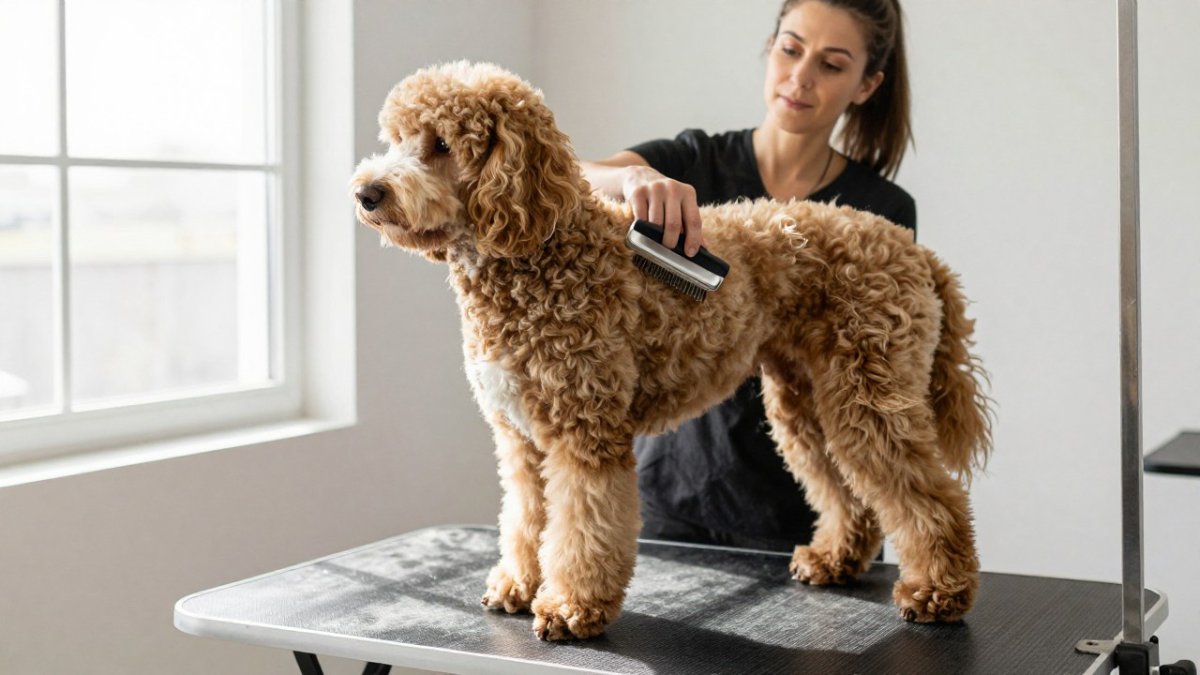
Coat type drives the plan. Curly and wavy coats mat fastest and need combing down to the skin, not just surface brushing. Double coats shed heavily and benefit from de-shedding rather than shaving. Silky coats tangle at friction points like collars and armpits.
Breed-specific needs matter too. Poodles and Doodles carry coats that demand consistent professional shaping, and their owners often want specific trims rather than a generic clip. See how personalized attention for every pet applies to Poodle and Doodle coats.
How Often Should Dogs Be Groomed? A Personalized Schedule
There is no universal answer to how often should dogs be groomed. The honest answer is that frequency follows coat type, lifestyle, and season, not a fixed calendar. What separates a personalized schedule from a generic one is that the groomer can explain why your pet's interval is what it is, and adjust it when something changes.
A common starting framework looks like this:
| Coat Type | Typical Grooming Interval | Main Focus |
|---|---|---|
| Short, smooth | Every 6-8 weeks | Bathing, nail trimming, ear checks |
| Double coat | Every 4-6 weeks | De-shedding, undercoat removal |
| Curly or wavy | Every 4-6 weeks | Full groom, mat prevention |
| Silky or long | Every 3-5 weeks | Tangle removal, trimming |
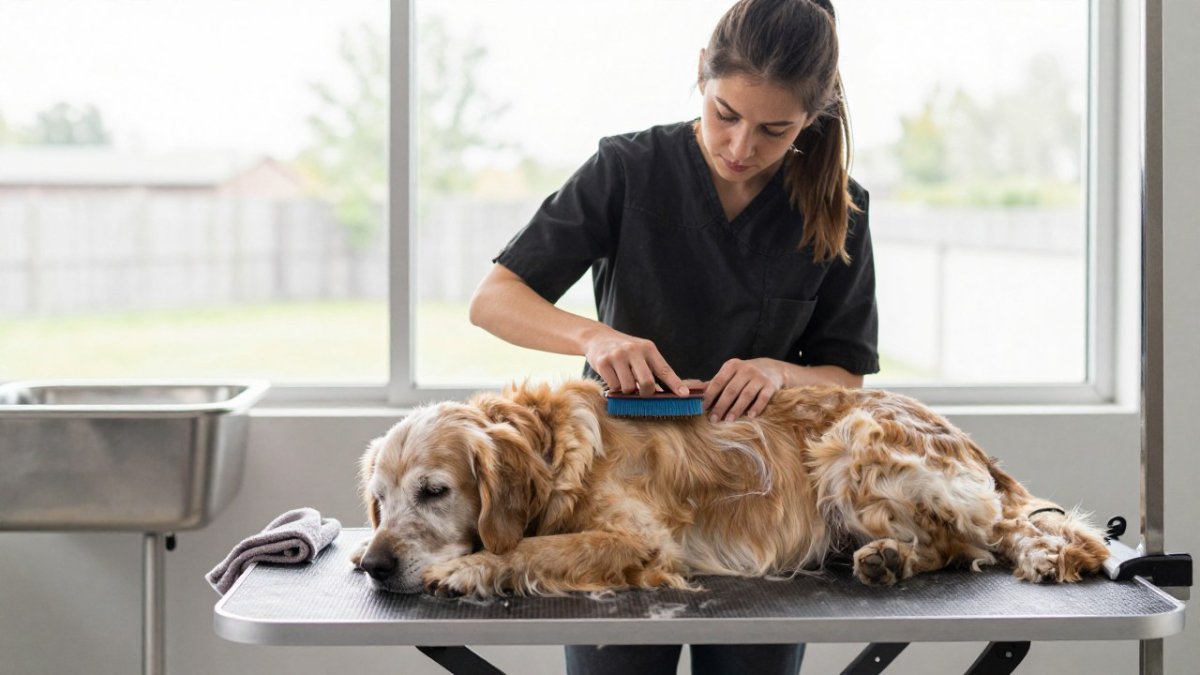
| Senior or special needs | Every 3-4 weeks | Comfort, hygiene, skin checks |
Treat those numbers as a starting point, not a prescription. Four variables move the interval in either direction:
- Coat growth and shedding rate. A dog that blows coat twice a year needs a de-shedding appointment timed to the shed, not a random date on the calendar. Curly coats that grow continuously need shaping before the coat closes into mats.
- Activity and environment. A dog that swims, hikes, or rolls in the yard weekly picks up more dirt, burrs, and tangles than a couch companion. Dogs that spend time in tall grass or wooded areas also warrant more frequent tick and parasite checks during grooming.
- Home maintenance between visits. An owner who brushes three times a week can stretch a curly coat's interval; an owner who never brushes cannot. The schedule should reflect what actually happens at home, not what the owner intends to do.
- Age and health status. Senior pets, arthritic dogs, and pets with skin conditions often need shorter intervals focused on comfort and hygiene rather than styling. A dog recovering from a skin infection may need bathing on a veterinary timeline that overrides the usual grooming cadence.
Season matters too. Winter coats trap moisture and mat faster under harnesses and sweaters; summer brings more swimming, pollen, and burrs. Many pets do well on a slightly shorter interval in spring and fall, when coats are transitioning.
Schedules are built by appointment so the interval matches the pet, not the calendar.
Pet Grooming for Anxious Dogs: Stress-Aware Handling and Consent
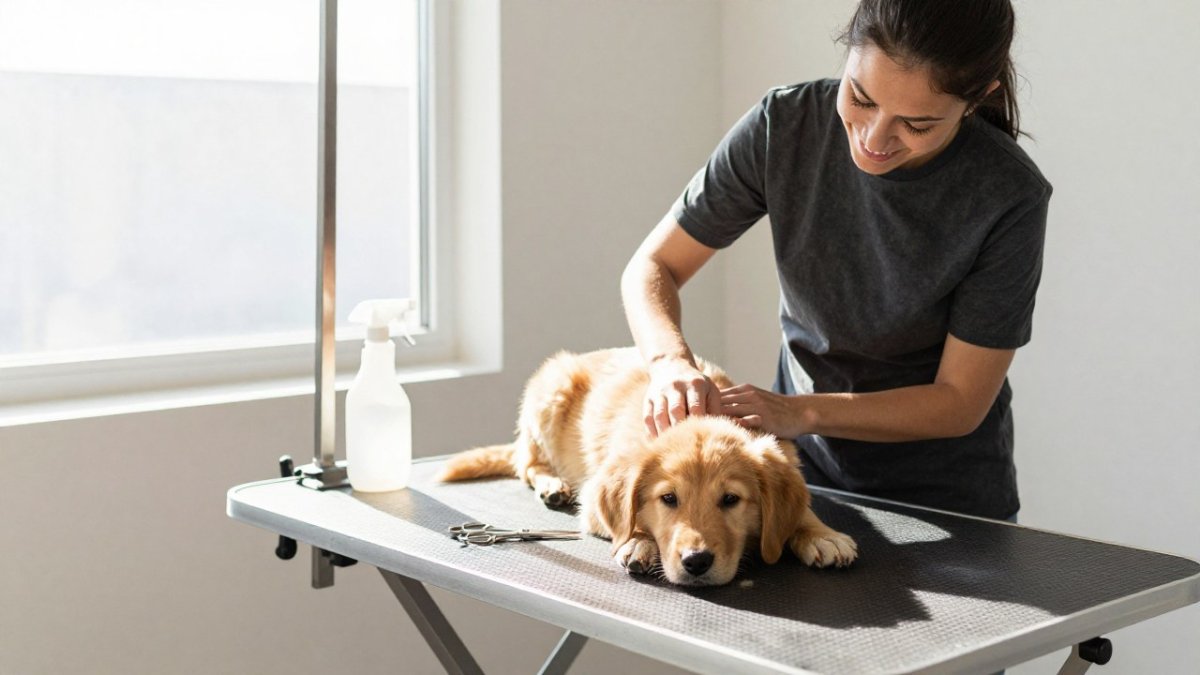
Pet grooming for anxious dogs works best when the groomer reads body language and pauses before a pet panics. Stress-aware handling means one pet at a time, a calm environment, and no forcing a nervous animal through a step it can't tolerate.
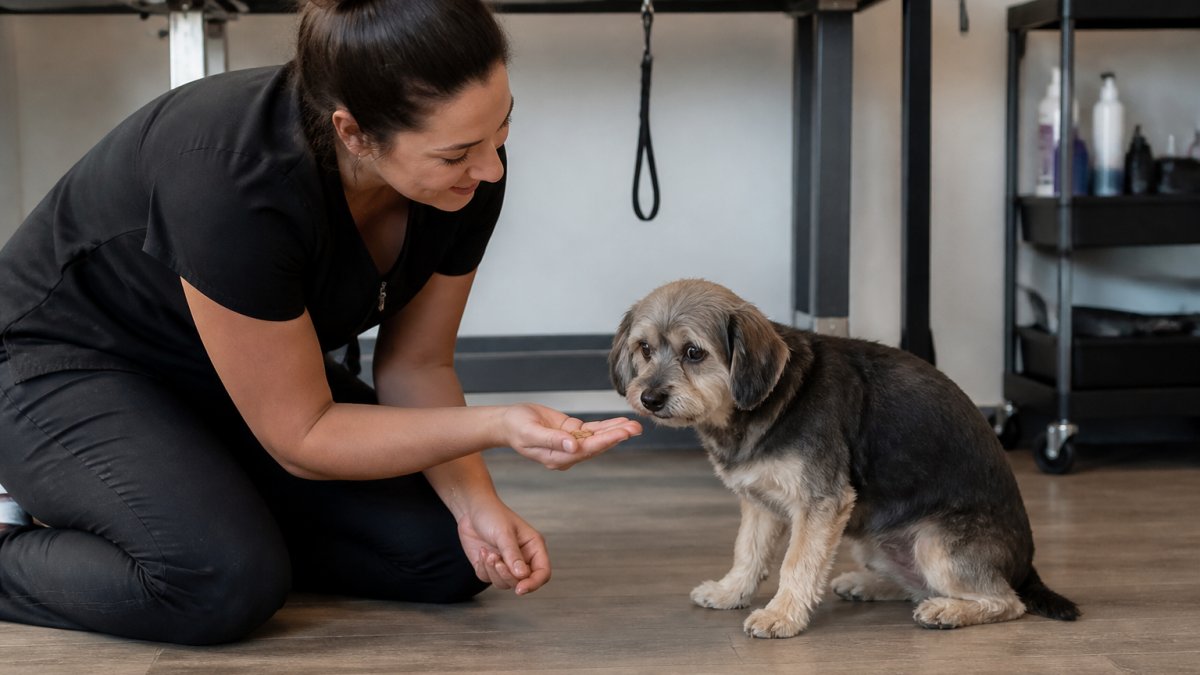
Consent in grooming is simple to describe. If a dog flinches, freezes, or pulls away, the groomer stops and resets rather than pushing through. For deeper practical guidance, see Dog Grooming for Difficult Dogs: A Practical Guide.
What to Tell a Dog Groomer So Your Pet Gets the Right Care
What to tell a dog groomer comes down to three things: what the pet tolerates, what the owner wants, and what has changed since the last visit. A short, specific briefing beats a vague "just a trim." The intake conversation is where personalization actually starts, a groomer can only adapt the plan to what they know about the pet.
A useful briefing covers:
- Coat goals: length, shape, and any areas to leave longer
- Handling limits: sensitive paws, sore hips, no ear plucking
- Health notes: allergies, skin irritation, recent vet treatment, medications
- Behavior: nervous around dryers, reactive to other dogs, dislikes the clippers
- Changes since last visit: new lumps, scratching, appetite shifts, limping
- Home routine: how often you brush, what tools you use, whether the pet tolerates baths at home
Owner preferences belong in that list too. If you want a specific style or a shorter summer clip, say so at drop-off, not at pickup. A groomer who knows the plan can work with the pet's behavior instead of against it.
How to Share Medical and Behavioral History
Be direct about anything a veterinarian has flagged. Skin conditions, ear infections, allergies, arthritis, and anxiety diagnoses all change how a groom should be handled, which shampoos are safe, which areas to avoid, how long the pet can comfortably stand. If your pet is on medication that affects the skin or coat, say so. If a vet has recommended a medicated bath schedule, bring the instructions.
Behavioral history matters just as much. A dog that bit a groomer once, panicked under a dryer, or had a bad experience with nail trims needs that context up front, not after the fact. Groomers are not veterinarians, and a pet with a medical or behavioral concern that exceeds routine handling should be referred to a vet rather than pushed through a groom.
Aftercare Between Appointments
Personalization does not end when the leash clips back on. Ask the groomer what to do at home before the next visit: which brush to use and how often, how to check for mats behind the ears and under the collar, how to keep nails from clicking on the floor, and what signs warrant a call before the next scheduled appointment. A groomer who knows your pet's coat can tell you exactly where it tangles first, that is the spot to check weekly.
A short written note or a photo of the finished groom helps too. It gives the next appointment a baseline and makes changes easier to spot.
What Full-Service Dog Grooming Includes Beyond the Bath
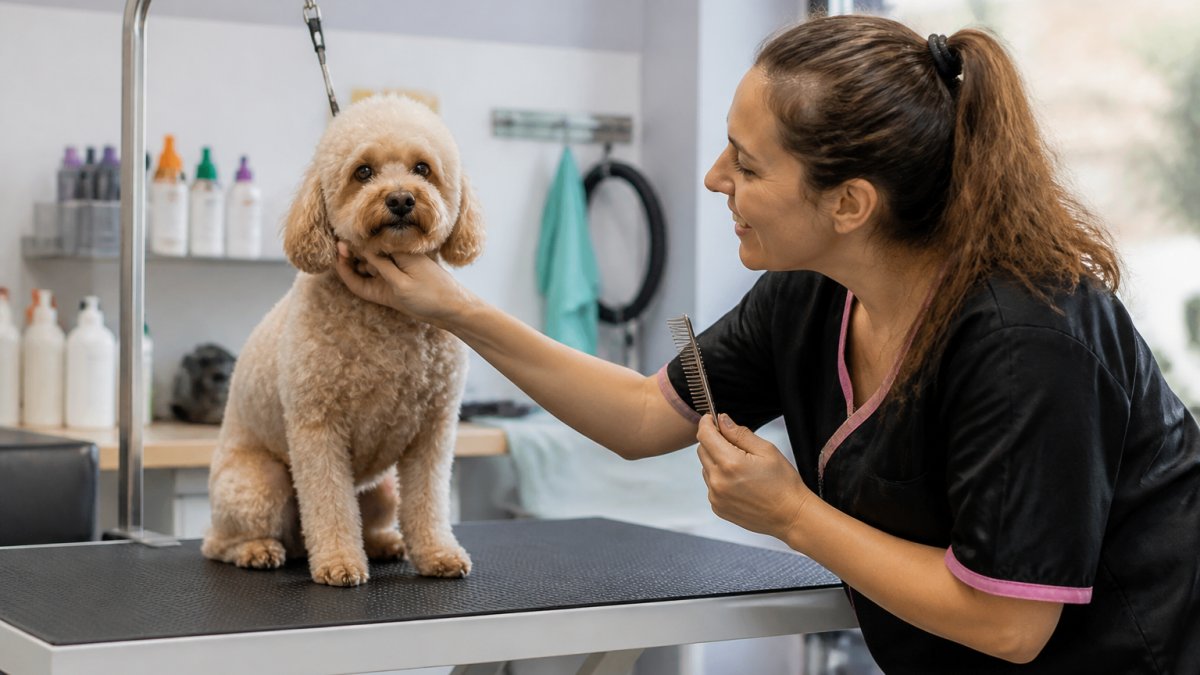
Full-service dog grooming covers far more than soap and water. A complete appointment typically includes bathing, brushing, nail trimming, ear cleaning, paw care, and a finished haircut, plus a hands-on check of the whole body.
Nail trimming and paw care protect mobility. Overgrown nails change how a dog stands and walks, and matted fur between the pads traps grit. Ear cleaning catches wax buildup and early infection before it becomes painful.
Professional tools and groomer expertise matter here. Clippers, dryers, and de-shedding tools chosen for the coat do work that home equipment can't match, and a trained eye notices things an owner might miss in the bath at home.
Early Detection and Skin Health: The Quiet Benefit of Regular Grooming
Regular grooming is one of the most reliable early detection tools a pet owner has. A groomer handling the same animal every few weeks notices lumps, parasites, and skin changes when they are still small.
Skin health sits at the center of this. Matted fur traps moisture and creates the warm, damp conditions where skin infections start. Routine bathing and brushing keep the coat clean and let air reach the skin, which reduces irritation.
Anything suspicious belongs with your vet.
Booking Your Pet's Personalized Grooming Appointment
Booking is the easy part once the plan is clear. We take appointments only, which means each pet gets one-on-one attention in a calm environment rather than a rushed slot in a busy line.
Our team handles full grooming, baths, and extra services, with two convenient locations in Deltona and Orange City. You can book your pet's grooming appointment when you're ready.
The difference between a good groom and a great one is rarely the shampoo. It's whether anyone adjusted the plan for your pet.
Frequently Asked Questions
What are the benefits of professional pet grooming?
Professional grooming does more than improve appearance. It removes dead hair and dirt, reduces shedding, prevents mats and tangles, and keeps nails and ears healthy. A groomer also checks the skin and coat closely, which can surface irritation, parasites, or lumps early enough for veterinary care. Personalized pet grooming goes further by matching products, tools, and handling to your pet's coat type, age, and temperament, so the appointment supports physical health and comfort rather than just hygiene.
How often should a dog be professionally groomed?
There is no single answer because coat type and lifestyle drive the schedule. Short-coated dogs often do well every six to eight weeks, while Poodles, Doodles, and other curly or long coats usually need appointments every four to six weeks to prevent matting. Dogs who spend time outdoors or shed heavily may need more frequent visits. A groomer can build a personalized schedule after assessing your dog's coat, so ask at your first appointment rather than guessing.
How does personalized grooming help anxious pets?
Pet grooming for anxious dogs works best when the environment is quiet and the handling is calm. Personalized care means one-on-one attention, a slower pace, and breaks when a pet shows stress signals like panting, lip licking, or trembling. Familiar surroundings and a consistent groomer build trust over repeat visits, which reduces fear and anxiety. Tell the groomer about your pet's triggers, such as loud dryers or nail trimming, so the team can adjust the approach before the appointment starts.
Can regular grooming help detect skin or coat problems?
Yes. A groomer handles the whole body and sees areas owners often miss, including the belly, paws, and behind the ears. Regular grooming makes it easier to notice redness, flaking, hot spots, parasites, or new lumps while they are small. Catching these early supports faster veterinary care and keeps skin infections from worsening. Mention any changes you have noticed at check-in, and ask the groomer to flag anything unusual during the appointment.