 how-to
How to Groom a Long-Haired Cat Without Stress or Mats
Last Updated: October 25, 2026
Quick Summary
Grooming long-haired cats takes five to ten minutes of daily combing plus a longer weekly session to check the belly, legs, and hindquarters. Start at the chest and work backward in layers, holding fur at the base so you never pull skin. Brush mat-prone spots like behind the ears and armpits first, and book a professional for tight mats.
- Use a wide-toothed metal comb with teeth about 1/8 to 1/4 inch apart as your daily workhorse.
- Skip plastic combs, which snag, create static, and bend instead of gliding through the undercoat.
- Trim nails every 2-3 weeks and schedule sanitary trims every 4-6 weeks.
- Never use scissors on a mat tight against the skin; book professional help instead.
- Desensitize a fighting cat over two to three weeks, starting with the comb nearby and no brushing.
Table of Contents
- Step 1: Set Up Your Grooming Space and Gather Tools
- The Best Brush for Long-Haired Cats: Match the Tool to the Task
- How Often to Groom a Long-Haired Cat: Building a Routine That Works
- Step 2: Brush Section by Section Without Causing Pain
- How to Prevent Mats in Long-Haired Cats Before They Form
- Grooming an Unwilling Cat: Desensitization and Calm Handling
- Step 3: Bathing, Nails, and Sanitary Trims for Long-Haired Cats
- When to Book a Professional Grooming Appointment
- Frequently Asked Questions
Step 1: Set Up Your Grooming Space and Gather Tools
Grooming long-haired cats starts with preparation, not the brush. A calm space and the right tools do more for a nervous cat than any technique.
Grooming long-haired cats is a skill built on small habits. The cat reads your energy first. So does the room.
Set up before your cat enters the space:
- A nonslip towel or mat on a stable table or counter
- Good overhead light so you can see the skin
- Treats within reach
- A second person for difficult cats
Keep sessions short at first. Five minutes beats a twenty-minute battle.
Watch out: never groom on a slippery surface. One bad slide can make a cat fear the table for months.
The Best Brush for Long-Haired Cats: Match the Tool to the Task
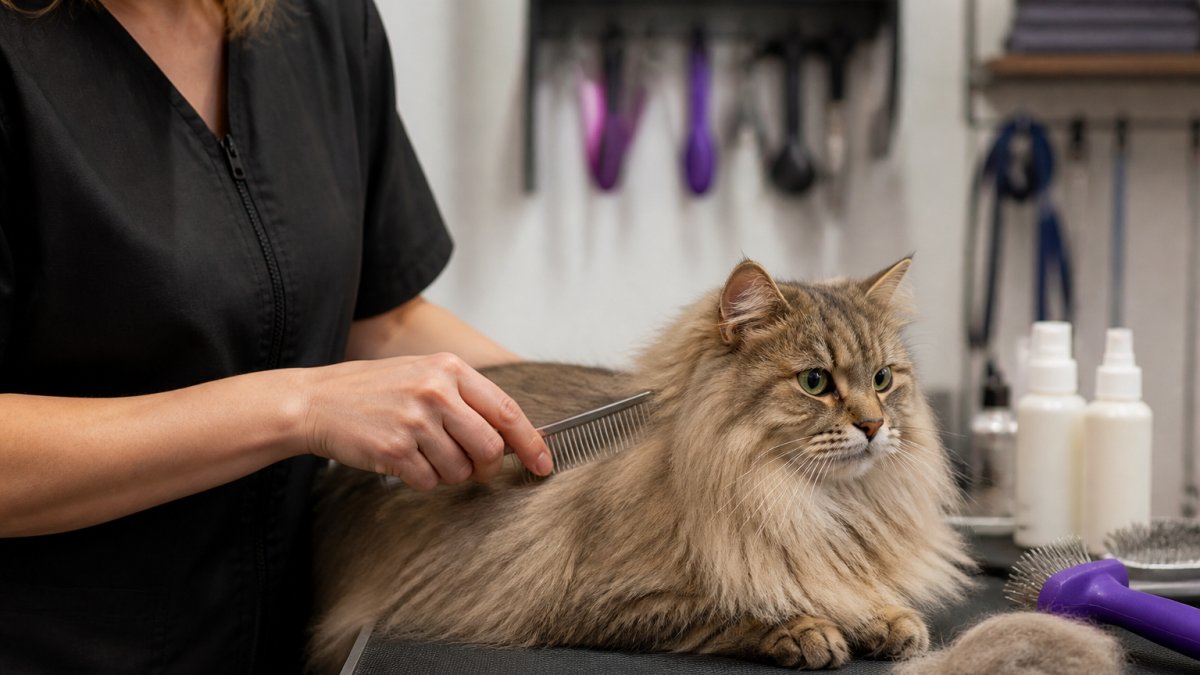
The best brush for long-haired cats depends on the coat in front of you, not on a single universal pick. A wide-toothed metal comb is the daily workhorse, a slicker brush lifts loose fur, and a pin brush smooths the finish, but which one leads depends on coat type.
Your core kit:
- Wide-toothed metal comb (teeth roughly 1/8 to 1/4 inch apart): finds tangles before they become mats and works through the undercoat
- Slicker brush: lifts dead hair from the topcoat; choose one with flexible pins and a cushion that gives slightly
- Pin brush: smooths the finished coat and works well on fine hair
- Nail clippers: for routine trims
- Cat-safe shampoo: for bath days
- Greyhound comb or fine-toothed comb: for finishing and checking behind the ears and hindquarters
Skip plastic combs. They snag, create static, and bend instead of gliding through the undercoat. A metal comb tells you where trouble hides because it stops at a tangle rather than skimming over it.
Match the tool to the coat type
- Fine, silky coats (such as a Persian or a Balinese): lead with a pin brush or a soft slicker, then finish with a metal comb. Fine hair mats easily but responds to gentle, frequent passes. Avoid stiff slickers that scratch the skin.
- Dense, cottony undercoats: start with a wide-toothed metal comb to break up the underlayer, then follow with a slicker. This coat type traps dead hair close to the skin and is the most mat-prone.
- Curly or wavy coats: use a comb first to open the coat, then a slicker in small sections. Curls hide tangles at the base, so comb down to the skin rather than across the surface.
- Double coats: a slicker plus an undercoat rake removes the looser underlayer without stripping the guard hairs. Comb daily during seasonal shedding.
A quick test: run the metal comb through a small section. If it stops, you have found a tangle before it becomes a mat, switch to the comb and work that spot first.
If your cat has a thick, fluffy coat, our guide to fluffy pet grooming styles and care walks through coat types and the tools that suit each one.
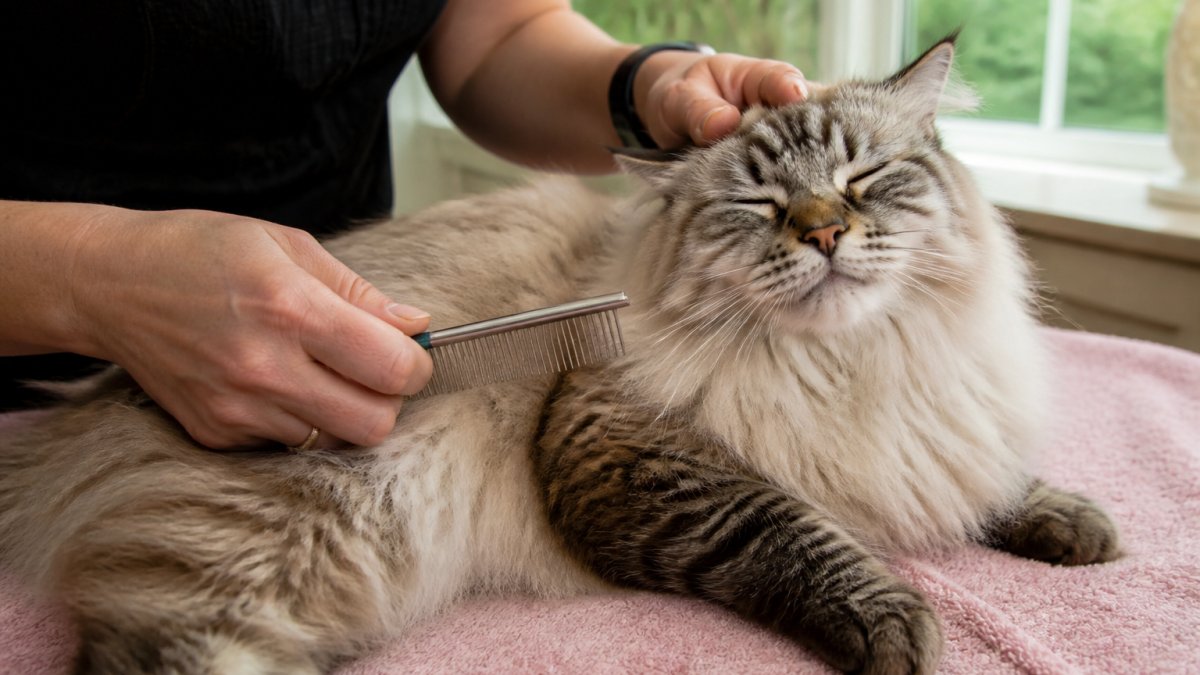
How Often to Groom a Long-Haired Cat: Building a Routine That Works
Groom a long-haired cat every day for five to ten minutes, and book a longer session once a week. Daily brushing removes loose hair before it tangles. Weekly sessions let you check the belly, legs, and hindquarters.
A simple schedule:
| Task | How Often | Time Needed |
|---|---|---|
| Quick comb-through | Daily | 5-10 minutes |
| Full brush-out | Weekly | 20-30 minutes |
| Nail trim | Every 2-3 weeks | 5 minutes |
| Bath | As needed | 20-30 minutes |
| Sanitary trim | Every 4-6 weeks | 10 minutes |
Stick to the same time each day. Cats relax into routine faster than you'd think. Morning or after dinner works well for most households.
Step 2: Brush Section by Section Without Causing Pain
Start at the chest and work backward. Long fur hides knots, so brush in layers, not across the top. Lift the coat with one hand and comb underneath with the other.
Work in this order:
- Chest and shoulders
- Back and sides
- Belly and abdomen, gently
- Legs and paws
- Hindquarters and tail
Use short strokes. Stop at any tangle and hold the fur at the base so you don't pull the skin. Never rip through a knot.
Watch out: yanking a mat tears skin and teaches your cat that grooming hurts. Slow down instead.
How to Prevent Mats in Long-Haired Cats Before They Form
Mats form where fur rubs together: behind the ears, under the legs, around the hindquarters, and in the armpits. The fix is boring and effective. Brush those spots first, every single day, and check them with your fingers between sessions.
Other habits that help:
- Check the armpits, belly, and behind the ears daily with your fingertips
- Keep the coat dry and clean; damp fur clumps faster
- Trim problem areas before they clump, using blunt-tipped scissors only on loose fur away from skin
- Book professional help early if mats start forming
- Comb daily during seasonal shedding, when dead undercoat builds up fastest
Safe mat triage: loose tangle vs. tight mat
Not every knot is the same, and the difference decides what you should do.
- A loose tangle sits on the surface, moves freely when you lift it, and separates with a comb and gentle finger work. Work it out slowly, holding the fur at the base so you do not pull skin.
- A tight mat is felted against the skin, does not move when you lift it, and hides the skin underneath. Do not comb through it, and do not cut it with scissors.
Why scissors are risky: cat skin is thin and loose, and it tents up into a mat. It is easy to catch skin between the blades, and cuts happen fast, often without the cat reacting until later. A groomer or veterinarian has the tools and handling skill to remove a tight mat safely, sometimes with clippers that slide under the mat rather than against the skin.
When to stop and call a professional
- The mat is tight against the skin and will not lift
- The skin under or around the mat looks red, raw, or broken
- Mats cover the hindquarters or armpits
- Your cat will not tolerate handling in that area
- The coat smells sour or feels greasy under the mat
Our team handles mat removal and de-shedding as part of a full groom, and we can assess whether a mat is safe to work out or needs clipper removal. Catching mats early is always easier on the cat than waiting until they tighten.
Grooming an Unwilling Cat: Desensitization and Calm Handling
A cat that fights the brush is not a lost cause. Most learn to accept grooming with a slow, patient plan. Skip the full session and build trust in steps.
Try this plan over two to three weeks:
- Days 1-3: Set the comb nearby during petting. No brushing.
- Days 4-7: One gentle stroke on the back, then a treat.
- Week 2: Three or four strokes per session, always ending with a treat.
- Week 3: Work up to one full minute, then extend slowly.
Watch your cat's signals. Ears flat, tail twitching, or a low growl means stop. End on a good note every time.
For senior or sensitive cats, our grooming tips for senior cats cover age-specific handling and comfort.
Step 3: Bathing, Nails, and Sanitary Trims for Long-Haired Cats
Most long-haired cats need a bath only every few months, or when the coat gets soiled. Use lukewarm water and a cat-safe shampoo. Rinse thoroughly, because leftover shampoo irritates skin.
Bath steps:
- Brush out all tangles first
- Wet the coat with lukewarm water
- Lather with cat-safe shampoo, avoiding the eyes and ears
- Rinse until the water runs clear
- Towel dry and keep the cat warm
Nail trimming takes a steady hand. Press the paw gently to extend a claw, and clip only the clear tip. Sanitary trims around the hindquarters keep long fur clean and reduce matting.
If nail care or sanitary trims feel like too much, our shop offers these as add-on services during a grooming visit. You can view our full grooming services and see our add-on options.
When to Book a Professional Grooming Appointment
Book a professional groomer when mats are tight, when your cat fights handling, or when health issues make home grooming hard. A groomer has the tools and hands-on skill to work through a tough coat safely.
Signs it's time to call:
- Mats close to the skin
- Matted fur around the hindquarters
- Greasy or dull coat that won't clean up
- An older cat with arthritis or limited mobility
- A cat that panics during home sessions
Before you book anywhere, read our guide to choosing a professional pet groomer. It covers the questions worth asking.
At STEPH'S CUTE CRITTER CUTS & CORI'S CRITTER CREATIONS, we groom by appointment only at two locations, with a focus on calm handling and personalized care. Nervous and senior cats get the extra time they need. Ready to hand off the hard parts?
Frequently Asked Questions
How often should you brush a long-haired cat?
Most long-haired cats need brushing three to five times per week to stay ahead of tangles, and daily during heavy shedding seasons. Cats with very thick undercoats or a history of mats may need daily sessions. Keep each session short, around five to ten minutes, and focus on the areas where mats form first: behind the ears, under the front legs, and around the hindquarters. A consistent routine matters more than a long, occasional session.
What is the best brush for long-haired cats?
Start with a wide-toothed metal comb to find tangles, then follow with a slicker brush to remove loose undercoat. A pin brush works well on longer, finer coats, while a metal comb is essential for checking down to the skin. Avoid plastic combs with sharp seams, which can snag fur. The best brush for long-haired cats depends on coat type and condition, so keep two or three tools on hand and switch as needed.
How do you groom an unwilling cat without getting scratched?
Work in short sessions, two to three minutes at first, and stop before your cat gets upset. Choose a quiet time when your cat is relaxed, offer treats, and start with gentle petting before introducing the comb. If your cat swats or hisses, pause and try again later. For cats that stay fearful, a gradual desensitization plan over several weeks works better than forcing a full grooming session.
When should a long-haired cat be professionally groomed?
Book a professional groomer if mats are tight against the skin, if your cat becomes distressed during home grooming, or if you need help with sanitary trims and nail care. Senior cats, overweight cats, and cats with mobility issues often benefit from professional grooming because they cannot reach their hindquarters to self-groom. A professional groomer can also show you which tools and techniques suit your cat's specific coat.
Grooming a long-haired cat takes patience, the right tools, and a routine your cat can trust. When mats, nails, or anxious handling make home grooming a struggle, we're here to help. Our team offers full grooming, baths, and add-on services with gentle handling and personalized attention for every pet. Get started with STEPH'S CUTE CRITTER CUTS & CORI'S CRITTER CREATIONS and give your cat a calm, comfortable grooming experience.